Third Party Risk Management Framework

What is a third-party risk management framework?

A third-party risk management (TPRM) framework is a structured methodology organizations use to identify, assess, manage, and mitigate the risks associated with outsourcing services or business operations to external vendors, suppliers, and partners. Given today's interconnected digital ecosystem, a robust TPRM framework is crucial for cybersecurity professionals to ensure that third-party relationships do not compromise an organization's security posture.

Importantly, a framework is developed before any vendor risk management technologies or tools are put in place. In this way, a framework is a proactive step towards defining and optimizing a mature third-party risk management program.

Purpose 

A TPRM framework is essential for managing the inherent risks that arise from third-party partnerships, such as data breaches, compliance violations, and operational disruptions. Organizations today operate within increasingly complex digital supply chains, making comprehensive risk management a necessity rather than an option. An effective TPRM framework helps security analysts and risk managers systematically evaluate third-party risks, maintain regulatory compliance, and ensure that external partners adhere to the organization’s cybersecurity standards.

5 Components of a third-party risk management framework

A successful TPRM framework typically comprises five critical components:

Risk identification

Understanding and cataloging third-party relationships and potential risks, including cybersecurity threats, regulatory compliance issues, and operational vulnerabilities.

Risk assessment

Evaluating and quantifying the risks associated with each third-party relationship through methods such as vendor assessments, security questionnaires, and continuous monitoring tools.

Risk mitigation 

Implementing strategies and controls to minimize identified risks, which could include contractual obligations, vendor audits, or ongoing cybersecurity training.

Continuous monitoring 

Regularly tracking and analyzing the cybersecurity posture and compliance status of third parties, allowing for proactive rather than reactive risk management.

Reporting and governance

Providing clear, actionable insights and regular updates to stakeholders and decision-makers about third-party risk levels, fostering transparency and accountability across the organization.

How to develop a TPRM framework

Developing a robust TPRM framework requires a systematic, phased approach tailored to an organization’s specific needs and regulatory environment.

Begin by assembling cross-functional teams, including cybersecurity professionals, compliance officers, legal experts, and procurement specialists, to ensure a comprehensive perspective.

Next, follow these structured steps:

  1. Set a tolerance level: First, clearly define your organization’s risk tolerance and objectives. 
  2. Identify and classify relationships: Clearly identify and classify third-party relationships based on their criticality and potential risk impact.
  3. Continuous monitoring: Establish standardized assessment criteria and integrate continuous monitoring technologies to maintain real-time visibility into third-party risks. 
  4. Develop policies and standards: Establish detailed policies and standards that outline organizational expectations, risk assessment procedures, due diligence activities, and ongoing monitoring practices.
  5. Implement automation and technology solutions: Implement automated workflows and leverage AI-driven analytics to streamline risk assessment processes, enhance accuracy, and provide real-time risk intelligence.
  6. Continuous refinement: Regularly refine and update the framework based on evolving threats, emerging industry best practices, and regulatory changes.
  7. Organizational alignment: Ensure your TPRM framework aligns with business priorities and compliance obligations, promoting a cohesive cybersecurity culture across your entire organization.

By following these steps, organizations can effectively build a resilient and adaptive TPRM framework.

Third-party risk management framework best practices 

Below are best practices and freely-available resources that can help you establish a vendor risk management framework that works best for your organization. 

Leverage existing vendor risk management frameworks

Fortunately, there are many resources in the public domain that can help you develop your cybersecurity framework. A useful starting point is Deloitte’s capability maturity model which provides a valuable roadmap for your program.

Another reference point is the National Institute of Standards and Technology (NIST) Cybersecurity Framework. NIST is the foundation for most emerging cybersecurity regulations and its framework outlines standards, guidelines, and best practices for defining controls and managing cybersecurity risk both in your own organization and across third-party relationships. 

Also worth a look is the ISO 27001 information security management certification. ISO 27001 is considered the international standard for validating a cybersecurity program and is a great way of assessing all the different components of your vendor’s security program. If a vendor has ISO 27001 certification it’s a good indication that they’re doing things right when it comes to securing their data.

Also worth a mention is the Fair Institute methodology which provides a model for understanding and quantifying risk in financial terms. It puts risk in common, easy-to-understand terms that can be shared across the organization.

With so many well-known best practices and established frameworks in place, it’s not necessary to create your own. Furthermore, by leaning on standard approaches and terminology that your vendors already use or recognize (as opposed to a custom framework), the third-party risk assessment and management process becomes much easier.

Factor compliance into your vendor risk management framework

There is also a compliance element that must be factored into your framework. Certain sectors are subject to strict third-party cybersecurity risk management regulations.

In the healthcare industry, for example, continuous third-party compliance with HIPAA and HITRUST, among other regulations, must be addressed by the cybersecurity compliance framework.

Exceptions must also be made for industries that classify or “tier” vendors by risk, as often happens in the financial services sector. For example, a third party may be considered “high risk” if a cyber-attack on their network has the potential to critically impact your business, data, or regulatory status. In such instances, separate policies and procedures must be incorporated into the framework to address high, medium, and low risk third parties.

Take an iterative approach

Finally, it’s important that your third-party cyber risk management framework considers the shifting nature of third-party relationships.

Too often traditional third-party risk management programs focus on fixed points in time, such as the pre-contract due diligence phase. This approach fails to capture risk that may arise as a result of a change in scope, personnel, or strategy. Gartner's study found that 83% of legal and compliance leaders identified third-party risks after due diligence and before recertification.

To account for a constant flux in risk, build policies and processes that enable you to iteratively assess and monitor risk over the course of the vendor relationship. Gartner recommends using a data-driven methodology to determine critical risks to streamline vendor due diligence. For example, once the contract is signed, leverage technology, like security ratings, to continuously monitor third-party networks and detect change.

Don’t go framework crazy

Depending on your industry and the cyber risks you’re seeking to address, the frameworks mentioned above (or portions of them) provide a foundation that can be augmented to meet the needs of your organization. But try not to overdo it. Too many layers in your framework can be hard to govern and enforce, especially if your organization is decentralized and you’re dependent on different teams and business units to keep these processes and frameworks in place.

But rest assured: as your third-party network expands, a well-thought out third-party risk management framework provides a critical foundation that integrates security and risk management into your vendor relationship lifecycle. With a framework as your guidepost, you’ll gain vital insight into where your highest security risk is and make more informed decisions about managing that risk for the long-term.

How to choose a TPRM framework

When selecting a TPRM framework, cybersecurity professionals should evaluate several key factors:

  • Scalability and flexibility: Ensure the framework can adapt to your organization’s growth and evolving third-party relationships.
  • Comprehensive visibility: Choose a framework that offers robust continuous monitoring and real-time risk detection capabilities, providing objective data and actionable intelligence.
  • Integration capabilities: Opt for solutions that seamlessly integrate with your existing cybersecurity tools and business processes, enhancing operational efficiency.
  • Ease of use: Look for intuitive interfaces and streamlined processes that enable quick adoption and reduce the complexity associated with third-party risk management.
  • Proven results: Prioritize frameworks backed by strong industry validation, customer testimonials, and measurable outcomes, demonstrating their effectiveness in mitigating third-party cyber risks.
  • Dark Web Intelligence for Supply Chains: Goes deeper into your vendor's exposure to see what threat actors are targeting. With supply chain dark web intelligence, you can detect early signs of real-world targeting and exposure across your vendor ecosystem beyond what static scores can reveal.

Adopting a comprehensive TPRM framework empowers organizations to proactively manage third-party risks, safeguard sensitive data, and enhance overall cybersecurity resilience, ultimately contributing to greater trust and security across their extended digital ecosystem.

Developing a TPRM framework with Bitsight

Bitsight for Third-Party Risk Management and other Bitsight technologies provide all of the tools required to develop and support a third-party risk management framework. With Bitsight, you can:

  • Enable your business by bringing on vendors in a timely way: With Bitsight, you can help your organization enjoy the benefits of working with vendors while summarizing and communicating the risk that is associated with each relationship. Bitsight enables you to communicate technical details to stakeholders throughout the organization, using a common language and set of easily understood metrics that enable everyone to make outcomes-based, informed decisions.
  • Onboard vendors faster: Smart tiering recommendations, workflow integration, and risk vector breakdowns that identify areas of known risk can help to accelerate onboarding and making your third-party risk management program more scalable.
  • Mitigate third-party risk: Make confident, data-driven decisions to prioritize resources, improve operational efficiency, and drive efficient risk reduction across your vendor portfolio.
  • Improve executive reporting: Bitsight facilitates data-driven conversations with senior executives and board members by streamlining the reporting process, demonstrating how investments in security directly impact performance, and providing essential metrics and context that enable oversight of your cyber security plan.
A Third-Party Risk Management Framework Template- 10 Critical Elements cover cta

10 Critical Elements to Build a Resilient TPRM Program

Working hard to stay on top of vendor risk? We can help. This practical guide outlines 10 critical steps you can take today to reduce exposure, boost collaboration, and drive risk clarity at scale.

Vendor Risk Assessment Checklist

A vendor risk assessment checklist is an outline of information that organizations require when performing due diligence during the vendor procurement process. It’s a critical tool used by cybersecurity professionals, risk managers, and security analysts to systematically evaluate and mitigate potential risks associated with third-party vendors. This checklist helps organizations ensure that their vendor relationships do not compromise their overall security posture, operational integrity, or compliance with regulatory standards

Purpose of vendor risk assessments

The primary purpose of a vendor risk assessment is to identify, analyze, and mitigate the risks posed by third-party vendors. Vendors often have access to sensitive data, critical infrastructure, or operational processes that, if compromised, can significantly impact your organization's security and reputation. Conducting regular assessments ensures that vendors adhere to agreed-upon security standards and compliance requirements, reducing the likelihood of data breaches, regulatory penalties, and operational disruptions.

What data should be included in a vendor risk assessment?

A thorough vendor risk assessment should include evaluation of the following data components:

  • Security controls: Verify the vendor's cybersecurity practices, including data encryption, network protection, access controls, and incident response capabilities.
  • Compliance status: Ensure the vendor meets relevant regulatory frameworks such as GDPR, HIPAA, PCI DSS, or industry-specific compliance standards.
  • Operational stability: Assess the vendor's business continuity planning, disaster recovery strategies, and financial health.
  • Data handling practices: Understand how the vendor processes, stores, and transmits your organization's sensitive data.
  • Legal and contractual obligations: Review contracts for security clauses, liability terms, and responsibilities clearly outlined.

Vendor risk assessment checklist essentials

An effective vendor risk assessment checklist typically includes:

  1. Vendor identification and classification: Tier vendors based on the level of risk and type of services provided.
  2. Security posture assessment: Review the vendor’s cybersecurity policies, procedures, and incident response plans.
  3. Compliance documentation: Verify certifications and compliance with relevant standards.
  4. Risk mitigation strategies: Identify how vendors address potential vulnerabilities and mitigate associated risks.
  5. Monitoring and audits: Outline procedures for regular ongoing vendor assessments and audits.

Vendor risk assessment checklist for large enterprise

Large enterprises need a comprehensive checklist that covers:

  • In-depth cybersecurity assessments: Including penetration testing results, security audits, and advanced threat detection capabilities.
  • Detailed financial assessments: Ensure the vendor's financial stability and ability to scale alongside enterprise growth.
  • Advanced compliance checks: Confirm adherence to multiple regulatory frameworks applicable in global markets.
  • Customized vendor questionnaires: Specifically tailored to gather precise, detailed responses relevant to the enterprise's complex security requirements.

Vendor risk assessment checklist for small business

If your organization is just getting started with vendor risk management, there are four key things you’ll want to consider as part of vendor risk assessment —and we’ve outlined them in the streamlined checklist below for small businesses:

  • Basic cybersecurity verification: Essential security practices like encryption and multi-factor authentication.
  • Compliance verification: Confirmation of adherence to basic regulatory requirements relevant to their industry.
  • Operational viability: Assessment of the vendor’s ability to maintain business continuity and handle incidents effectively.
  • Simplified vendor questionnaires: Straightforward and concise questions that cover essential security and operational requirements.

What should a vendor risk evaluation framework include?

A robust vendor risk evaluation framework should contain:

  • Risk identification: Clearly defined categories and processes for identifying potential risks.
  • Risk analysis: Mechanisms for evaluating the severity and likelihood of identified risks.
  • Risk mitigation & response: Strategies and contingency plans for mitigating identified risks.
  • Continuous monitoring: Ongoing monitoring processes, regular reassessments, and audits.
  • Documentation and reporting: Comprehensive documentation for accountability, reporting purposes, and regulatory compliance.

Vendor risk assessments are critical for maintaining secure operations in an interconnected business environment. By systematically applying a vendor risk assessment checklist and adhering to a structured framework, organizations of all sizes can effectively minimize third-party vulnerabilities, safeguard sensitive information, and uphold their reputation and regulatory compliance.

Vendor risk assessment next steps

While assessment checklists play a valuable role in managing third-party ecosystems, they must be augmented with tools for continuous monitoring risk in vendor networks. Most of the data collected through assessments offers only a point-in-time snapshot of a company’s security posture, and relies on the accuracy of the vendor’s self-reporting. To manage risk more effectively, organizations need solutions that can provide immediate alerts when a vendor’s security posture changes or security performance degrades, as well as verifies the information the organization receives from a vendor.

For security and risk leaders who want to learn how to mitigate third party risk more effectively, Bitsight Third-Party Risk Management offers automated tools that continuously measure and monitor the security performance of vendors.

By providing unprecedented visibility into third-party risk, the Bitsight TPRM solution enables you to:

  • Monitor vendors throughout the entire lifecycle
  • View risk across a vendor portfolio
  • Streamline onboarding
  • Monitor risk year-round
40 questions ebook cover

Not all vendors need the same scrutiny—but some do. This guide delivers 40 purpose-built questions to uncover red flags, validate security controls, and align assessments with real-world cyber risk—not just checkbox compliance.

How to Mitigate Third-Party Risk

Understanding third-party cyber risk

Third-party cyber risk is the potential threat posed by external entities—such as vendors, suppliers, and partners—that have access to an organization's systems or data. These risks can manifest through various vulnerabilities, including inadequate security controls, lack of compliance with industry standards, or insufficient incident response capabilities. It can lead to financial, reputational, and regulatory/compliance consequences.

Third-party risk management (TPRM)

Third Party Risk Management (TPRM) is the practice of continually identifying, analyzing, mitigating, and controlling risks associated with third parties. Effective TPRM programs allow organizations to accurately gauge vendor risk in a variety of areas, understand the risk of current and potential vendors, and take steps to mitigate risk by implementing protections, addressing concerns with vendors, and avoiding or ending vendor relationships that are considered too risky.

Strategies to mitigate third-party cyber risk

As enterprises are more reliant than ever on outsourcing and cloud services, knowing how to mitigate third-party risk has become a critical priority. Risk incidents connected to third parties are at an all-time high, with 59% of organizations reporting that a data breach was caused by one of their vendors.

As a result, security leaders and risk managers are seeking better solutions for third-party risk management. Companies need strategies for accessing the value that vendors and third-party services provide, but without introducing unwanted cyber risk and unnecessary overhead. Traditional approaches to measuring third-party risk provide some help, but they don’t deliver the security visibility organizations need to prioritize resources and achieve measurable risk reduction.

1. Implement continuous monitoring

Traditional point-in-time assessments are insufficient in the dynamic cyber threat landscape. Continuous monitoring provides real-time visibility into the security posture of third-party vendors, enabling organizations to detect and respond to risks promptly. Tools like Bitsight offer daily-updated Security Ratings, offering objective insights into a vendor's cybersecurity performance. 

2. Conduct thorough vendor assessments

Before onboarding a new vendor, perform comprehensive due diligence to evaluate their security practices. Assessments should include reviewing security policies, incident response plans, and compliance with relevant regulations. Automated solutions can streamline this process, reducing the time and resources required for manual evaluations.

3. Facilitate transparent communication

Establish open lines of communication with vendors regarding cybersecurity expectations and requirements. Sharing security ratings and assessment results fosters collaborative efforts to address vulnerabilities and enhance overall security posture. Bitsight's platform, for instance, allows organizations to share ratings with vendors, promoting transparency and accountability. 

4. Define clear security requirements in contracts

Incorporate specific cybersecurity clauses into vendor contracts, outlining expectations for data protection, incident reporting, and compliance obligations. Clearly defined contractual requirements ensure that vendors are legally bound to maintain adequate security measures, reducing the likelihood of breaches originating from third-party relationships.

5. Prioritize vendors based on risk

Not all vendors pose the same level of risk. Implement a tiered approach to vendor management by categorizing vendors based on the sensitivity of the data they handle and their access to critical systems. This prioritization enables organizations to allocate resources effectively, focusing on high-risk vendors that require more rigorous oversight.

6. Leverage risk ratings for informed decision-making

Security ratings provide a quantifiable measure of a vendor's cybersecurity performance. By leveraging these ratings, organizations can make informed decisions about engaging with vendors, identifying potential risks early in the relationship. Bitsight's Security Ratings, for example, offer objective data to assess and compare vendors' security postures. 

The importance of a proactive approach

Adopting a proactive stance toward third-party cyber risk management is crucial. By continuously monitoring vendors, conducting thorough assessments, and fostering transparent communication, organizations can identify and address vulnerabilities before they are exploited. This proactive approach not only mitigates risks but also strengthens the overall cybersecurity resilience of the organization.

Bitsight for Third-Party Risk Management provides tools for continuously monitoring the security posture of vendors to give risk managers a complete and trusted view into their risk portfolio. With Bitsight, risk managers can learn how to mitigate third-party risk through automated processes, daily-updated Security Ratings, and a clear picture of third-party risk aligned to the organization’s risk tolerance levels.

How to minimize the risk of a third-party data breach

A key challenge to managing third-party cyber risk is that everything is out of your direct control. How can you gain insight into your vendor's security posture so that you can make informed decisions about the risks of doing business with them? Even with that insight, how do you get at-risk vendors to improve their security controls?

Below are 4 steps you can take to reduce of the risk of a third-party data breach:

Assess your vendors for risk before you enter a relationship

Onboarding third-party vendors who will have access to your network and data without gauging the cybersecurity risk they pose is extremely risky. Yet, too many organizations overlook the importance of cyber risk assessment during the vendor selection process.

One way to calculate risk is by using a continuous monitoring and vendor risk assessment tool, like Bitsight Security Ratings. With Bitsight, you can quickly assess the information security, vulnerability and threats that a vendor may pose and the risk for a potential breach. This pre-assessment can be done without requiring consent from a vendor. You can even benchmark and compare a vendor to their peers and others in their sector to help you make an informed decision about which vendor you should select.

The result is a more accurate real-time picture of cyber risk than can be achieved by completing costly vendor risk assessmentspenetration tests, or vulnerability scans.

Incorporate risk management into your contracts

Make a practice of including cybersecurity risk into your vendor contracts. While this won’t prevent a third-party data breach, it will hold the vendor accountable should their cyber risk posture change and they fail to act to remediate it.

We also recommend that you incorporate SLAs into your contract so that you can steer the cybersecurity risk management behavior of your vendor. Consider adding language that requires your vendors to communicate or even remediate any security issues within a certain time frame, such as 48 or 72 hours.

Once onboard, continuously monitor your vendors for security risks

An organization’s security posture can and will change over the course of your contract. It’s critical that you continuously monitor their security controls over time.

The trouble is, most organizations don’t continuously monitor into their third-party risk management programs. Instead, they perform point-in-time assessments, such as a cyber security audit or cyber security risk assessment questionnaires, which are typically only snapshots of an organization's security posture. These snapshots can fail to capture risk that can arise over the course of the third-party relationship.

Indeed, Gartner found that 83% of legal and compliance leaders identified third-party risks after due diligence and before recertification. “As third-party relationships change, compliance leaders must ensure risks are mitigated over the course of the relationship.

Collaborate with your vendors to protect against a third-party data breach

While you can never fully prevent a third-party data breach, it’s important that you work collaboratively, not combatively, with your vendors to reduce risk and fix security issues quickly so that you don't end up in a situation similar to the SolarWinds breach.

There are several features in Bitsight that support this process. For example, you can give vendors access to your portal so they can investigate their rating and the details behind it, enabling them to identify vulnerabilities and immediately remediate risk. Bitsight also sends alerts when a vendor’s rating drops below a certain threshold and suggests remediation strategies. This facilitates outreach and allows you and your vendors to react quickly and responsively.

The role of continuous monitoring

Continuous monitoring has long been an effective tool for addressing cybersecurity risk. Many organizations have security operations centers that monitor the network 24/7 for attacks and vulnerabilities, enabling security teams to quickly identify threats and take action to remediate them.

However, effectively deploying continuous monitoring for third-party cyber risk assessment has been more of a challenge, as organizations lack clear insight into the internal operations, defenses, and security controls of their vendors as networks are rapidly expanding year over year. Instead, risk managers have relied on vendor self-assessments completed at regular intervals – often yearly – to evaluate the security posture of their organizations, leaving them blind to vulnerabilities that occur between assessment periods.

While this approach offers some value, it is limited by its subjectivity and frequency. Self-assessment questionnaires are inherently subjective, and risk managers can’t know how accurate a vendor’s assessment is without spending a great deal of time manually verifying their responses. Additionally, because assessments are completed so infrequently, they offer no help in continuously monitoring for third-party risk.

To implement a continuous monitoring program, third-party risk managers need objective, verifiable information about a vendor’s security posture on an ongoing basis. Fortunately, Bitsight Security Ratings can provide this information easily and accurately.

Mitigating third-party risk with Bitsight

Bitsight Third-Party Risk Management provides organizations with the capabilities they need to reduce third-party risk and mitigate third-party cyber security issues:

  • Take a proactive approach. With near real-time insight into the security posture of vendors, risk managers can measure changes in security ratings against established risk thresholds and conduct reassessments to prevent potentially unacceptable risk from being introduced into the third-party ecosystem.
  • Customize assessments. Risk managers can tailor assessments to each vendor, spending more time and resources on the vendors or areas of a vendor’s operation that represent greater risk, and can choose to skip or spend minimal time on vendors with higher Bitsight ratings.
  • Establish a tiered assessment structure. By tiering vendors according to level of sensitive data they will have access to, risk management teams can spend more time assessing vendors that pose a greater risk to their organization and less time on vendors who won’t cause much damage to the organization based on their business use-case.
  • Provide objective context to self-assessments. Armed with data from continuous monitoring, risk managers can add objective context to the assessments completed by vendors to determine how accurate their answers are and whether their self-assessment truthfully reflects their security posture.
  • Security ratings that correlate to risk of data breach. Research has shown that an organization’s Bitsight rating along with grades in certain risk categories can reliably predict future security performance and how susceptible they are to bad actors.
  • Faster onboarding. Bitsight helps third-party risk management teams reduce the time and cost of onboarding vendors by quickly identifying known issues and quantifying risk with smart tiering recommendations.
  • Enable the business. Bitsight makes it easy to bring on vendors in a timely way while summarizing and communicating the risk that’s associated with the vendor relationship.
  • Reduce third-party and cyber security risk. Bitsight delivers a clear picture of risk aligned to each organization’s risk tolerance. Risk managers can prioritize resources to drive risk reduction across the portfolio of vendors, based on the risk-based tier a vendor falls into.
  • Communicate risk to the Board and C-suite. Bitsight’s reporting capabilities make security performance understandable and accessible for individuals with non-technical backgrounds. Security and risk managers can quickly create custom reports on the fly or use built-in cyber security risk assessment report samples and templates.
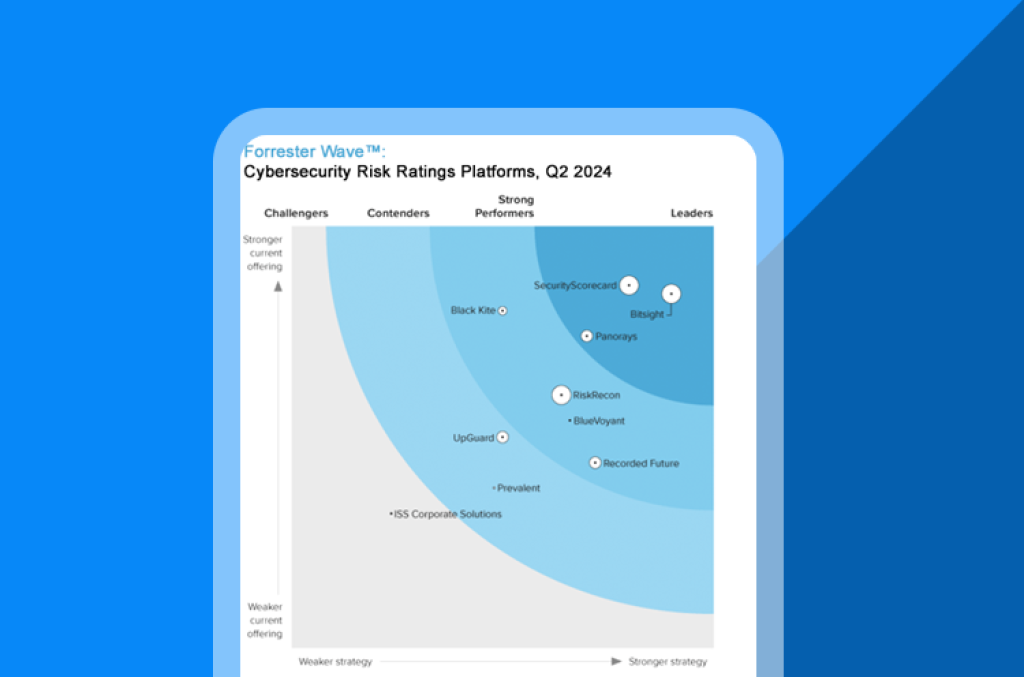
Forrester 2024 New Wave Cover

Cyber risk ratings platforms are proliferating—and not all are built equal. Forrester’s 25‑criterion evaluation reveals who’s delivering accuracy, scale, and vendor credibility. Use it to shortlist tools aligned to your risk appetite and control framework.

Ten Pillars of Supply Chain Resilience: Reduced Risk, Reduced Effort

10 pillars of a resilient third party risk management program cover
Watch your webinar
Cyber Threat Intelligence
Artificial Intelligence
Third Party Risk Management
Watch this webinar to hear Bitsight's Chris Poulin and Evan Tegethoff, with over 60 years of combined cybersecurity and risk expertise, reveal what "good" TPRM looks like in 2025.

Zero-Day Vulnerability

Cyberattacks frequently make headlines, but one threat increasingly challenging security leaders — especially following the Log4j and SolarWinds incidents — is zero-day vulnerabilities. What is a zero day vulnerability and why is it relevant for third-party risk management?

What is a zero-day vulnerability?

A zero day (also referred to as 0-day) is a software vulnerability either unknown to its developer, or known and without a patch to fix it. The name derives from the fact that developers or vendors have "zero days" to fix the flaw before it is actively exploited.

Until the vulnerability is mitigated, attackers can use it to compromise data or additional systems, including operating systems, web browsers, office applications, open-source components, hardware, firmware, or Internet of Things (IoT) devices.

Zero day: vulnerability vs. exploit vs. attack

The term is often used along with words like vulnerability, exploit, and attack, so it’s helpful to understand the difference:

  • Zero-day vulnerability: a software flaw that attackers discover before the vendor does. Because no patch exists yet, attacks exploiting it are likely to succeed.
  • Zero-day exploit: the code that allows attackers to leverage the vulnerable piece of software to compromise systems; exploits are usually sold on the dark web.
  • Zero-day attack: the use of a zero day exploit to disrupt, cause damage to, or steal data from a vulnerable system.

How to protect against zero-day attacks

Software is written by humans, and humans are fallible. Developers create software every day, but unbeknownst to them, it may contain vulnerabilities. This makes zero-day attacks inevitable, as attackers often spot those vulnerabilities before the developers detect and act on them.

So how can you minimize risk in your organization and across your digital supply chain?

Bitsight is the only third-party monitoring solution which offers Dark Web Intelligence for Supply Chains to detect early signs of real-world targeting and exposure across your vendor ecosystem beyond what static scores can reveal.

Basic zero day protection measures include:

  • Keeping all software and operating systems up to date, installing patches as soon as they become available. Security patches often cover newly identified vulnerabilities, and poor patching cadence has been proven to correlate with risk.
  • Enforcing security standards as part of your vendor risk assessments and due diligence process, and updating your requirements as needed after a zero day is discovered.
  • Performing continuous monitoring and reassessment of your vendors as opposed to point-in-time calendar evaluations.
  • Using a layered defense strategy, combining antivirus, firewall, and other security solutions, with security mechanisms like zero trust or MFA.
  • Educating users on cybersecurity best practices, especially amid flexible work arrangements, as many zero-day attacks capitalize on human error.

Organizations must establish a comprehensive and agile TPRM strategy that incorporates continuous monitoring, timely vendor risk assessments, and rapid response mechanisms. Effective integration of threat intelligence within TPRM frameworks allows organizations to swiftly identify potential third-party exposures and initiate immediate mitigation actions, thus significantly reducing the window of risk associated with zero-day vulnerabilities.

Collaboration and transparent communication with third-party vendors are essential. Establishing clear expectations for vendors to promptly report their vulnerability status and remediation plans helps organizations better manage exposure. Moreover, conducting regular scenario-based exercises with critical third-party vendors enhances preparedness and ensures that all stakeholders clearly understand their roles and responsibilities during a zero-day incident.

Steps to take if you are affected by a zero day

The first thing you need to do when a new zero day is reported is to assess the prevalence of the vulnerability in your organization and within your third-party digital supply chain. In other words, determine if your organization or your vendors are utilizing vulnerable versions of the software in question.

As part of your due diligence and ongoing reassessment processes, you need to make sure that your vendors are enforcing standards that keep your business safe. Should a zero-day vulnerability appear, you need to be able to promptly:

  •  Identify vulnerable third-party vendors in your supply chain
  •  Ask them how they are planning to react and mitigate the vulnerability
  •  Update your requirements and request additional assurances

To effectively manage these events, implement a centralized, streamlined third-party risk management (TPRM) process. This allows for efficient, scalable responses, avoiding cumbersome manual follow-ups with vendors via emails and spreadsheets.

5 Tips for remediating zero-day vulnerabilities

Follow these zero day remediation tips if you think your organization might be vulnerable to a newly discovered zero day.

1. Patch your systems

Vendors and makers usually act fast to issue a patch once the zero-day vulnerability is discovered. Install it as soon as it becomes available.

2. Assess risk exposure

Identify critical third-party vendors who might be vulnerable and check if your own organization is vulnerable.

3. Update your requirements

Request additional security assurances from critical third-party vendors and update your vendor contracts accordingly.

4. Strengthen your posture

If you are a vendor to other organizations, share an update of your security posture to let them know you already conducted mitigation efforts.

5. Track, report, and conclude

Vulnerability management includes identifying, analyzing, remediating, and reporting phases; make sure everything is documented.

Why are zero days relevant to TPRM?

Dealing with unpredictable zero-day vulnerabilities is one of the greatest challenges faced by today’s security teams. They can either affect the organization directly or indirectly, through its third-party vendors with access to the network.

Log4j is a recent reminder of the impact zero-day vulnerabilities can have in entire supply chains, after it was discovered that the vulnerability could allow attackers to seize control of nearly everything from industrial control systems to web servers and consumer electronics. Until the patch was released, every organization and vendor using the open source Apache logging library Log4j was vulnerable.

This is why vendor risk assessments and continuous monitoring of your vendors' security performance are the pillars of a third-party risk management program (TPRM).

How Bitsight facilitates zero day detection & response

Bitsight third-party risk management (TPRM) is an end-to-end solution that empowers you to accelerate vendor risk assessments, continuously monitor and uncover blind spots across your digital ecosystem, and take action on exposure swiftly and confidently.

Third party risk management

Bitsight’s third-party vulnerability detection and response capabilities allow you to stay ahead of zero days and major security events, by taking action on high-priority incidents at a moment’s notice. Teams rely on these capabilities to initiate vendor outreach and track responses to critical vulnerabilities through scalable templated questionnaires — with tailored exposure evidence — for more effective remediation. 

The ability to continuously monitor your vendors’ security posture will raise timely alerts when an indicator goes beyond your security standards. In addition, a comprehensive and categorized third-party inventory will make it easier to understand where to focus your attention when a zero day occurs.

When it comes to zero day response, the ability to rapidly create and distribute a simple questionnaire among your vendors to assess exposure and manage potential threats can make the difference between business as usual and business continuity issues.

If one of your vendors is vulnerable, you can immediately ask them for additional requirements and assurances, and easily track them. You can also update their category or change their classification (i.e. more or less critical, more or less impactful for the business).

With Bitsight Vulnerability Detection & Response you can:

  • Detect, manage, and mitigate emerging zero-day vulnerabilities in your vendor ecosystem with speed
  • Remediate risk more quickly and effectively with better prioritization of critical vendor response
  • Initiate and track vendor outreach at scale through built-in questionnaire capabilities
  • Confidently adhere to growing regulatory pressure with easy access to critical vulnerability data
  • Build stronger vendor relationships through timely and trusted collaboration

Threat intelligence 

The Bitsight platform leverages robust, data-driven threat intelligence and real-time monitoring, enabling organizations to rapidly detect emerging vulnerabilities within their vendor ecosystem. By proactively analyzing threat intelligence data, Bitsight allows security teams to predict potential exploitations and prioritize remediation efforts effectively, significantly reducing the risk associated with zero-day attacks.

Bitsight's threat intelligence also provides actionable insights into the security posture of vendors, highlighting specific weaknesses or unusual activity that could signal impending security incidents. This granular visibility helps organizations proactively address potential vulnerabilities before they become exploitable.

Attack surface analytics

In addition, Bitsight exposure management capabilities like Attack Surface Analytics enable you to gain continuous visibility into all of your assets – ports, endpoints, databases, applications, cloud instances, even shadow IT and remote offices – so when a vulnerability is discovered, you can act fast and drill down into the root causes of vulnerabilities.

Given this holistic view of the organization and its extended supply chain, teams can identify hidden risks and the systems or data that may be compromised if an attacker exploits a vulnerability threat.

With a complete workflow, when a new zero-day vulnerability affects your supply chain, you will be better equipped to limit the network impact and maintain control. Explore how Bitsight’s TPRM solution can help you grow and build trust across your ecosystem without worrying about expanded risk.

state of the underground cta cover

TRACE Report

State of the Underground 2025 — Research report

Ransomware, breach sharing, stealer logs, credentials, and cards. What has shifted and how to respond.

10 Pillars of a Resilient TPRM Program

TPRM 10 Pillars ebook
Get your guide
Third Party Risk Management
This eBook outlines a structured, scalable approach to managing third-party cyber risk at every phase of the vendor lifecycle.

Third-Party Monitoring

What is third-party monitoring?

In the field of cybersecurity, third-party monitoring is the practice of gathering and analyzing data on the security posture of vendors within an organization’s supply chain. By monitoring the security performance of third parties, organizations can better defend against cyber threats that originate in a vendor’s IT ecosystem.

What are third-party breaches?

A third-party breach occurs when attackers access a company’s IT systems by using credentials or sensitive information stolen from a vendor within the company’s supply chain.

What is dark web monitoring?

Dark web monitoring is the process of tracking activity, conversations, and transactions on sites on the dark web. This is where cybercriminals tend to congregate online as they plan attacks, share information, and buy and sell the tools of their trade. By surreptitiously monitoring and automatically extracting data from hundreds of thousands of sites, dark web monitoring solutions provide security teams with early warning of imminent threats and a better understanding of the tactics, techniques, and procedures (TTPs) threat actors may use in their attacks.

Understanding third-party risk management

Third-party risk management has become an essential component of security risk management. In recent years, many of the largest cybersecurity breaches originated not as an attack on the company itself, but on third-party vendors. By exploiting weaknesses in a vendor’s security controls, attackers can often gain access to credentials that enable them to easily access the IT environment of the target company to steal money and sensitive information, cause disruption, or damage the business.

Third-party risk management enables businesses to better understand the security posture of the vendors in their supply chain. By using third-party intelligence that highlights the security gaps and exploitable vulnerabilities in vendors' software, organizations can configure their own security controls more effectively, and help vendors identify and remediate threats more successfully.

Sources on the deep and dark web can provide a wealth of intelligence for supply chain monitoring initiatives. The dark web is where threat actors discuss methods, plan attacks and buy and sell tools and data. Cyber security monitoring of dark web forums, illicit marketplaces, and code repositories can provide security teams with automated alerts and in-depth understanding of the threats facing the company’s vendors.

For security teams looking to improve their third-party risk management program, Bitsight offers a third-party intelligence platform with the broadest intelligence collection capabilities in the industry.

Monitoring the dark web for third-party threats

The most effective techniques for mitigating supply-chain threats involve three essential activities.

Improving security hygiene

Enforcing strong password policies and ensuring that users change their passwords regularly can help to prevent attacks that start with third-party vendors.

Validating SaaS application security

By regularly testing both sanctioned SaaS applications and the unsanctioned SaaS programs that employees rely on, you can ensure that these third-party apps are secure.

Preempting attacks with dark web monitoring 

The dark web is where cyber criminals go to discuss plans, learn techniques, and buy the tools and data they need to carry out attacks. With a third-party intelligence solution, security teams can uncover the earliest indications of risk and preempt attacks. Dark web monitoring enables teams to identify threats at the earliest stages, extracting intelligence they can use to configure firewalls and trigger playbooks to recognize and block specific attacks.

Third-party monitoring with Bitsight

Bitsight's fully automated threat intelligence solution helps organizations fight cybercrime, detect phishing, prevent fraud, enhance online brand protection, and improve governance, risk and compliance efforts. Our timely and comprehensive cyber threat intelligence offerings provide early warning when your organization is targeted or when your systems are compromised. By discovering threats and breaches earlier, you can take swift action to mitigate attacks before they impact your business.

To protect your organization against third-party risk, we actively monitor activities across numerous channels and forums in the deep, dark, and clear web to identify attacks in the making. As a third-party monitoring solution, Bitsight can uncover the earliest indications of risk and threats targeting any vendor in your supply chain. Our solutions enable your security teams to share with vendors vital intelligence that can help to configure protections against imminent threats, mitigate attacks in progress, and improve their security posture. Our agile, automated, and contextual cyber threat intelligence also enables your security teams to adjust and refine your own defenses to block threats originating in your supply chain.

With Bitsight, your security teams can:

  • Expose threat actor activity in any language, format, or platform.
  • Preempt and block threats as they emerge, before they can be weaponized in an attack.
  • Integrate threat management into existing security solutions according to the unique attack surface, assets, and workflows of the organization.

Dark Web Intelligence for Supply Chains

Bitsight is the only third-party monitoring to include Dark Web Intelligence for Supply Chains, part of the Continuous Monitoring product, which delivers continuous visibility into threat activity across your vendors, suppliers, and partners. These features correlate dark web signals to help GRC and third-party risk teams detect, communicate, and remediate threats in partnership with security operations helping to unite the GRC and SOC with a single shared view of cyber data.

40 questions ebook cover

40 questions you should have in your vendor security assessment

With this ebook, we'll help you prioritize which vendors need the most attention with an in-depth security assessment – such as those with low security ratings, or critical vendors that maintain constant contact with your company’s systems.