5 Essential Tools for Supply Chain Risk Management

5 Tools for Supply Chain Risk Management
Written by Kim Johnson

While all areas of risk management involve blind spots, supply chain risk management might be the murkiest. To be effective in this field, risk professionals must account for risks from a wide variety of sources, from bad password management to geopolitical upheaval. Supply chain risks can be difficult to detect, unpredictable, and fast-moving.

Thankfully, technology companies have made the process of managing risk in the supply chain easier. These companies put big data, machine learning, and artificial intelligence to work to increase visibility for risk professionals, giving them the ability to more effectively monitor, prepare for, and mitigate risks within their supply chain.

Depending on the nature of their supply chains, professionals should consider adding at least a few of these supply chain risk management solutions to their toolbox.

5 Essential tools for supply chain risk management:

Please note that while we will be discussing a few different software products in this post, Bitsight does not necessarily endorse the use of these specific solutions.

1. Supply chain mapping solutions

One of the most important components of any supply chain risk management programs is an up-to-date map of supplier relationships. The more detail this map includes, the more insights risk professionals can draw from it to help monitor and mitigate supply chain risk.

For most companies, mapping tier 1 suppliers is relatively easy. However, true visibility requires knowing who supplies the suppliers. These maps can get very complex very quickly, and relying on humans alone to create and maintain them can lead to missed connections.

Technology companies have stepped in to solve this problem. Solutions from IBM and Achilles both promise to leverage artificial intelligence to help businesses map their global supply chains and produce automated insights about potential risks.

That’s all well and good for physical supply chains, but what about digital ones? After all, risks to technology vendors like cloud services providers and operations software companies can be just as costly as risks to physical suppliers. Bitsight Discover is a tool designed to help businesses map their digital supply chains using externally available data. This tool can be used to identify fourth- and fifth-tier connections and single points of failure that could introduce additional risk.

2. Environmental risk solutions

Artificial intelligence and big data are now being employed to help businesses predict and respond to weather events faster than ever before. These solutions use a combination of forecasting data, real-time updates on infrastructure status, historical data, and compliance factors to deliver risk insights that would not have been possible in the past.

One of these environmental supply chain risk management solutions is Riskpulse, which gives businesses the ability to track the environmental risks affecting shipments. These risks are quantified on a scale from 1-25 and continuously updated, giving risk professionals the power to predict in real time whether shipments along their supply chain will be delayed by bad weather.

3. Code verification solutions

Within a digital supply chain, one of the greatest risks is vulnerabilities introduced by third-party code that has been integrated within a proprietary system. This is exactly the kind of threat that caused a major data breach at Ticketmaster earlier this year.

Therefore, solutions like IBM AppScan and CA Veracode are an integral part of the supply chain risk management toolbox. All third-party code should be scanned for integrity before it’s allowed anywhere near internal systems or data.

4. Geopolitical risk solutions

With so many businesses relying on suppliers and providers on the other side of the world, it can be easy to overlook geopolitical risks to the supply chain.

However, risk professionals in the West can’t be expected to become experts in the complex political realities of China, India, or anywhere else for that matter. So, how can you know whether your critical partners overseas are at risk?

Believe it or not, technology helps in this arena as well. Tech companies like Geoquant aggregate data from social media, news outlets, and other sources, then analyze it using natural language processing and machine learning algorithms to provide near real-time indicators of political risk.

5. Vendor risk management solutions

Whether we’re talking about the physical or digital supply chains, cyber risk is a major consideration. So-called “celebrity” cybersecurity events like Heartbleed, Petya, and WannaCry can take down huge swaths of a business’s supply chain in less than a day, and these are just the threats that make the news. Every business is subject to cyber threats, and those who are unprepared to defend against them risk operational disruption, regulatory violations, and data breaches.

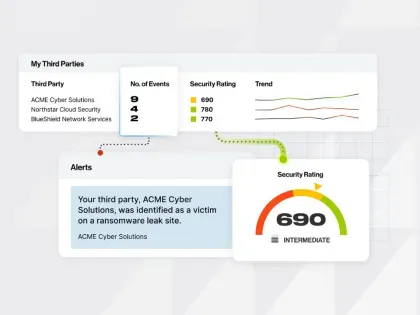
Bitsight Vendor Risk Management fits seamlessly into your current third-party risk management process and provides a customized approach to match your organization’s risk tolerance and program maturity. Risk management teams can combine workflow automation with objective data when evaluating third-party vendors to match both organizational and cybersecurity requirements. Combined with Bitsight Security Ratings that indicate the overall cybersecurity posture, Bitsight's VRM solution gives you the ability to continuously monitoring your vendors in order to validate vendor questionnaire responses with further objective evidence.

Armed with visibility into the cyber risk exposure of their suppliers, risk professionals can take the necessary steps to mitigate potential issues before they get out of hand.

Not every organization needs to use all solutions; however, some amount of continuous monitoring and advanced analytics is necessary to improve visibility into supply chain risk and prepare for the next big problem (no matter where it comes from).

5 Keys to Building a Scalable Vendor Risk Management Program CTA

Free guide: 5 Keys to Taking the Chaos Out of Vendor Risk Management

Streamline onboarding, automate assessments, and stay ahead of third-party threats—without burning out your team.

5 Questions to ask before buying a VRM tool

Finding the right vendor risk management (VRM) tool is a unique process for every organization, as needs and requirements vary across program maturity, industry, and company size. While most organizations seek to increase efficiency with automation capabilities, there are other things you need to consider when you explore the market.

These questions will help you choose the best supply chain risk management tool that will take your program to the next level.

1) Are there hidden costs?

There are low-priced vendor license packages in the market that require the purchase of additional service and maintenance to make them fully functional. This impacts both the initial investment and annual renewals.

You’re obviously looking for a good deal that adds value to your business without draining your budget. But when it comes to pricing, you need a transparent offering.

Pro Tip: Investigate whether the package includes everything you need for your vendor risk management program, from unlimited assessments to flexibility of configuration.

2) Can you configure the program without buying additional services?

On top of hidden costs, some packages offer solutions that require significant technical expertise to implement, customize, make changes, or integrate, leading to high dependency on the provider and frustration and low productivity of your team. Some implementations result unsuccessful due to the inflexibility of a heavily discounted, low usability package that fails to meet specific needs.

Pro Tip: Make sure you can configure your program to fit your needs without paying for additional services. From setting up your risk assessment workflow stages to configuring integrations and customizing your alerts, thresholds, reminders, and more.

3) What does customer support include?

A scalable, successful VRM program needs expertise in implementation to meet your organization's unique requirements. Implementation can take months without on-time support, lowering your ROI and jeopardizing your business.

Pro Tip: Look for a partner that offers extended support, promptly answers your questions and requests, and guides you with expert know-how through all the stages of your program, including onboarding, adoption, and continuous improvement. Extra points if they offer training and workshops!

4) What is the average implementation time?

If the previous questions led to the conclusion that you will have to purchase additional services or support, and this wasn’t detected in the initial scoping, implementation can quickly go over six months. Especially if you are looking to integrate your VRM tool with other core business apps, such as ticketing systems, GRC tools, or reporting solutions to pull and push vendor risk information from and to these apps.

Pro Tip: Seek for transparency in verbal and written communications around the offer and what it entails, with details on how long it would take to get your workflow up and running.

4) How secure is the platform?

Your risk assessment and overall vendor management process involves the exchange of confidential security documentation, such as questionnaires, certifications, internal controls, data retention policies, penetration tests, and third-party audits. Plus sensitive information about your standards, such as cybersecurity analytics, the data types you process/store, internal employee information, and what controls you have in place.

This data and all communication with your vendors need to be secured and properly safeguarded against unauthorized access.

Pro Tip: Ask about SSO, MFA, encryption, and any other security measures that ensure only you and your vendors have access to the assessment process and documents.

Next steps in choosing a supply chain management tool

Choose the package that satisfactorily answers all of the questions above. With Bitsight VRM, for instance, you’ll have full access to a fit-for-purpose VRM platform to set up a customized and automated workflow, plus a dedicated customer support manager to help you with implementation and tailoring your program to meet your needs. You will also be able to communicate with your managed vendors securely, anytime, and at no cost.

Security is guaranteed with SSL authentication and encryption, ensuring data integrity, confidentiality, and availability. A vendor needs to accept the invite and log in to Bitsight VRM to join an organization’s vendor list, and only the organization’s team and the vendor can see the questions, answers, artifacts, and communication history, with built-in access and permission management capabilities.

When it comes to support, Bitsight offers a dedicated customer success manager that responds to questions within one business day, as well as free access to integration engineers, a comprehensive implementation plan and workshops to ensure success, and additional support for vendors that need to fulfill requirements.

Are you ready to get your VRM program up and running? Download our ebook “5 Keys to Building a Scalable VRM Program”.

bitsight and the european supply chain battlefield

The Supply Chain Is a Cyber Battlefield—And Europe’s Under Fire

State-backed attackers are exploiting everything from open-source code to firmware tampering. The NIS2 directive signals a shift: supply chain security is national defense. Learn how to harden your organization’s position.