What is a cyber security plan?
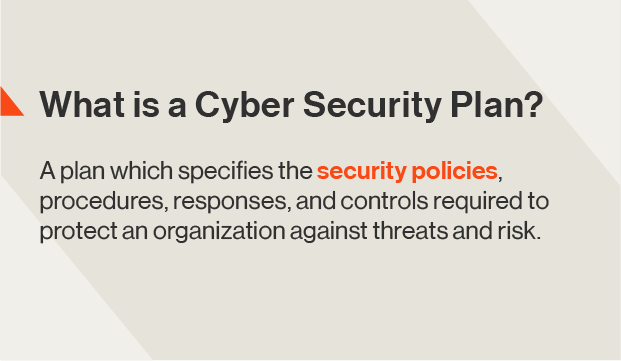
A cyber security plan specifies the security policies, procedures, and controls required to protect an organization against threats and risk. A cyber security plan can also outline the specific steps to take to respond to a breach.
Refining Your Cyber Security Plan with Data and Metrics
A cyber security plan is the centerpiece of any effort to defend against attacks and mitigate risk in IT environments. Cyber security plans cover the strategy, policy, procedures, and technologies your organization will rely on when seeking to heighten cyber risk management and implement successful security programs.
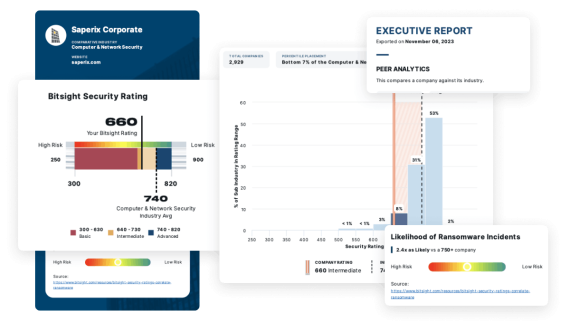
Data and metrics are critical to every cyber security plan. By providing greater visibility into the attack surface and measuring the effectiveness of security controls, data and metrics enable your security leaders to focus resources on addressing the largest areas of risk while benchmarking performance against competitors and peers.
Bitsight provides a suite of cyber security and risk management solutions that help organizations create, measure, and refine effective and efficient cyber security plans. With Bitsight, cyber security risk management teams have the objective, verifiable information they need to confidently make informed decisions and drive data-driven conversations about security and risk.
Developing a Data Breach Response Plan
Determining how an organization will respond to a data breach is an essential part of every cyber security plan. When a breach occurs, have a pre-established data breach response plan enables security leaders to take immediate action to minimize damage to data, reputation, and the bottom line without having to spend time defining ownership and responsibilities.
Data breach response plans are highly customized to the needs of each organization, but there are several tasks that must be included in this kind of cyber security plan for every business.
- What types of data constitute a data incident? This information is key to knowing when to trigger a data breach response plan. A breach including sensitive data most likely will require activating your incident response plan. Sensitive data may include customer information, company information, user credentials, intellectual property, or data on a vendor’s network. Depending on the type of data that is breached, you may be required to notify customers as part of your response plan.
- Who is responsible for what during a data breach?. Your data breach response plan should list the people responsible for stopping the breach and remediating damage. A legal team may need to weigh in if customers' protected information was involved. You may need the communications team to help with crisis management and public relations. The HR department may be required to help if employee information was involved. Responding to data breaches of a certain size will likely need to involve C-suite executives.
- How does the internal escalation process work?. When an employee discovers a potential breach, there must be a concrete plan for how that information gets escalated internally up the chain to different departments that is also agreed upon by everyone involved.
- How does the external escalation process work?. When should you get help from outside partners and what kind of help might you need? These external resources often include forensic investigation teams or legal resources.
Like every other part of a cyber security plan, a data breach response plan relies on superior metrics. When a breach is detected, Bitsight metrics can help identify where vulnerabilities are present in the network, helping to speed remediation. After remediation, Bitsight cyber risk monitoring tools can help to see if problems in systems have been truly addressed or if vulnerabilities are still present in your network.