Cyber Security Assessment: 4 Best Practices

Cyber security assessments are a critical part of managing third-party risk. While vendors are essential to helping a business grow and remain competitive, they also introduce certain levels of unwanted cyber risk. Regular security risk assessments can help to identify risk within the supply chain, allowing organizations to work with vendors to remediate it – or to choose an alternate vendor relationship.

Bitsight for Third-Party Risk Management allows security teams to go beyond point-in-time assessments to expose cyber risk in the supply chain in near-real time, helping to focus resources to achieve significant and measurable cyber risk reduction. Providing automated tools that continuously measure and monitor the security performance of vendors, Bitsight helps optimize third-party risk management programs without overextending your resources.

These four best practices are designed to help streamline the cybersecurity risk assessment process and achieve better risk reduction with Bitsight and beyond:

1. Choose Industry-Standard Methodologies

Establishing a robust third-party risk management strategy begins with the selection of appropriate assessment methodologies. The utilization of established frameworks like the NIST Cybersecurity Framework or the SANS Top 20 Critical Security Controls provides a comprehensive roadmap. These methodologies amalgamate industry best practices, standards, and exemplify cybersecurity policies, thereby offering a structured approach for mitigating cyber risks within third-party networks.

The NIST Cybersecurity Framework, for instance, operates as a blueprint encompassing five core functions: Identify, Protect, Detect, Respond, and Recover. Its adaptable nature allows organizations to tailor its implementation according to their specific risk profiles and requirements. Similarly, the SANS Top 20 Critical Security Controls present a prioritized set of actions that reflect the evolving threat landscape, serving as a benchmark for evaluating and improving an organization's security posture.

Adopting such industry-standard methodologies not only facilitates a uniform understanding of cybersecurity risks but also streamlines assessment processes. It enables a standardized language across the organization, fostering clearer communication regarding potential threats, vulnerabilities, and risk mitigation strategies.

2. Customize Assessments

While standardized methodologies provide a strong foundation, tailoring assessments to individual vendors' risk profiles and roles within the ecosystem is crucial. Not all vendors pose the same level of risk to an organization. Some may handle more sensitive data or have deeper integrations, necessitating more frequent and thorough evaluations.

By categorizing vendors into tiers based on their risk level and criticality to business operations, a more nuanced and targeted approach to assessments emerges. High-risk vendors demand more intensive scrutiny, involving deeper penetration testing, on-site assessments, and stringent security checks. Conversely, low-risk vendors may undergo less frequent and less exhaustive assessments, optimizing resource allocation without compromising security.

Customizing assessments also involves considering the specific industry regulations and compliance requirements each vendor must adhere to, ensuring alignment with sector-specific standards and obligations.

3. Establish Risk Thresholds

Setting clear risk thresholds is fundamental in quantifying and managing third-party risk effectively. Defining these thresholds enables organizations to benchmark vendors' security performance against predefined acceptable risk levels. It provides a tangible yardstick for measuring compliance and identifying deviations that demand immediate attention.

By establishing tiered risk thresholds aligned with the categorization of vendors, the risk management team gains a structured approach to prioritize remediation efforts. Alerts can be triggered when a vendor breaches or approaches the defined risk threshold, prompting timely action and facilitating swift risk mitigation strategies.

The establishment of risk thresholds also facilitates ongoing improvements by fostering a culture of continuous evaluation and enhancement within the third-party risk management framework.

4. Implement Continuous Monitoring

Complementing periodic assessments with continuous monitoring mechanisms fortifies an organization's resilience against evolving cyber threats. Point-in-time assessments, while valuable, provide only a snapshot of the security posture at a specific moment.

Continuous monitoring solutions like security ratings or automated monitoring tools furnish near-real-time insights into vendors' security postures. They offer continuous visibility into risk factors, enabling prompt identification of anomalies or deviations from predefined risk thresholds. This proactive approach empowers organizations to swiftly address emerging risks and vulnerabilities before they escalate into significant security breaches.

Additionally, continuous monitoring augments the credibility of vendors' self-assessments by providing corroborative, ongoing evaluations, ensuring ongoing compliance and adherence to security standards. This proactive stance contributes to a more agile and adaptive third-party risk management strategy, capable of responding promptly to dynamic cyber threats.

Assessing Cyber Security Risk with Bitsight

As the world’s leading Security Ratings service for third-party cyber security assessment, Bitsight enables organizations to improve risk management throughout the vendor lifecycle. Bitsight Security Ratings are a proven assessment tool, delivering a dynamic measurement of each vendor’s security posture based on objective and verifiable data. By continuously monitoring and assessing each vendor’s security performance, Bitsight helps risk managers make more strategic decisions about selecting and onboarding new vendors and working with existing vendors to mitigate risk.

Bitsight Security Ratings work much like credit ratings – they’re an objective, externally verifiable evaluation of an organization’s performance. Unlike point-in-time cyber security assessments that identify risk once or twice per year, Bitsight continuously measures security performance based on evidence of compromised systems, user behavior, security diligence, and data breaches. The result is a data-driven cyber risk rating issued daily that delivers an accurate assessment of the risk each vendor carries.

Bitsight Attack Surface Analytics for Cyber Security Assessments

In addition to third-party risk management, Bitsight Security Ratings provide cybersecurity visibility into an organization’s own security performance and its attack surface. While Bitsight Security Ratings provide an overall view of security performance, Bitsight Attack Surface Analytics deliver granular detail about the risks hidden across digital assets in the cloud, diverse geographies, subsidiaries, and in the remote workforce. With Bitsight Attack Surface Analytics, security teams can quickly validate their organization’s digital footprint, assess security posture, and reduce risk in increasingly complex IT ecosystems.

Improve visibility

Bitsight automatically inventories all the assets in a digital ecosystem. Outlining the location of each asset by cloud provider, geography, and business unit as well as any cyber risks that are associated with it.

Uncover shadow IT

Bitsight helps teams discover hidden assets and cloud instances that fall outside the control of the IT department. By identifying cloud services, servers spun up in the cloud, and other unknown assets that are attributed to the organization, Bitsight helps security teams assess the risk of these assets and bring them into alignment with corporate policies.

Identify concentrated risk

With Bitsight’s ecosystem-wide view of digital assets, security teams can assess cyber risk based on individual assets and visualize areas of excessive risk to prioritize remediation.

Why choose Bitsight?

An industry-leading solution

Bitsight is the world’s leading provider of cyber risk intelligence, transforming how security leaders manage and mitigate risk. Leveraging the most comprehensive external data and analytics, Bitsight empowers organizations to make confident, data-backed decisions and equips security and compliance teams from over 3,300 organizations across 70+ countries with the tools to proactively detect exposures and take immediate action to protect their enterprises and supply chains. Bitsight customers include 38% of Fortune 500 companies, 4 of the top 5 investment banks, and 180+ government agencies and quasi-governmental authorities, including U.S. and global financial regulators.

Extensive visibility

Bitsight operates one of the largest risk datasets in the world. Leveraging over 10 years of experience collecting, attributing, and assessing risk across millions of entities, we combine the power of AI with the curation of technical researchers to unlock an unparalleled view of your organization. Bitsight offers more complete visibility into important risk areas such as botnets, mobile apps, IoT systems, and more. Our cyber data collection and scanning capabilities include:

  • 40 million+ monitored entities
  • 540 billion+ cyber events in our data lake
  • 4 billion+ routable IP addresses 
  • 500 million+ domains monitored
  • 400 billion+ events ingested daily
  • 12+ months of historical data

Superior analytics

Bitsight offers a full analytics suite that addresses the challenges of peer comparison, digital risk exposure, and future performance.

Ratings validation

Bitsight is the only rating solution with third-party validation of correlation to breach from AIR Worldwide and IHS Markit.

Quantifiable outcomes

Bitsight drives proven ROI with significant operational efficiency and risk reduction outcomes.

Prioritization of risk vectors

Bitsight incorporates the criticality of risk vectors in to calculation of Security Ratings, highlighting risk in a more diversified way to ensure the most critical assets and vulnerabilities are ranked higher. 

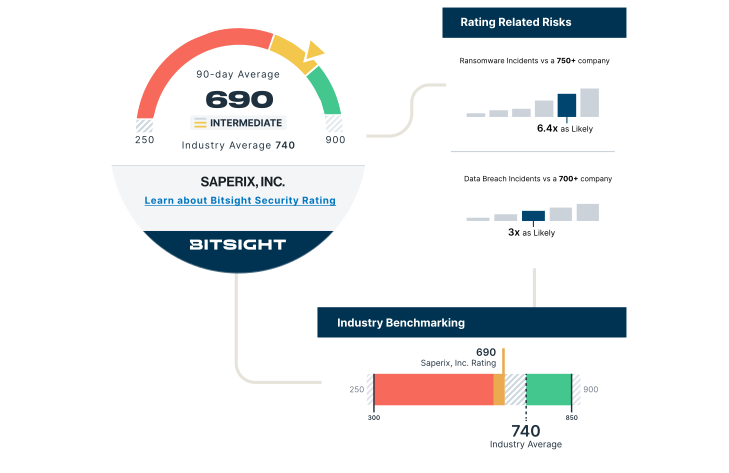
Security Ratings example: rating score and benchmarking

Free cyber risk report

Get a report built on your actual external infrastructure—domains, IPs, certificates, cloud assets—and benchmarked against real-world breach data.

Cyber Liability

Understanding cyber liability

Cyber risk remains a critical concern for business leaders. As the landscape of cyber threats continues to evolve, leaders are justifiably concerned about mitigating risk within their digital ecosystem and ensuring supply chain security. Too often, however, risk is conceived only in technical terms rather than business terms, making it harder for executives and Board members to understand the real business impact and financial liability of cyber risk.

Security and risk leaders can remedy this by quantifying the financial impact of risk. By presenting security performance findings as a form of cyber liability, security leaders can ensure the organization’s stakeholders have the data and business context they need to make more informed decisions about security investments.

Bitsight can help. As the world’s leading Security Ratings platform, Bitsight offers a suite of solutions for performing cyber risk assessments and implementing cyber risk best practices. Bitsight’s Financial Quantification for Enterprise Cyber Risk provides quick and easy calculation and assessment of financial exposure based on risk within an organization’s digital ecosystem.

Why cyber liability matters

C-suite executives and the Board of any organization are responsible for deciding on funding for a wide range of competing priorities. While they may be keenly interested in matters of cyber security, these stakeholders may not automatically understand the financial impact of programs proposed by security teams. By framing their security recommendations and program proposals in terms of financial impact and cyber liability, security leaders can help non-technical stakeholders assess cybersecurity programs in the same way they evaluate other initiatives that receive funding.

By quantifying cyber risk in financial terms, security leaders are essentially analyzing risk in the same way that organizations look at other types of risk – how it will impact the financial health of the organization. Discussing risk in terms of cyber liability puts the intangible nature of risk into a tangible business context. As a result, stakeholders can better understand the potential financial exposure related to risk vectors and impact scenarios.

Armed with these data-driven insights, the organization’s decision-makers can then allocate resources and prioritize remediation efforts based on the financial impact of funding – or not funding – a program to address a specific gap in security performance.

Determining the financial impact of cyber liability has traditionally been a complex and time-consuming process. This task is made even more challenging by the ever-changing nature of an organization’s cybersecurity posture. To provide stakeholders with the data on cyber liability, security leaders need tools that can streamline and automate the process of financial quantification. That’s where Bitsight can help.

Reporting on cyber liability with Bitsight

The Bitsight Security Ratings platform transforms how companies manage third-party risk and cyber security performance. Bitsight’s industry-leading Security Ratings provide the data and insight for a suite of solutions that help organizations improve security posture, mitigate risk in their supply chain, and streamline operational risk management.

Bitsight Financial Quantification for Enterprise Cyber Risk enables security leaders to quickly and easily assess the potential financial exposure of individual vulnerabilities as well as overall cyber risk. Providing cyber liability insights in a language that makes sense to the business, Bitsight provides a framework that leads to meaningful conversations with the Board and other stakeholders on the impact of security and risk decisions.

Features of Bitsight’s Financial Quantification

Powered by Kovrr’s proven models developed for the cyber insurance industry, Bitsight’s solution offers an efficient and easily repeatable way to quantify risk in terms of cyber liability and financial impact.

Built on Bitsight Security Ratings

Bitsight’s Financial Quantification solution complements visibility provided by Bitsight Security Ratings and can be managed without any additional headache for security program managers. Using multiple data sets from real-world cyber events, and details of an organization’s digital footprint and security posture, Bitsight simulates the financial impact of risk using multiple cyber scenarios. These detailed metrics reveal the financial cost of cyber liability. They also allow security teams to focus efforts on improving programs and controls to maximize the impact of risk reduction programs.

On-demand analytics

In contrast to consulting engagements or internal projects, Bitsight’s Financial Quantification is available on-demand. Bitsight makes it easy to drill down into cyber event examples to quickly and efficiently diagnose the underlying causes that can impact financial exposure.

Game-changing insights

With a financially quantified view of the organization’s cyber risk and cyber liability, Board members and non-technical stakeholders can better understand cyber risk in financial terms and evaluate the ROI of cybersecurity programs. Leaders can make decisions based on an understanding of which programs will most significantly reduce risk and cyber exposure. Built-in reports enable security leaders to share insights with Board and executive stakeholders quickly and easily, using cyber security risk assessment report samples and templates or creating custom reports on the fly.

Why choose Bitsight?

An industry-leading solution

Bitsight is the world’s leading provider of cyber risk intelligence, transforming how security leaders manage and mitigate risk. Leveraging the most comprehensive external data and analytics, Bitsight empowers organizations to make confident, data-backed decisions and equips security and compliance teams from over 3,300 organizations across 70+ countries with the tools to proactively detect exposures and take immediate action to protect their enterprises and supply chains. Bitsight customers include 38% of Fortune 500 companies, 4 of the top 5 investment banks, and 180+ government agencies and quasi-governmental authorities, including U.S. and global financial regulators.

Extensive visibility

Bitsight operates one of the largest risk datasets in the world. Leveraging over 10 years of experience collecting, attributing, and assessing risk across millions of entities, we combine the power of AI with the curation of technical researchers to unlock an unparalleled view of your organization. Bitsight offers more complete visibility into important risk areas such as botnets, mobile apps, IoT systems, and more. Our cyber data collection and scanning capabilities include:

  • 40 million+ monitored entities
  • 540 billion+ cyber events in our data lake
  • 4 billion+ routable IP addresses 
  • 500 million+ domains monitored
  • 400 billion+ events ingested daily
  • 12+ months of historical data

Superior analytics

Bitsight offers a full analytics suite that addresses the challenges of peer comparison, digital risk exposure, and future performance.

Ratings validation

Bitsight is the only rating solution with third-party validation of correlation to breach from AIR Worldwide and IHS Markit.

Quantifiable outcomes

Bitsight drives proven ROI with significant operational efficiency and risk reduction outcomes.

Prioritization of risk vectors

Bitsight incorporates the criticality of risk vectors in to calculation of Security Ratings, highlighting risk in a more diversified way to ensure the most critical assets and vulnerabilities are ranked higher. 

U.S. Election Security, Part 1: Voting Systems Vendors’ Cybersecurity is Improving

Election Security_Part One_Infographic Cover
Get your data sheet
Cybersecurity
Significant concerns have been raised about the security of the 2020 United States election. In response to Congressional Testimony in January of 2020 surrounding election security, Bitsight began tracking the security performance of a number of Voting Systems Vendors representative of the U.S. election infrastructure market. Discover what we found.

Security Visibility

Improving security visibility with Bitsight

As your digital footprint expands, it becomes increasingly difficult to maintain complete security visibility. From cloud storage instances to on-premise hardware to remote/home offices, your attack surface is growing larger and more complex by the day. Even with a well-designed security tech stack, you might not have a clear view of everything you need to see. To get a clear picture of your ecosystem and where cyber risk is concentrated, you need solutions that can deliver greater visibility to identify the gaps in your security programs and controls.

Bitsight for Security Performance Management provides superior security visibility so you can understand the true size of your attack surface and maximize the effectiveness of your efforts to protect it. Through continuous monitoring, broad measurement, and detailed cybersecurity planning and forecasting, Bitsight lets you make data-driven decisions on how to better manage your resources and protect your organization.

The challenge of security visibility in today’s IT environment

Your IT environment and expanding digital footprint present a number of critical challenges to security visibility.

  • Your digital footprint today is probably much larger than you think, thanks to old URLs, forgotten domains, rogue IP addresses, and assets acquired through acquisition. If you’re unsure what assets you have, visibility into their security is impossible.
  • SIEM monitoring tools are logging everything that happens your network. However, your SIEM solution can’t deliver the context required to understand the raw data it’s producing or show you how events are impacting your security performance.
  • On-premise assets sit safely behind a firewall. But if they’re not patched, updated, and properly configured, it’s hard to know if they’re open to known vulnerabilities.
  • Endpoints – and the people who use them – are the weakest links in your security chain. Endpoints are easy targets for malware and botnet infections, and file sharing among users represents significant risk exposure. To protect your organization, you need visibility into what endpoints are sending to and receiving from the Internet.
  • Firewalls are a primary line of defense. But because so much business happens outside the network today, you need greater visibility about everything that’s entering and leaving the network.
  • Subsidiaries and geos may have digital assets that aren’t in your official inventory. And without adequate visibility, it’s hard to know what data is out there and whether it safe.
  • Shadow IT is always a concern. It’s easy today for users to spin up new cloud instances or deploy web services, and many of these may not be on your radar.
  • Cloud services offer tremendous value but they expand your attack surface as well. Without expansive security visibility, it’s hard to know whether each cloud instance is properly configured, managed, and monitored.
  • Remote offices present a growing challenge, as residential IP’s account for over 90% of all observed malware infections and compromised systems. To protect your far-flung workforce, you need greater visibility into your extended network.

Bitsight for Security Performance Management

Bitsight for Security Performance Management shines a light on the gaps in security visibility. From giving critical context to SIEM to spotting control gaps in firewalls and identifying risky remote office networks, Bitsight delivers greater visibility into your attack surface so you can take action to remediate issues.

Bitsight for Security Performance Management provides a continuous, risk-based, outcome-driven approach to cybersecurity. By measuring, monitoring, and managing program performance, Bitsight helps to drive accountability for security outcomes while enabling security leaders to make data-driven decisions on how to better manage resources and cybersecurity budgets.

Bitsight solutions are based on Bitsight Security Ratings, a dynamic and data-driven measurement of an organization’s cybersecurity performance. Bitsight’s daily ratings range from 250 to 900, with the current achievable range being 300-820 – higher ratings indicate more effective security practices – and are derived from objective, verifiable information. Bitsight ratings enhance security visibility by measuring security performance on a wide range of data points related to compromised systems, security diligence, user behavior, and publicly disclosed data breaches.

How Bitsight increases security visibility

With Bitsight for Security Performance Management, security leaders and risk managers can:

  • Continuously assess cybersecurity posture. Bitsight provides actionable insight into the performance of security programs.
  • Identify areas of unknown risk. Through continuous monitoring, Bitsight identifies gaps in cybersecurity controls such as misconfigurations, unpatched systems, and vulnerabilities across the digital ecosystem.
  • Prioritize remediation. With Bitsight ratings, security teams can identify the areas of highest risk and focus cybersecurity investments and resources on remediation.
  • Discover risk on remote networks. Security teams can easily gain visibility into cyber risk created by unmonitored and insecure home and remote office networks.
  • Benchmark security performance. Security reporting makes it easy to compare the organization’s cybersecurity posture to other organizations and to uncover gaps based on a comparison of risk factors within a peer group.
  • Enhance collaboration and accountability among teams. Bitsight enables entire organizations to unite around a common language and an objective set of KPIs for quantifying performance.

Why choose Bitsight?

An industry-leading solution

Bitsight is the world’s leading provider of cyber risk intelligence, transforming how security leaders manage and mitigate risk. Leveraging the most comprehensive external data and analytics, Bitsight empowers organizations to make confident, data-backed decisions and equips security and compliance teams from over 3,300 organizations across 70+ countries with the tools to proactively detect exposures and take immediate action to protect their enterprises and supply chains.

Bitsight customers include 38% of Fortune 500 companies, 4 of the top 5 investment banks, and 180+ government agencies and quasi-governmental authorities, including U.S. and global financial regulators.

Extensive visibility

Bitsight operates one of the largest risk datasets in the world. Leveraging over 10 years of experience collecting, attributing, and assessing risk across millions of entities, we combine the power of AI with the curation of technical researchers to unlock an unparalleled view of your organization. Bitsight offers more complete visibility into important risk areas such as botnets, mobile apps, IoT systems, and more. Our cyber data collection and scanning capabilities include:

  • 40 million+ monitored entities
  • 540 billion+ cyber events in our data lake
  • 4 billion+ routable IP addresses 
  • 500 million+ domains monitored
  • 400 billion+ events ingested daily
  • 12+ months of historical data

Superior analytics

Bitsight offers a full analytics suite that addresses the challenges of peer comparison, digital risk exposure, and future performance.

Ratings validation

Bitsight is the only rating solution with third-party validation of correlation to breach from AIR Worldwide and IHS Markit.

Quantifiable outcomes

Bitsight drives proven ROI with significant operational efficiency and risk reduction outcomes.

Prioritization of risk vectors

Bitsight incorporates the criticality of risk vectors in to calculation of Security Ratings, highlighting risk in a more diversified way to ensure the most critical assets and vulnerabilities are ranked higher.

FAQs: What is security visibility?

Security Posture

What is Security Posture?

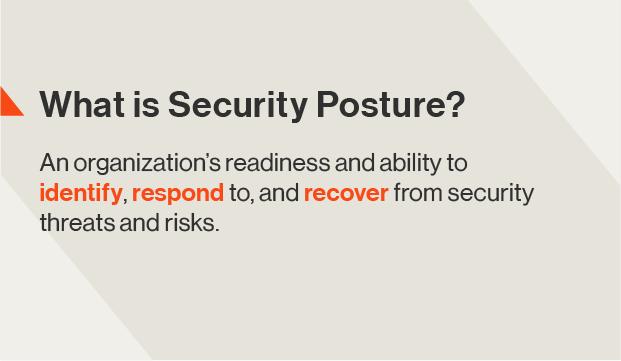
An organization’s security posture is its readiness and ability to identify, respond to and recover from security threats and risks. All cybersecurity efforts and investments contribute to security posture, meaning security strategy, policy, technology, procedures, controls, training, and security reporting are all part of building a strong security posture.

What is Security Posture?

The True Meaning and Value of Security Posture

As cybercrime continues to proliferate, organizations are heavily focused on their security posture and attack surface – meaning their readiness to stop threats, mitigate risk, and respond to cyberattacks. A strong security posture reduces the likelihood of a successful breach, while a weak posture suggests the presence of vulnerabilities that could be easily exploited by attackers.

What really makes security posture meaningful, however, is the that it targets cybersecurity budgets and focuses cybersecurity planning. With a clear understanding of your security posture, your security and risk leaders can identify areas of acceptable risk and direct resources to remediate them. Conversations with executives and board members can be driven by security posture, meaning security leaders have more clarity in the data and metrics they offer to support findings and justify efforts.

Identifying and managing security posture requires clear visibility into the risks and threats within your digital ecosystem as well as the performance of security programs designed to address them. For companies seeking tools to heighten and maintain proper security posture, Bitsight provides solutions built on the world’s leading Security Ratings platform.

The Challenge of Security Visibility in Today’s IT Environment

Your organization’s security posture refers to your ability to recognize threats and your readiness to mitigate them or recover from an attack. Everything related to security helps to determine your security posture, meaning your security plans, strategies, policies, technologies, controls, communications, and training all play a role in shaping security posture. Your organization’s ability to maintain a strong cybersecurity posture through regular maintenance and program care even when I direct threat isn’t necessarily present is also indicative of strong security posture.

Because security posture is a dynamic and evolving measurement of your approach to security, managing it requires tools that deliver continuous metrics about the risk in your digital systems and the performance of your security programs.

There are two principal challenges in accurately assessing security posture.

  • Attack surfaces for most organizations are rapidly changing and expanding. From acquisitions and new technologies to vendor ecosystems and the burgeoning use of remote/home networks, your attack surface is likely growing quickly and in ways that make it difficult to identify and evaluate risk. Greater security visibility is essential to understanding the threats you face and how well you’re positioned to address them.
  • Many metrics for identifying risk and analyzing performance are often unhelpful to shaping security posture, meaning they are too vague, lacking in context, or not continuously available. Finding solutions that can deliver a continuous stream of targeted metrics in context is critical to evaluating the performance of security programs and shaping efforts to improve them.

The Bitsight Security Ratings platform provides metrics and tools that allow security teams to easily overcome these obstacles and effectively measure and manage their organization’s security posture.

Bitsight Security Ratings

Security ratings are a data-driven, objective, and dynamic measurement of an organization’s security performance. Thousands of organizations around the world use Bitsight Security Ratings to improve their security posture and make more effective security decisions.

Security ratings provide a comprehensive, outside-in view of a company’s overall cybersecurity posture. Similar to the way credit ratings are developed, Bitsight ratings are based on externally observable data rather than information provided by organizations themselves. Bitsight Security Ratings range from 250 to 900, with the current achievable range being 300-820 – higher ratings indicate a stronger overall security posture, while lower ratings suggest an organization is more susceptible to breach.

Bitsight’s ratings are based on observable data from hundreds of sources categorized into four areas: compromised systems, security diligence, user behavior, and publicly disclosed breaches. Bitsight weights this data according to the risk it presents to the organization and uses a proprietary algorithm to calculate a rating.

Bitsight is the only security ratings service whose ratings have been independently verified to correlate to breach. Companies with a Bitsight security rating of 500 or lower, for instance, are nearly five times more likely to have a breach than those with a rating of 700 or higher. If organizations believe their rating should be different, Bitsight also has an established way to handle any ratings dispute and provide organizations a fair way to make a logical case for a rating change if they believe their security posture isn’t accurately represented.

Enhancing Security Posture with Bitsight

Bitsight Security Ratings can play a pivotal role in assessing security posture by evaluating risk within an organization’s IT environment as well as its vendor ecosystem. Bitsight offers a suite of solutions to monitor, measure, and manage risk.

  • Bitsight for Security Performance Management. Bitsight helps security and risk leaders take a risk-based, outcome-driven approach to managing their organization’s cybersecurity performance. Through broad measurement, continuous monitoring, and detailed planning forecasting, security teams can measurably reduce cyber risk and improve security posture. Bitsight directly demonstrates how cybersecurity investments are affecting security posture and helps teams allocate limited resources to the most critical areas of cyber risk. Bitsight also facilitates data-driven conversations about cybersecurity among key stakeholders.
  • Bitsight for Third-Party Risk Management. While traditional methods for managing third-party risk rely on manual, subjective, and periodic assessments, Bitsight provides continuous monitoring to help risk teams constantly quantify cyber risk of third parties and scale third-party risk management programs. Bitsight ratings provide a simple snapshot of a vendor’s security posture and allows risk teams to track vendor performance over time. Bitsight ratings also make it easier to collaborate with vendors and develop remediation plans or set security performance standards in contracts.
  • Bitsight Attack Surface Analytics. Bitsight provides clear visibility into your expanding attack surface. A centralized dashboard shows the location of your digital assets broken down by cloud provider, geography, and business unit, along with the corresponding cyber risk. With Bitsight, security teams can discover hidden assets and shadow IT, or visualize areas of concentrated risk to determine the highest areas of exposure and prioritize remediation efforts.
  • Bitsight Security Ratings for Benchmarking. Bitsight enables organizations to benchmark security performance and posture against industry peers and competitors. With Bitsight, you can measure the impact of risk mitigation efforts and provide meaningful cyber risk reports to executives and boards.

Why Manage Security Posture with Bitsight?

An industry-leading solution

Bitsight is the world’s leading provider of cyber risk intelligence, transforming how security leaders manage and mitigate risk. Leveraging the most comprehensive external data and analytics, Bitsight empowers organizations to make confident, data-backed decisions and equips security and compliance teams from over 3,300 organizations across 70+ countries with the tools to proactively detect exposures and take immediate action to protect their enterprises and supply chains.

Bitsight customers include 38% of Fortune 500 companies, 4 of the top 5 investment banks, and 180+ government agencies and quasi-governmental authorities, including U.S. and global financial regulators.

Extensive visibility

Bitsight operates one of the largest risk datasets in the world. Leveraging over 10 years of experience collecting, attributing, and assessing risk across millions of entities, we combine the power of AI with the curation of technical researchers to unlock an unparalleled view of your organization. Bitsight offers more complete visibility into important risk areas such as botnets, mobile apps, IoT systems, and more. Our cyber data collection and scanning capabilities include:

  • 40 million+ monitored entities
  • 540 billion+ cyber events in our data lake
  • 4 billion+ routable IP addresses 
  • 500 million+ domains monitored
  • 400 billion+ events ingested daily
  • 12+ months of historical data

Superior analytics

Bitsight offers a full analytics suite that addresses the challenges of peer comparison, digital risk exposure, and future performance.

Ratings validation

Bitsight is the only rating solution with third-party validation of correlation to breach from AIR Worldwide and IHS Markit.

Quantifiable outcomes

Bitsight drives proven ROI with significant operational efficiency and risk reduction outcomes.

Prioritization of risk vectors

Bitsight incorporates the criticality of risk vectors in to calculation of Security Ratings, highlighting risk in a more diversified way to ensure the most critical assets and vulnerabilities are ranked higher.

FAQs: What is the Meaning of Security Posture?

Get a personalized demo to find out how Bitsight can help you solve your most pressing security and risk challenges.
  • We will use your information to communicate with you about this contact form and other solutions and related resources that may be of interest to you. You may unsubscribe at any time. For more information, please see our Privacy Policy.

Information Security Requirements

Complying With Evolving Information Security Requirements

As organizations battle sustained attacks from a constantly changing landscape of cybersecurity threats, breaches have become the new “business normal.” The catastrophic impact of breaches has caused regulators around the world to create new and more strict information security requirements, guidelines, and frameworks to better protect organizations and the customer and employee data they possess. To ensure compliance in this increasingly complex regulatory environment, you need solutions that deliver greater visibility into your organization’s security performance and the risk present in your digital ecosystem and third-party network.

Bitsight can help. Bitsight Security Ratings provide a comprehensive view of your organization’s security posture as well as in-depth analysis of your security performance across multiple risk vectors, including areas mandatory to monitor in compliance with security standards. With Bitsight, you can more easily comply with evolving information security requirements and better protect your organization from a broad range of cyber risk.

What’s Driving Changes In Information Security Requirements?

As security breaches continue to plague businesses in every vertical, there is a growing list of organizations that have sustained record fines for failing to comply with information security requirements or legislation.

Cyber security regulations today tend to center on two key themes: establishing senior-level accountability for dealing with security and risk strategically, and ensuring that companies have effective information security controls in place to monitor security performance of their organizations and their third-party vendors.

The intention of new legislation is to highlight the need for executives and boards to ensure their organizations have adopted measures that safeguard the personal data of customers from misuse or unauthorized access to the best of their ability. These new cybersecurity standards also recognize the risk present in supply chains and emphasize the importance of effective third-party risk management processes that require vendor networks to adhere to the same standards as your own internal cybersecurity program.

In this ever-changing universe of regulation, organizations that focus solely on compliance will always be several steps behind the curve. To manage compliance and risk mandates effectively, organizations must develop cybersecurity policy that’s focused on continuously monitoring, measuring, and mitigating risk instead of waiting for risks to present themselves.

That’s where Bitsight excels.

Bitsight Security Ratings

Bitsight Security Ratings help organizations navigate complex information security requirements by providing continuous visibility into their own security performance and the security posture of their third-party vendors.

Bitsight’s industry-leading Security Ratings provide an objective measurement of security performance based on external and verifiable information about compromised systems, user behavior, security diligence, and data breaches. Issued daily, Bitsight ratings help you flag risk in your own digital ecosystem and expose risk within your supply chain. Armed with Bitsight Security Ratings, you can more easily identify risk, focus resources on remediation, and facilitate data-driven conversations with senior leadership and your board.

Bitsight Security Ratings provide both an overall quantitative measure of security posture as well as significant detail on performance across 25 risk vectors. Ratings range from 250 to 900, with the current achievable range being 300-820. The higher the rating, the more effective the rated company is at implementing good security practices.

Bitsight ratings have been independently verified to correlate to data breaches, providing greater insight into vulnerabilities within your own IT environment and that of your third parties. For example, companies with a Bitsight Security Rating of 500 or lower are nearly 5 times more likely to experience a breach than companies with a rating of 700 or higher.

Managing Information Security Requirements With Bitsight

Bitsight offers solutions built on its security rating platform that simplify the task of complying with information security requirements, including:

  • Bitsight for Security Performance Management helps your security and risk leaders take a risk-based, outcome-driven approach to managing your organization’s cybersecurity programs. Through broad measurement, continuous monitoring, attack surface analytics, and detailed planning and forecasting, Bitsight helps you to measure the effectiveness of your investments in cybersecurity protection and take action to improve your security programs immediately and over time.
  • Bitsight for Third-Party Risk Management continuously assesses the security posture of every vendor integrated with your network. With Bitsight, your third-party risk management teams can continuously monitor and quantify the risk posed by vendor relationships to measurably reduce cyber risk in your third-party ecosystem. With daily, objective, and quantitative ratings, you can track each vendor’s security performance over time, receiving alerts when their security posture weakens or if a critical vendor is experiencing a potential risk.

Why choose Bitsight?

An industry-leading solution

Bitsight is the world’s leading provider of cyber risk intelligence, transforming how security leaders manage and mitigate risk. Leveraging the most comprehensive external data and analytics, Bitsight empowers organizations to make confident, data-backed decisions and equips security and compliance teams from over 3,300 organizations across 70+ countries with the tools to proactively detect exposures and take immediate action to protect their enterprises and supply chains. Bitsight customers include 38% of Fortune 500 companies, 4 of the top 5 investment banks, and 180+ government agencies and quasi-governmental authorities, including U.S. and global financial regulators.

Extensive visibility

Bitsight operates one of the largest risk datasets in the world. Leveraging over 10 years of experience collecting, attributing, and assessing risk across millions of entities, we combine the power of AI with the curation of technical researchers to unlock an unparalleled view of your organization. Bitsight offers more complete visibility into important risk areas such as botnets, mobile apps, IoT systems, and more. Our cyber data collection and scanning capabilities include:

  • 40 million+ monitored entities
  • 540 billion+ cyber events in our data lake
  • 4 billion+ routable IP addresses 
  • 500 million+ domains monitored
  • 400 billion+ events ingested daily
  • 12+ months of historical data

Superior analytics

Bitsight offers a full analytics suite that addresses the challenges of peer comparison, digital risk exposure, and future performance.

Ratings validation

Bitsight is the only rating solution with third-party validation of correlation to breach from AIR Worldwide and IHS Markit.

Quantifiable outcomes

Bitsight drives proven ROI with significant operational efficiency and risk reduction outcomes.

Prioritization of risk vectors

Bitsight incorporates the criticality of risk vectors in to calculation of Security Ratings, highlighting risk in a more diversified way to ensure the most critical assets and vulnerabilities are ranked higher. 

FAQs: What Are Information Security Requirements?

Get a personalized demo to find out how Bitsight can help you solve your most pressing security and risk challenges.
  • We will use your information to communicate with you about this contact form and other solutions and related resources that may be of interest to you. You may unsubscribe at any time. For more information, please see our Privacy Policy.

Information Security Controls

What are Information Security Controls?

Information security controls are measures that help reduce risk, such as breaches, data theft, and unauthorized changes to digital information. Information security controls may include hardware devices, software, policies, plans, and procedures that improve an organization’s security performance.

Mitigating Risk With Information Security Controls

Information security controls are the building blocks of cybersecurity and risk management. Designed to block threats and minimize risk, information security controls may be any policies, techniques, solutions, technologies, or actions that can protect an organization’s information from the threat of breach or compromise.

The challenge when deploying information security controls is determining which controls will be most effective at protecting the organization and its data. Security teams must have clear visibility of the assets to be protected, the threats and risks facing the organization, and how well existing cybersecurity controls have performed. Yet, with a constantly expanding attack surface that now encompasses cloud and remote environments, it’s increasingly difficult for security teams to achieve this visibility.

Bitsight for Security Performance Management delivers the clarity that security and risk leaders need to identify risk throughout the digital ecosystem and select the information security controls that will best serve to mitigate it. Bitsight also enables security leaders to continuously monitor the performance of information security controls set in place, and to identify the investments and actions that will yield the highest measurable impact over time.

Types Of Information Security Controls

Information security controls fall into three categories.

  • Preventive controls are intended to help prevent cybersecurity incidents.
  • Detective controls are designed to recognize attacks while they are in progress and provide alerts to security teams.
  • Corrective controls come into play after a security incident and are intended to help minimize damage from an attack or to restore business systems.

There are variety of information security controls within each category. Some controls are technical – for example, deploying antivirus software, configuring firewalls, patching vulnerabilities, or requiring multi-factor authentication. Administrative controls include establishing cybersecurity policy, conducting security awareness education, or developing incident response plans. Physical controls may include things like video surveillance, locks on server cabinets, and ID cards required to gain physical access to a property.

In a successful security program, information security controls must be aligned with type and severity of risk present in the organization’s attack surface. To implement the most effective controls, security teams need insight into the areas of highest risk and how well existing controls have performed to mitigate that risk. That’s where Bitsight can help.

Bitsight For Security Performance Management

Bitsight for Security Performance Management provides security and risk leaders with tools to continuously monitor, measure, and communicate the efficacy of the information security controls they have chosen to secure valuable assets from risk in their digital ecosystem.

Using Bitsight Security Ratings, security professionals can efficiently allocate their limited resources to build out and support the most effective controls and protect the most critical areas from cyber risk. Bitsight combines broad measurement, continuous monitoring, and detailed planning and forecasting to better assess and manage the performance of cybersecurity programs and information security controls.

Bitsight for Security Performance Management comprises a suite of solutions that include:

  • Attack Surface Analytics that deliver greater visibility to assess risk exposure throughout a digital ecosystem.
  • Executive Reporting that helps security leaders effectively communicate key metrics and answers critical cybersecurity questions for senior leadership and board members.
  • Benchmarking capabilities that establish baseline metrics, measure performance against industry peers, and enables actionable cybersecurity forensics.
  • Internal Assessments that reveal how an organization’s security posture is viewed by others.
  • Peer Analytics that provide an in-depth analysis of how an organization’s security performance compares to a meaningful set of peers.
  • Forecasting capabilities that project future security ratings based on a given course of action.
  • NIST & ISO Framework Mapping that maps an organization’s results to industry-standard cybersecurity frameworks.

Benefits of Bitsight’s Suite of Solutions

With Bitsight for Security Performance Management, organizations can:

  • Gain visibility into cyber risk across all digital assets on premises, in the cloud, in remote/home offices, and across geographies and subsidiaries.
  • Identify gaps in information security controls and cybersecurity programs.
  • Prioritize remediation efforts and security initiatives based on cybersecurity and cloud security metrics that highlight levels of risk, instead of trying to tackle every little risk at once.
  • Quantify the effectiveness and impact of investments in security programs to help company decision makers make meaningful, quick decisions.
  • Make informed choices surrounding the effectiveness of security controls, tools, technologies, and people.

Why Manage Security Performance With Bitsight?

An industry-leading solution

Bitsight is the world’s leading provider of cyber risk intelligence, transforming how security leaders manage and mitigate risk. Leveraging the most comprehensive external data and analytics, Bitsight empowers organizations to make confident, data-backed decisions and equips security and compliance teams from over 3,300 organizations across 70+ countries with the tools to proactively detect exposures and take immediate action to protect their enterprises and supply chains. Bitsight customers include 38% of Fortune 500 companies, 4 of the top 5 investment banks, and 180+ government agencies and quasi-governmental authorities, including U.S. and global financial regulators.

Extensive visibility

Bitsight operates one of the largest risk datasets in the world. Leveraging over 10 years of experience collecting, attributing, and assessing risk across millions of entities, we combine the power of AI with the curation of technical researchers to unlock an unparalleled view of your organization. Bitsight offers more complete visibility into important risk areas such as botnets, mobile apps, IoT systems, and more. Our cyber data collection and scanning capabilities include:

  • 40 million+ monitored entities
  • 540 billion+ cyber events in our data lake
  • 4 billion+ routable IP addresses 
  • 500 million+ domains monitored
  • 400 billion+ events ingested daily
  • 12+ months of historical data

Superior analytics

Bitsight offers a full analytics suite that addresses the challenges of peer comparison, digital risk exposure, and future performance.

Ratings validation

Bitsight is the only rating solution with third-party validation of correlation to breach from AIR Worldwide and IHS Markit.

Quantifiable outcomes

Bitsight drives proven ROI with significant operational efficiency and risk reduction outcomes.

Prioritization of risk vectors

Bitsight incorporates the criticality of risk vectors in to calculation of Security Ratings, highlighting risk in a more diversified way to ensure the most critical assets and vulnerabilities are ranked higher.

FAQs: What Are Information Security Controls?

Security Ratings example: rating score and benchmarking

Free cyber risk report

Get a report built on your actual external infrastructure—domains, IPs, certificates, cloud assets—and benchmarked against real-world breach data.

Cybersecurity Planning

Vendor Due Diligence and Cybersecurity Planning

Performing vendor due diligence is a critical part of cybersecurity planning. As you consider bringing on new partners, suppliers, or third-party vendors, it’s essential to address the inherent risks to which they may expose your network. Cyber risk must be a key area of vendor due diligence, since vendors increasingly have access to corporate networks and sensitive data.

As the average number of vendors continues to grow for most businesses, the time and cost of effective due diligence can easily overwhelm vendor risk management teams. According to Gartner, 60% of organizations now work with more than 1,000 third-party vendors, including partners, sub-contractors, and suppliers1. To keep up with the cybersecurity planning needs of the organization, third-party risk managers need solutions that automate processes to reduce risk across their third-party networks while accelerating proper due diligence.

Bitsight can help. Bitsight for Third-Party Risk Management provides continually updated security ratings based on publicly available cybersecurity data. These cybersecurity ratings simplify due diligence and reduce the time and cost required to assess and onboard new vendors. With Bitsight, you can simplify cybersecurity planning with solutions that help to focus resources, enable more informed decision-making, and reduce risk across your vendor portfolio.

A Vendor Due Diligence Checklist

As you work to onboard third parties, this checklist of information can help to make the most complete and thorough evaluation of the risk each vendor represents.

  • Basic company information. This information is designed to ensure the company is legitimate and licensed to do business in your area. You’ll want to collect articles of incorporation, business licenses, and proof of location such as photographs or an on-site visit. Depending on the vendor’s proposed relationship to your network data, you’ll also want an overview of the company structure, bios of executives and board members, and references from credible sources.
  • Financial information. Because you want to work with vendors who can provide value over time, you want to make sure each company is financially solvent and keeping up with financial requirements. Helpful information here includes tax documents, balance sheets, as well as details of loans and liabilities, major assets, and compensation structure.
  • Political and reputational risk. When vendors run into political or reputational troubles, their scandals can quickly become your scandals. Vendors with access to sensitive company information or systems will need special scrutiny. Be sure to check the organization against key watch lists and global sanctions lists, and to check key personnel against lists of politically exposed persons and law enforcement lists. Identify the vendor’s risk-related internal policies and procedures, and review litigation history of the company.
  • Cyber risk. Because data breaches that originate with third parties are increasingly common and expensive, assessing third-party cyber risk is paramount. Bitsight Security Ratings provide an objective view of a vendor’s risk and can verify the data presented in traditional cyber risk assessment questionnaires. To identify cyber risk, you may also run penetration tests and security awareness tests, review cybersecurity reports on history of data breaches, and traditionally perform a site visit to assess physical cybersecurity. A Bitsight Discover map can help to manage risk by continuously monitoring business connections to identify areas of concentrated cyber risk.
  • Operational risk. Any operational risks within a third-party organization could negatively affect your own company. It’s helpful to review a vendor’s business continuity plan and disaster preparedness plan. You may also want to review employee turnover rates, lawsuits, and other indicators of toxic culture.

As you are performing the tasks in this checklist, Bitsight for Third-Party Risk Management can provide external key insights and metrics that make due diligence and cybersecurity planning faster, more cost-efficient, and more accurate.

1https://www.gartner.com/smarterwithgartner/a-better-way-to-manage-third-party-risk/

Bitsight for Third-Party Risk Management

Bitsight for Third-Party Risk Management provides automated tools to continuously measure and monitor the security performance of vendors without strictly relying on a vendor’s self-reported cybersecurity data. In contrast to manual processes like yearly questionnaires, Bitsight’s solution lets you perform due diligence and onboard vendors with much greater speed and accuracy. Through continuous monitoring, Bitsight provides a clear picture of where risk specifically lives in you third-party network, allowing you to work with vendors to pinpoint risks and remediate vulnerabilities to achieve measurable cyber risk reduction.

With Bitsight for Third-Party Risk Management, you can:

  • Continuously monitor vendors throughout the entire lifecycle, starting even before the contract is signed. No matter the size of your third-party landscape, you can perform due diligence and communicate technical details while making data-driven decisions based on the risk levels for each vendor, and where risks specifically live in each vendor’s network. Bitsight delivers near real-time updates on changes to vendor security ratings or risk vector grades.
  • Improve the performance of your vendor portfolio. Bitsight provides security visibility into risk across your portfolio as a whole, in addition to each individual vendor. With a clear picture of cyber risk aligned to your risk tolerance, you can prioritize resources to efficiently drive risk reduction.
  • Increase operational efficiency. Bitsight helps reduce the time and cost it takes to onboard vendors while making your third-party risk program more scalable. Data-based tiering recommendations, workflow integrations, and risk vector breakdowns help to identify areas of known risk. Bitsight Security Ratings can help tailor reassessments to minimize cost and time while focusing resources where they are most needed.

Security Ratings Aid Cybersecurity Planning

Bitsight for Third-Party Risk Management and other Bitsight solutions rely on metrics provided by Bitsight Security Ratings. As a data-driven and dynamic measurement of an organization’s cybersecurity performance, Bitsight Security Ratings provide insight into a vendor’s cybersecurity posture and help identify areas of risk. Ratings are calculated using a proprietary algorithm that analyzes and classifies externally observable data. Ratings range from 250 to 900, with the current achievable range being 300-820 – higher the rating, the more effective the company is in managing their security programs. Bitsight ratings are generated based on four classes of data – security diligence, user behavior, compromised systems, and publicly disclosed data breaches. Using more than 120 data sources, Bitsight Security Ratings are updated daily and allow organizations to proactively identify, quantify, and manage cyber risk in their vendor ecosystem.

Why choose Bitsight?

An industry-leading solution

Bitsight is the world’s leading provider of cyber risk intelligence, transforming how security leaders manage and mitigate risk. Leveraging the most comprehensive external data and analytics, Bitsight empowers organizations to make confident, data-backed decisions and equips security and compliance teams from over 3,300 organizations across 70+ countries with the tools to proactively detect exposures and take immediate action to protect their enterprises and supply chains.

Bitsight customers include 38% of Fortune 500 companies, 4 of the top 5 investment banks, and 180+ government agencies and quasi-governmental authorities, including U.S. and global financial regulators.

Extensive visibility

Bitsight operates one of the largest risk datasets in the world. Leveraging over 10 years of experience collecting, attributing, and assessing risk across millions of entities, we combine the power of AI with the curation of technical researchers to unlock an unparalleled view of your organization. Bitsight offers more complete visibility into important risk areas such as botnets, mobile apps, IoT systems, and more. Our cyber data collection and scanning capabilities include:

  • 40 million+ monitored entities
  • 540 billion+ cyber events in our data lake
  • 4 billion+ routable IP addresses 
  • 500 million+ domains monitored
  • 400 billion+ events ingested daily
  • 12+ months of historical data

Superior analytics

Bitsight offers a full analytics suite that addresses the challenges of peer comparison, digital risk exposure, and future performance.

Ratings validation

Bitsight is the only rating solution with third-party validation of correlation to breach from AIR Worldwide and IHS Markit.

Quantifiable outcomes

Bitsight drives proven ROI with significant operational efficiency and risk reduction outcomes.

Prioritization of risk vectors

Bitsight incorporates the criticality of risk vectors in to calculation of Security Ratings, highlighting risk in a more diversified way to ensure the most critical assets and vulnerabilities are ranked higher.

FAQs: What is Cybersecurity Planning for Vendor Management?

Cybersecurity Controls

How effective are your cybersecurity controls?

On the surface, building effective security management programs is fairly straightforward: security teams must identify risks and threats, and implement cybersecurity controls to prevent or minimize them.

In practice, however, the task of managing cybersecurity controls is far more complex. Organizations often lack visibility into their attack surfaces and the expansive and variety of risks they face. Determining which controls to use and how to configure them is a continual challenge. Controls must be continually monitored, measured, and reconfigured to respond to an ever-evolving threat landscape.

Bitsight can help. By relying on Bitsight’s industry-leading Security Ratings and a comprehensive suite of technologies for managing risk, security teams and organizations can deploy cybersecurity controls with greater confidence and using less resources.

Choosing the right security controls

One of the greatest challenges for security teams is knowing which cybersecurity controls to implement. Following several critical cybersecurity best practices can help to ensure you deploy the best mix of physical, operational, and management controls.

  1. Know what you’re protecting. The first priority for any security leader is to understand the data they’re required to protect. Knowing which data is most valuable, where it exists, and who has access to it can help to determine the information security controls required to protect it.
  2. Prioritize controls based on data sensitivity. Security managers must strictly prioritize efforts to maximize the effectiveness of constrained or shrinking security budgets. Ranking sensitive data, like employee or customer financial or personal information, as high priority can help to decide where to focus efforts and resources first.
  3. Engage senior executives and the board. Boards and senior leadership are increasingly taking a more active role in oversight of cybersecurity and establishment of cybersecurity standards. Success of any cybersecurity program – and the controls required to support it – will depend in part on receiving buy-in and budget from senior leadership. Superior reporting capabilities can facilitate this effort immensely.
  4. Know your environment. Deciding which policies, products, and cybersecurity controls will best serve your needs requires a thorough understanding of your IT environment. Complete visibility into your attack surface and digital ecosystem is critical – including what cloud services, shadow IT, and vendor networks are connected to your data, as well as where remote/home network connections are present.
  5. Engage the workforce. Employees are one of the weakest links in your cybersecurity efforts. Understanding their needs and behavior, and providing the proper cybersecurity training and required actions in their contracts are great cybersecurity controls to require to help protect against human error and shadow IT.

Managing cybersecurity controls with Bitsight

Bitsight Security Ratings provide the insight you need to seamlessly identify and measure cyber risk – and deploy the cybersecurity controls to address it. Bitsight Security Ratings are an external, data-backed measurement of an organization’s security performance. With an outside-in approach that’s similar to credit ratings, Bitsight continuously measures security performance based on objective, verifiable data that is connected to an organization’s likelihood of experiencing a data breach. From evidence of compromised systems and data breaches to information on security diligence and user behavior, Bitsight analyzes vast amounts of externally observable data to generate daily security ratings for organizations and their vendors.

With help from Bitsight, you can easily identify risk, determine which cybersecurity controls are necessary to prevent it, and measure the effectiveness of controls over time.

Bitsight’s comprehensive solutions

Bitsight Security Ratings are the foundation for a suite of solutions that can help you follow best practices for implementing cybersecurity controls.

  • Bitsight for Security Performance Management offers a risk-based, outcome-driven approach to managing performance of cybersecurity controls and programs. With Bitsight as your cyber security assessment tool, you can use broad measurement, continuous monitoring, and detailed planning and forecasting to measurably reduce cyber risk.
  • Bitsight Attack Surface Analytics provides visibility into your complete digital ecosystem and the risks associated with each asset in your attack surface. Bitsight helps you discover hidden assets and cloud instances, visualize areas of disproportionate risk, and implement the appropriate security controls to remediate them.
  • Bitsight Security Ratings for Benchmarking offers an effective way to monitor your cybersecurity posture and benchmark your performance against competitors and peers. With Bitsight, you can measure the impact of your cybersecurity controls and risk mitigation efforts, and report on progress and results more clearly and effectively.
  • Bitsight for Third-Party Risk Management exposes risk in your supply chain to help you prioritize resources and achieve significant and measurable cyber risk reduction. Bitsight offers insight into where exactly the riskiest issues impacting your vendors live in your network landscape, and helps to ensure they’re complying with cyber security regulations like PCI security standards. Ultimately, Bitsight helps to optimize your third-party risk management program with the resources you have today.

Why choose Bitsight?

An industry-leading solution

Bitsight is the world’s leading provider of cyber risk intelligence, transforming how security leaders manage and mitigate risk. Leveraging the most comprehensive external data and analytics, Bitsight empowers organizations to make confident, data-backed decisions and equips security and compliance teams from over 3,300 organizations across 70+ countries with the tools to proactively detect exposures and take immediate action to protect their enterprises and supply chains.

Bitsight customers include 38% of Fortune 500 companies, 4 of the top 5 investment banks, and 180+ government agencies and quasi-governmental authorities, including U.S. and global financial regulators.

Extensive visibility

Bitsight operates one of the largest risk datasets in the world. Leveraging over 10 years of experience collecting, attributing, and assessing risk across millions of entities, we combine the power of AI with the curation of technical researchers to unlock an unparalleled view of your organization. Bitsight offers more complete visibility into important risk areas such as botnets, mobile apps, IoT systems, and more. Our cyber data collection and scanning capabilities include:

  • 40 million+ monitored entities
  • 540 billion+ cyber events in our data lake
  • 4 billion+ routable IP addresses 
  • 500 million+ domains monitored
  • 400 billion+ events ingested daily
  • 12+ months of historical data

Superior analytics

Bitsight offers a full analytics suite that addresses the challenges of peer comparison, digital risk exposure, and future performance.

Ratings validation

Bitsight is the only rating solution with third-party validation of correlation to breach from AIR Worldwide and IHS Markit.

Quantifiable outcomes

Bitsight drives proven ROI with significant operational efficiency and risk reduction outcomes.

Prioritization of risk vectors

Bitsight incorporates the criticality of risk vectors in to calculation of Security Ratings, highlighting risk in a more diversified way to ensure the most critical assets and vulnerabilities are ranked higher.

FAQs: What are cybersecurity controls?

Cybersecurity Best Practices

Transforming Our Cybersecurity Best Practices

It’s a time of immense change for security leaders. Even before the pandemic sent companies scrambling to make their networks for an at-home workforce, along with other business disruptions, security teams faced significant challenges. Threats and security risks have been constantly growing in volume and sophistication. The number of breaches continues to rise, despite close adherence to cybersecurity best practices. Security leaders are under increasing scrutiny from boards and executives who want more ROI for their security investments. Yet, teams often have difficulty measuring the effectiveness of security efforts and risk reduction programs.

In these volatile times – when security leaders face pressure to deliver results faster and with less resources – it’s no longer possible to rely on traditional cybersecurity best practices. As they examine their security programs and implement changes, organizations need new strategies, methods, and solutions that can deliver measurable results with less effort and fewer resources.

Bitsight can help. As the world’s leading security ratings service, Bitsight provides a suite of solutions that enable security teams to follow new cybersecurity best practices for improving security posture and managing risk more effectively.

Four Best Practices for Cybersecurity

In this evolving cybersecurity climate, there are several cybersecurity best practices that are essential to delivering results on shrinking budgets.

  • Measure impact, not just accomplishment. When tracking cyber risk metrics, security leaders too often focus on accomplishments rather than the impact of their programs on the business. For example, tracking and reporting on the number of network penetrations prevented in a given month is helpful for evaluating security performance or informing cybersecurity policy, but it’s not enough. Security leaders should include how well programs are aligned with business objectives and what the real value of security programs are to the bottom line when they are measuring program effectiveness.
  • Manage the expanding attack surface. The traditional network perimeter has disappeared. As more employees work from home or remote locations, the organization’s attack surface is rapidly expanding. Security teams must quickly move to get visibility into this new digital ecosystem to uncover shadow IT, inventory old URLs or domains, understand third-party risk, and remediate risk exposure of home networks. It’s only with accurate and comprehensive visibility into the entire attack surface that security teams can start adapting cybersecurity best practices for this “new normal.”
  • Focus on risk rather than threats. Traditional security programs have viewed the world as a threat landscape. This perspective led to significant investments in technologies and tools without a clear sense of how they would benefit the business. In a world where digital ecosystems include cloud services, remote networks, and vast numbers of vendors, a focus on risk offers a more proactive approach to security. By focusing on identifying risk and implementing controls to mitigate it over focuses on individual network vulnerabilities, security leaders can generate actionable and proactive plans and deliver more meaningful KPIs to track the impact of security programs.
  • Optimize for cost and efficiency. As their budgets shrink, security leaders can accomplish more through automation. Rather than managing third-party risk with manual security compliance questionnaires, for example, risk teams can automate third-party onboarding and security assessment with tools for continuously monitoring the security posture of thousands of vendors. Automated tools for vulnerability assessment and attack surface monitoring can help security teams spot the gaps in controls and make asset inventories more complete.

Bitsight: Technology for Cybersecurity Best Practices

Bitsight transforms how companies manage security and risk by providing objective, verifiable, and actionable security ratings. As security teams establish new cybersecurity best practices, Bitsight’s technology delivers the visibility, metrics, and automation to improve security posture and manage risk more effectively.

Bitsight has revolutionized cybersecurity with a data-driven, outside-in approach to security ratings. Bitsight continuously measures the security performance of thousands of organizations to generate daily ratings that reveal how effective a company’s cybersecurity processes are, and how risky they are to work with as a business. Bitsight Security Ratings are calculated using a proprietary algorithm to continuously analyze vast amounts of external security data. By monitoring information on compromised systems, security diligence, user behavior, and data breaches, Bitsight can accurately measure the security performance of organizations and their vendors.

With Bitsight Security Ratings and Bitsight’s suite of security solutions, organizations have the tools they need to measure performance, visualize attack surfaces, identify risk, and automate processes for greater effectiveness and cost-efficiency.

Solutions for Cybersecurity Best Practices

Bitsight offers a suite of technologies that leverage Security Ratings to help organizations better manage risk and improve security performance.

  • Bitsight for Third-Party Risk Management automates and simplifies the task of identifying and managing risk in vendor relationships. With Bitsight, security teams can easily identify cyber risk within their supply chain with data that corresponds to potential security incidents. Bitsight helps to automate third-party security assessments and validate the information a vendor is providing, as well as ensure that vendors are following cybersecurity best practices such as complying with PCI security standards.
  • Bitsight for Security Performance Management provides the tools for tracking and improving security program performance over time. Using Bitsight Security Ratings, this Bitsight solution offers continuous monitoring to provide visibility into an expanding digital footprint and identify gaps in security programs. Armed with actionable metrics, security teams can better prioritize remediation efforts and quantify the impact of security investments.
  • Bitsight Attack Surface Analytics lets security teams continuously discover and segment the assets, devices, and applications within a growing digital footprint. Through a centralized dashboard, security leaders can view and secure digital assets, discover shadow IT, and visualize areas of concentrated risk.
  • Bitsight Security Ratings for Benchmarking helps organizations assess and contextualize their security posture by benchmarking performance against industry peers and competitors. Bitsight helps to measure the impact of risk mitigation efforts and lets security leaders report progress and results to executives and boards more effectively.

Why choose Bitsight?

An industry-leading solution

Bitsight is the world’s leading provider of cyber risk intelligence, transforming how security leaders manage and mitigate risk. Leveraging the most comprehensive external data and analytics, Bitsight empowers organizations to make confident, data-backed decisions and equips security and compliance teams from over 3,300 organizations across 70+ countries with the tools to proactively detect exposures and take immediate action to protect their enterprises and supply chains. Bitsight customers include 38% of Fortune 500 companies, 4 of the top 5 investment banks, and 180+ government agencies and quasi-governmental authorities, including U.S. and global financial regulators.

Extensive visibility

Bitsight operates one of the largest risk datasets in the world. Leveraging over 10 years of experience collecting, attributing, and assessing risk across millions of entities, we combine the power of AI with the curation of technical researchers to unlock an unparalleled view of your organization. Bitsight offers more complete visibility into important risk areas such as botnets, mobile apps, IoT systems, and more. Our cyber data collection and scanning capabilities include:

  • 40 million+ monitored entities
  • 540 billion+ cyber events in our data lake
  • 4 billion+ routable IP addresses 
  • 500 million+ domains monitored
  • 400 billion+ events ingested daily
  • 12+ months of historical data

Superior analytics

Bitsight offers a full analytics suite that addresses the challenges of peer comparison, digital risk exposure, and future performance.

Ratings validation

Bitsight is the only rating solution with third-party validation of correlation to breach from AIR Worldwide and IHS Markit.

Quantifiable outcomes

Bitsight drives proven ROI with significant operational efficiency and risk reduction outcomes.

Prioritization of risk vectors

Bitsight incorporates the criticality of risk vectors in to calculation of Security Ratings, highlighting risk in a more diversified way to ensure the most critical assets and vulnerabilities are ranked higher. 

FAQs: What are Cybersecurity Best Practices?

Get a personalized demo to find out how Bitsight can help you solve your most pressing security and risk challenges.
  • We will use your information to communicate with you about this contact form and other solutions and related resources that may be of interest to you. You may unsubscribe at any time. For more information, please see our Privacy Policy.