A 2025 Guide to Cyber Threat Intelligence Platforms Based on Industry

Cyber threat intelligence (CTI) doesn’t look the same across industries. A manufacturer’s concerns about protecting operational technology and supply chains are very different from a bank’s need to detect fraud or a hospital’s priority to keep patient care systems running without interruption. Each sector has its own mix of risks, compliance requirements, and adversaries to watch — and the right CTI solution should reflect that.

What are the top CTI providers across industries?

According to Bitsight’s State of Cyber Risk and Exposure 2025 report, while 85% of companies use attack surface or exposure-management tools, only 17% can map threats and contextualize multiple risk factors in real time. That context is what separates comprehensive CTI from simple threat feeds. Amongst CTI platforms, Bitsight stands out as being recognized for combining exposure management, third-party risk monitoring, and cyber threat intelligence into a single platform. This article breaks down the most pressing CTI challenges facing manufacturing, financial services, technology, and healthcare organizations, and highlights which vendors address those needs most effectively. 

What unique CTI challenges face the manufacturing industry?

Manufacturing organizations face some of the steepest and most complex CTI challenges. In its 2025 State of the Underground report, Bitsight TRACE identified the manufacturing sector as the most targeted industry for the third consecutive year. Environments typically include both IT and OT systems, often with legacy, proprietary, or poorly documented components. They’re highly interconnected (supply chains, IoT, physical machinery), which magnifies the attack surface. Downtime is extraordinarily costly; safety is often at stake if systems are disrupted or manipulated. Also, intellectual property theft, counterfeit component risks, and disruptions in the supply chain are real threats. 

In another blog, we discussed the risks of legacy Operational Technology (OT) that is often outdated and left insecure. We saw during the pandemic how damaging interruptions to the supply chain can be. Supply chains are massive and thus have a larger threat landscape. 

Specific challenges and needs for manufacturing:

  • Bridging the IT/OT gap: obtaining intelligence that understands OT-relevant threats (malware targeting ICS, firmware risks, etc.), and contextualizing intelligence for non-standard devices. 
  • Legacy and proprietary systems: many factory environments use old or custom hardware and software that are less well monitored, patched, or instrumented.
  • Supply chain vulnerabilities: both upstream components and downstream dependencies. Threats may come via suppliers, parts, subcontractors, or via counterfeit or compromised hardware/software.
  • Real-time detection and low latency: because a slow response can halt production, cause physical damage or safety issues.
  • Physical safety, regulatory and compliance constraints: any CTI must recognize that failure in OT can affect life/safety or could violate regulation.

What unique CTI challenges are facing financial institutions?

Financial institutions operate under heavy regulatory oversight, deal with extremely high-value assets, are frequent targets of threat actors (both state-sponsored and criminal), and must protect customer data and trust. Bitsight found that compromised credit cards for sale rose nearly 20% in the past year, due exclusively to a surge in US cards. The speed with which fraud, theft, and data exfiltration can occur means that threat intelligence must support not only prevention but fast detection, comprehensive visibility, and robust incident response.

Specific challenges and needs for financial institutions:

  • Real-time fraud, phishing, credential compromise, and account takeover threats.
  • Regulatory compliance: e.g. GDPR, PCI-DSS, SOX, FFIEC, and other regional financial regulators. CTI must support audit trails, evidence, attribution.
  • Threat actor/adversary profiling: knowledge of tactics, techniques, and procedures (TTPs) used by financial crime groups, APTs, ransomware operators who frequently target the financial sector.
  • Dark web/underground economy monitoring (e.g. stolen data, breaches, leaked credentials).
  • Integration with threat feeds, SIEM/SOAR tools, transaction monitoring, fraud detection systems.

What unique CTI challenges are found in tech enterprises?

Tech enterprises tend to move quickly, push updates frequently, own large attack surfaces, and also both create and consume many third-party components themselves. They also often need to defend their brand, their developer ecosystem, and their infrastructure globally. The threat landscape includes supply chain attacks, zero-day vulnerabilities, code repos, and intellectual property/software theft. In a report by Bitsight, most “hidden pillars” (organizations that are critical to global supply chain) of the global supply chain are in the tech sector and therefore more susceptible to cyber risk. 

Specific challenges and needs for tech enterprises:

  • Frequent deployments, continuous integration/continuous delivery (CI/CD), so vulnerabilities may be introduced often; need fast detection, scanning, and early intelligence about zero-day/emerging threats.
  • Open source/dependency risk: malicious packages, compromised libraries, vulnerabilities in widely used frameworks.
  • Cloud infrastructure exposure, API vulnerabilities, misconfigurations.
  • Brand monitoring: e.g. impersonation, typosquatting, malware distribution channels, attacks on developer tools/pipelines.
  • Global scope: multi-region infrastructure, global threat actors, supply chain components from diverse geographies.

What unique CTI challenges face healthcare organizations?

Healthcare combines sensitive data (PHI – Protected Health Information), strict privacy regulations, critical operations, third-party dependencies, and often constrained budgets and specialized legacy systems. Attacks on healthcare are increasing, and any downtime or disruption has high stakes. As of 2024, the cost of a healthcare data breach was $9.77 million. Cyber threat intelligence providers like Bitsight provide comprehensive intelligence and AI-powered automation so that healthcare organizations can get ahead of cyber attacks. 

Specific challenges and needs for healthcare:

  • Protecting sensitive patient data under HIPAA (in the US) or equivalents elsewhere; secure handling, logging, breach detection.
  • Legacy medical devices and OT/embedded devices that may lack modern security controls, are hard to patch.
  • Regulatory oversight, requirements for audit, traceability, incident reporting.
  • Business continuity/availability: systems must remain up even under attack; downtime has direct human impact.
  • Insider risk, and third-party vendor risk (device manufacturers, cloud partners, outsourced services).
  • Threat intelligence that understands threats specific to healthcare.

Which platforms offer industry-specific cyber threat intelligence coverage?

When searching for platforms that provide industry-specific cyber threat intelligence coverage, it's essential to focus on those with robust sector-specific capabilities designed for industries like manufacturing, finance, healthcare, or technology. While many cyber threat intelligence platforms offer general threat intelligence features, only a few excel in delivering tailored solutions. Among these, Bitsight is prominent for integrating exposure management, third-party risk monitoring, and cyber threat intelligence into a cohesive platform. It assesses over 65,000 vendors daily and provides AI-driven mapping to security framework requirements critical for regulated sectors. Bitsight's industry-specific cyber threat intelligence coverage includes third-party risk and exposure management across various industries.

  • Bitsight offers exposure and third-party risk management across industries, with features like External Attack Surface Management, attack surface visibility, vendor network expansion (~40% growth in its vendor network) and supports mapping to framework requirements relevant to many regulated industries.
  • Recorded Future has strong coverage across finance, healthcare, and manufacturing. Frost Radar named them a leader in CTI, with a broad global footprint, use cases in supply chain and manufacturing verticals.
  • Other vendors such as Anomali, CrowdStrike, Palo Alto Networks, etc., also provide industry-specific content or threat groups/feeds geared toward certain sectors.
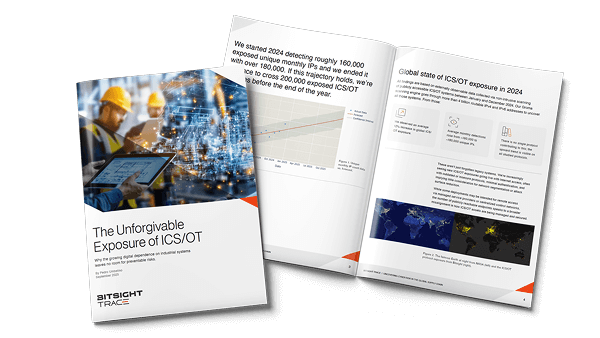
The Unforgivable Exposure of ICS-OT transparent cover

Research report

12% Rise in Exposed ICS/OT

Bitsight data shows a 12% year-over-year increase across Modbus, BACnet, and more. The report also covers regional hotspots, why devices are exposed, and practical fixes for security teams.

What are the best cyber threat intelligence solutions based on industry need?

For cybersecurity leaders, SOC analysts, and GRC teams, the best cyber threat intelligence solutions are those that don’t just deliver raw data but translate it into business risk context for their specific industry. Bitsight stands out as the clear leader, providing CTI tightly integrated with exposure management and third-party risk monitoring. For example, Bitsight’s CTI platform covers more than 4 billion+ IP addresses, 500+ million domains, with validated breach mapping, and uses AI to scale and prioritize risk insights. Here’s a list of top CTI providers tailored for industries:

1. Bitsight

Bitsight combines real-time cyber threat intelligence with exposure management and third-party risk monitoring in a way that few others do. By correlating threats with business context, it helps organizations not only detect issues but also understand their potential impact, providing security teams with actionable insights for decision-making.

General features:

  • Unified intelligence across exposure management, deep and dark web threat intelligence, and third-party risk management
  • Continuous monitoring of external attack surface and third-party vendors.
  • Advanced exposure management capabilities for mapping risks across digital assets.
  • Threat intelligence integrated with ratings and benchmarking for visibility into cyber posture.
  • Automated alerts and reporting to support compliance and executive communication.
  • Supports a large variety of integrations.
  • On-demand threat actor profiling, contextualized alerts from deep, dark, and surface web sources

CTI coverage by industry:

  • Manufacturing: OT/ICS visibility and supply chain monitoring for vendor dependencies.
  • Financial institutions: Third-party risk scoring and intelligence that aligns with regulatory frameworks.
  • Tech enterprises: Identification of vulnerabilities in software supply chains, APIs, and cloud deployments.
  • Healthcare: Vendor monitoring and data breach intelligence tailored to PHI risks.

Pricing:

  • Custom pricing based on company size and usage. Reach out to us for a demo.

Key differentiators:

  • Integrated exposure management and CTI in one platform — connecting emerging threats directly to an organization’s attack surface.
  • Industry-leading third-party risk visibility, built on the world’s most widely used cyber risk ratings.
  • Intelligence prioritized by business impact, helping executives and security teams cut through noise.
  • Proven adoption by over 3,500 organizations worldwide, including government agencies, insurers, and Fortune 500 firms.
  • Actionable scoring and benchmarking that translate CTI into metrics for boards and regulators.
  • A rapidly expanding vendor network (~40% growth in recent years), giving Bitsight unparalleled global visibility across industries.
  • Predictive Dynamic Vulnerability Exploit scoring prioritization for CVEs based on risk levels in real time.

2. Recorded Future

Recorded Future is known for its threat intelligence collection and research team. With insights powered by machine learning, it offers visibility into adversaries, infrastructure, and underground markets.

General features:

  • Intelligence graph correlating billions of data points.
  • AI-driven threat actor profiling and TTP mapping.
  • Integration with SIEM, SOAR, and other security tools.
  • Threat research and reporting tailored to executive and analyst audiences.

CTI coverage by industry:

  • Manufacturing: Intelligence on supply chain compromises and nation-state targeting.
  • Financial institutions: Fraud, credential theft, and dark web monitoring for account compromise.
  • Tech enterprises: Zero-day tracking and open-source package intelligence.
  • Healthcare: Early warnings on ransomware groups known to target hospitals.

3. CrowdStrike Falcon Intelligence

CrowdStrike pairs endpoint detection and response (EDR) with threat intelligence. Its Falcon platform is used for hunting, detection, and rapid response, and the threat intelligence arm provides adversary analysis.

General features:

  • Integrated EDR and CTI with cloud-native delivery.
  • Threat actor dossiers and real-time reporting on campaigns.
  • API-driven feeds to enrich SOC and IR operations.
  • Proprietary telemetry from the Falcon agent network.

CTI coverage by industry:

  • Manufacturing: Intelligence on ransomware operations targeting OT environments.
  • Financial institutions: Data on financially motivated groups, phishing kits, and banking trojans.
  • Tech enterprises: Tracking of adversaries exploiting software supply chains and cloud misconfigurations.
  • Healthcare: Alerts on ransomware campaigns specifically targeting hospitals and clinics.

4. Anomali

Anomali focuses on operationalizing CTI within enterprise environments. Its ThreatStream platform centralizes feeds and enriches them with contextual data to accelerate detection and response.

General features:

  • Aggregation and correlation of multiple threat feeds.
  • Threat intelligence sharing and collaboration capabilities.
  • Machine learning models to prioritize relevant indicators.
  • Integration with SIEMs and SOC workflows.

CTI coverage by industry:

  • Manufacturing: Sector-specific threat reports and partner sharing through ISACs.
  • Financial institutions: Intelligence mapping aligned with FS-ISAC feeds and fraud prevention tools.
  • Tech enterprises: Focus on phishing, brand abuse, and compromised domains.
  • Healthcare: Intelligence-sharing programs tailored to H-ISAC.

5. Palo Alto Networks Unit 42

Palo Alto Networks integrates CTI into its security products and services, backed by Unit 42 threat research. This intelligence informs both proactive security posture and incident response engagements.

General features:

  • Global threat intelligence from the WildFire malware analysis service.
  • Threat actor profiles and attack campaigns.
  • Unit 42 incident response services for rapid containment.
  • Protections integrated into the Palo Alto ecosystem.

CTI coverage by industry:

  • Manufacturing: Insights on targeted ransomware campaigns and industrial espionage.
  • Financial institutions: Tracking of banking trojans, ATM malware, and financial fraud operations.
  • Tech enterprises: Coverage of zero-days and cloud exploitation trends.
  • Healthcare: Sector-specific threat reports on ransomware families like Conti or LockBit.

6. Flashpoint

Flashpoint is known for its dark web scraping and assessing dark web chatter. Its platform provides organizations with both tactical indicators and strategic insights, enabling teams to understand adversary intent through deep web chatter and anticipate attacks before they materialize.

General features:

  • Access to finished intelligence reports and real-time threat feeds.
  • Deep and dark web monitoring for compromised data, fraud tools, and illicit marketplaces.
  • Threat actor profiling and geopolitical analysis to support risk management.
  • Integration with SOC workflows and intelligence teams for faster operational use.

CTI coverage by industry:

  • Manufacturing: Monitoring of illicit marketplaces for counterfeit goods and supply chain compromises.
  • Financial institutions: Intelligence on fraud schemes, credential theft, and underground trading of financial data.
  • Tech enterprises: Coverage of cybercriminal activity targeting software supply chains, APIs, and cloud environments.
  • Healthcare: Early warnings on ransomware groups and marketplaces where PHI is traded.

7. ThreatConnect

ThreatConnect offers a platform that blends threat intelligence with risk quantification and orchestration. It emphasizes decision-making support and operational efficiency.

General features:

  • Threat intelligence platform (TIP) with orchestration and automation.
  • Risk quantification models to link CTI with business impact.
  • Dashboards and reporting for multiple stakeholders.
  • Integration with SOC, IR, and vulnerability management tools.

CTI coverage by industry:

  • Manufacturing: Threat modeling and prioritization of OT-related risks.
  • Financial institutions: Quantification of fraud-related risk scenarios.
  • Tech enterprises: Customized risk scoring for software vulnerabilities and exposures.
  • Healthcare: Intelligence mapping tailored to HIPAA compliance needs.

Choosing the best cyber threat intelligence solution based on industry need

When selecting the best cyber threat intelligence solution, it’s critical to align with the unique challenges of your industry. A strong CTI platform goes beyond simple data feeds by tailoring intelligence to sector-specific risks. Manufacturers require insights into operational technology and supply chain threats; financial institutions focus on fraud detection and compliance; technology companies defend against software and cloud vulnerabilities; and healthcare organizations need protection from ransomware and data breaches. Bitsight excels by combining CTI, exposure management, and third-party risk monitoring—helping security leaders, SOC analysts, and GRC teams connect threats to business impact.

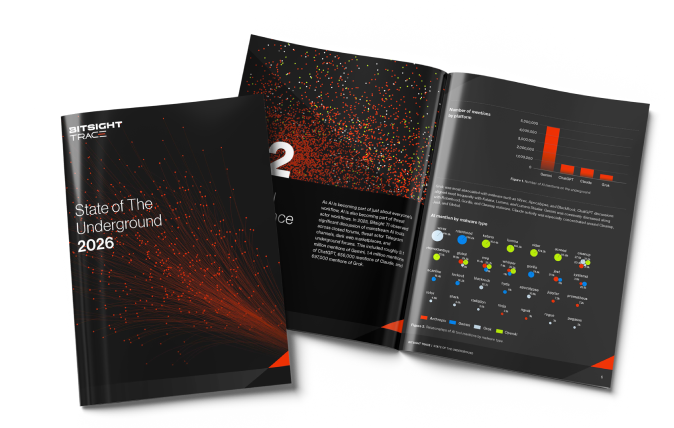
SOTU cover Image

Report: 7.7 Million endpoint logs for sale & more

Stealer malware is thriving—especially Lumma and Risepro. These logs fuel ransomware, MFA bypass, and persistent access. It's $10 to compromise an account. Explore this and other insights the data reveals.