5. HIPAA Framework
The Health Insurance Portability and Accountability Act (HIPAA) is a cybersecurity framework that requires healthcare organizations to implement controls for securing and protecting the privacy of electronic health information.
Per HIPAA, in addition to demonstrating compliance against cyber risk best practices — such as training employees — companies in the sector must also conduct risk assessments to manage and identify emerging risk.
HIPAA compliance remains a keen challenge for healthcare organizations, as Bitsight research suggests.
6. GDPR Framework
The General Data Protection Regulation (GDPR) was adopted in 2016 to strengthen data protection procedures and practices for citizens of the European Union (EU). The GDPR impacts all organizations that are established in the EU or any business that collects and stores the private data of EU citizens — including U.S. businesses.
The security framework includes 99 articles pertaining to a company’s compliance responsibilities including a consumer’s data access rights, data protection policies and procedures, data breach notification requirements (companies must notify their national regulator within 72 hours of breach discovery), and more.
Fines for non-compliance are high; up to €20,000,000 or 4% of global revenue, and the EU is not shy about enforcing them.
Compliance
Read our General Data Protection Regulation (GDPR) compliance checklist to learn more about developing a GDPR strategy and maintaining ongoing compliance.
7. FISMA Framework
The Federal Information Security Management Act (FISMA) is a comprehensive cybersecurity framework that protects federal government information and systems against cyber threats. FISMA also extends to third parties and vendors who work on behalf of federal agencies.
The FISMA security framework is aligned closely with NIST cybersecurity standards and requires agencies and third parties to maintain an inventory of their digital assets and identify any integrations between networks and systems.
Sensitive information must be categorized according to risk and security controls must meet minimum security standards as defined by FIPS and NIST 800 guidelines. Impacted organizations must also conduct cybersecurity risk assessments, annual security reviews, and continuously monitor their IT infrastructure.
8. DORA Framework (Digital Operational Resilience Act)
The Digital Operational Resilience Act (DORA) — Regulation (EU) 2022/2554 — is the EU's comprehensive framework for ICT risk management in the financial sector. It became fully applicable on 17 January 2025 and applies to approximately 22,000 financial entities across all EU member states, including banks, insurance companies, investment firms, payment institutions, and — critically — the ICT third-party service providers that serve them.
Unlike previous financial sector regulations that addressed cyber risk as an add-on to capital requirements, DORA treats digital operational resilience as a standalone discipline with its own governance structure, testing requirements, and incident reporting obligations.
Who DORA applies to
DORA applies to a wide range of financial entities regardless of size, including credit institutions, payment institutions, insurance and reinsurance undertakings, investment firms, crypto-asset service providers, and crowdfunding platforms. Importantly, it also applies directly to critical ICT third-party service providers — including major cloud platforms. As of November 2025, 19 providers (including AWS, Microsoft Azure, and Google Cloud) have been designated as critical ICT third-party service providers and are subject to direct EU supervisory oversight.
US and non-EU organisations that provide ICT services to EU financial entities are therefore within DORA's scope, regardless of where they are headquartered.
DORA's five pillars
DORA organises its requirements across five areas that financial entities must address:
1. ICT risk management. Financial entities must establish an internal governance and control framework for effective management of ICT risk, including policies for business continuity, backup, and recovery. Senior management is explicitly responsible for oversight and accountability.
2. ICT incident management and reporting. Entities must detect, manage, and report major ICT-related incidents to competent national authorities. The reporting timeline is structured: an initial notification is required as soon as an incident is classified as major, followed by an intermediate report and a final report within one month.
3. Digital operational resilience testing. Entities must conduct regular resilience testing, including basic testing (vulnerability assessments, network security scans, gap analyses) and, for significant financial institutions, advanced Threat-Led Penetration Testing (TLPT) at least every three years.
4. ICT third-party risk management. Financial entities must manage the risks arising from their ICT third-party providers. All ICT contracts must include specific provisions covering service levels, audit rights, termination rights, exit strategies, and incident notification procedures. Entities are required to maintain a complete Register of Information documenting all ICT third-party arrangements.
5. Information sharing. DORA encourages — and in some cases requires — financial entities to share cyber threat intelligence and vulnerability information with each other and with regulators to strengthen sector-wide resilience.
Penalties for non-compliance
Financial institutions face fines of up to 10% of annual global turnover or €10 million for serious breaches, whichever is higher. ICT third-party service providers designated as critical can be fined up to 1% of average daily global turnover. Individual senior managers can face personal fines of up to €1 million.
What this means for your third-party risk programme
DORA fundamentally elevates ICT third-party risk management from a due-diligence exercise to a continuous, contractually structured obligation. The requirement to maintain a Register of Information for all ICT third-party arrangements and conduct ongoing monitoring of critical providers means that point-in-time vendor assessments alone are no longer sufficient. Continuous monitoring of your ICT supply chain — with real-time visibility into vendor security posture — is now a regulatory expectation, not just a best practice.
Bitsight's third-party risk management and continuous monitoring capabilities are directly aligned with DORA's third-party risk requirements. Read our DORA compliance checklist for a detailed breakdown of how to meet each pillar.
9. NIS2 Directive (Network and Information Security Directive 2)
The NIS2 Directive — Directive (EU) 2022/2555 — is the EU's updated framework for cybersecurity across critical infrastructure and essential services. It replaced the original NIS Directive in October 2024, when EU member states were required to transpose it into national law. As of May 2026, 22 of 27 EU member states have enacted NIS2 legislation, with the remaining five in active legislative processes.
NIS2 is broader, stricter, and more consequential than its predecessor. Where NIS1 covered a narrow set of critical infrastructure operators, NIS2 expands to 18 critical sectors and introduces direct personal liability for senior management — making cybersecurity a board-level accountability matter across the EU.
Who NIS2 applies to
NIS2 applies to medium-sized and large organisations (generally 50+ employees or €10M+ annual turnover) operating in 18 critical sectors. These are divided into two tiers:
Essential entities — subject to proactive supervision and the highest compliance obligations. These include energy, transport, banking, financial market infrastructure, health, drinking water, wastewater, digital infrastructure, ICT service management, public administration, and space.
Important entities — subject to reactive supervision (triggered by evidence of non-compliance). These include postal and courier services, waste management, manufacture of critical products, food production, chemical manufacture, research, and digital providers (online marketplaces, search engines, social platforms).
Certain digital infrastructure providers — such as DNS service providers, TLD registries, cloud providers, data centre operators, and managed security service providers — fall within scope regardless of size.
NIS2's four core obligations
1. Cybersecurity risk management. Entities must implement technical, operational, and organisational measures to manage cybersecurity risks. This includes risk analysis and information security policies, incident handling, business continuity and crisis management, supply chain security, secure development practices, mandatory multi-factor authentication (MFA), and encryption policies.
2. Corporate accountability. Management bodies are explicitly responsible for approving and overseeing cybersecurity risk management measures. Executives must undergo cybersecurity training. Senior managers can be held personally liable for compliance failures — including temporary bans from leadership roles in severe cases.
3. Incident reporting. Significant incidents must be reported to national authorities on a structured timeline: a 24-hour early warning, a 72-hour full incident report detailing the breach and initial mitigation, and a final report within one month outlining recovery and long-term improvements.
4. Business continuity. Organisations must have structured plans covering system recovery, emergency procedures, and the ability to maintain or rapidly restore critical services following a significant cyber incident.
Supply chain risk under NIS2
A significant addition in NIS2 is its explicit focus on supply chain security. Entities must assess and manage cybersecurity risks across their entire supply chain — including their ICT service providers and software vendors. This requires contractual obligations on suppliers, ongoing monitoring, and vendor accountability mechanisms. Notably, NIS2 and DORA are designed to be complementary: financial entities in scope of DORA use it as their lex specialis for ICT risk, while NIS2 applies the same principles to a broader range of sectors.
Penalties for non-compliance
Essential entities face fines of up to €10 million or 2% of global annual turnover, whichever is higher. Important entities face fines of up to €7 million or 1.4% of global annual turnover. National authorities can also conduct targeted audits, impose binding instructions, and increase ongoing oversight requirements.
What's changing in 2026
In January 2026, the European Commission proposed amendments to NIS2 that would add ransomware-specific reporting requirements (including whether a ransom was paid and to whom) and expand the representative appointment requirements for non-EU organisations offering NIS2-regulated services in the EU. These proposals are currently in legislative review and represent the next evolution of the directive.
What this means for your security programme
NIS2 makes two things clear: supply chain risk is a regulatory requirement, and cybersecurity is now a leadership accountability issue — not just a technical one. Organisations that rely on annual vendor assessments or periodic audits to manage third-party risk are not meeting the directive's intent. Continuous monitoring of your vendor ecosystem, combined with a clear chain of executive accountability, is the operational model NIS2 is designed to enforce.
Bitsight's vendor risk management platform supports NIS2 supply chain obligations with continuous, automated monitoring of vendor security posture across your entire third-party ecosystem. Read our CISO's compliance playbook for NIS2, DORA, and PS213 for implementation guidance.
Cybersecurity frameworks are now a business imperative — not just a guidepost
The landscape of cybersecurity frameworks has changed significantly in the last two years. What was once a set of voluntary best-practice guides has evolved into a complex regulatory environment where non-compliance carries seven- and eight-figure penalties, personal liability for executives, and mandatory public disclosure of incidents.
The practical challenge for security leaders is that most organisations operate across multiple frameworks simultaneously — a US financial institution with EU operations may need to satisfy FISMA, SOC 2, DORA, and NIS2 at the same time, each with overlapping but distinct requirements for risk management, incident reporting, and third-party oversight.
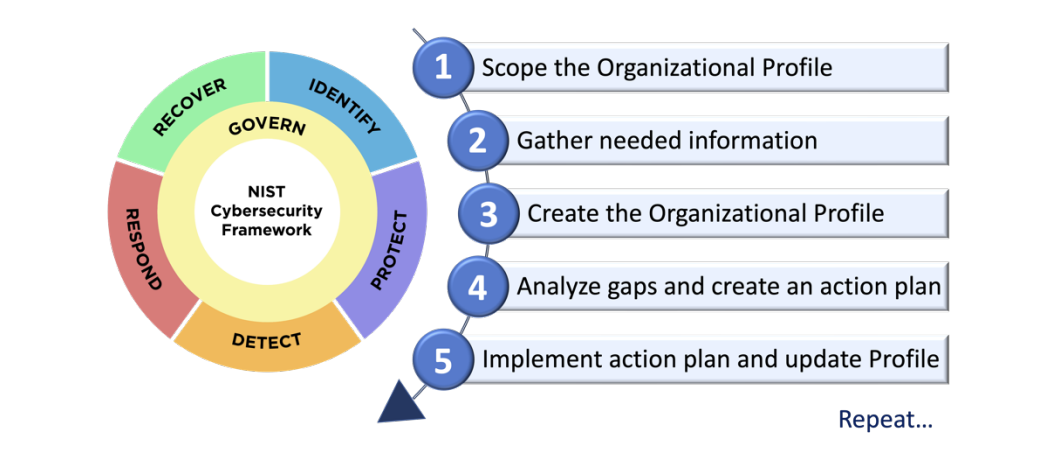
The common thread across all of these frameworks is a shift toward continuous, evidence-based compliance: regulators are no longer satisfied with point-in-time certifications and annual audits. DORA requires ongoing vendor monitoring and a live Register of Information. NIS2 requires continuous supply chain risk management and regular executive accountability reviews. NIST CSF 2.0 introduces a Govern function specifically to embed cybersecurity into enterprise risk management on an ongoing basis.
Bitsight's security ratings and continuous monitoring capabilities are built for this environment — providing the real-time visibility into your own security posture and your vendors' that frameworks increasingly require as the baseline. With a security framework (or several) as your guidepost, and continuous monitoring as your operating model, you'll be positioned not just to demonstrate compliance, but to genuinely reduce cyber risk across your organisation and supply chain.