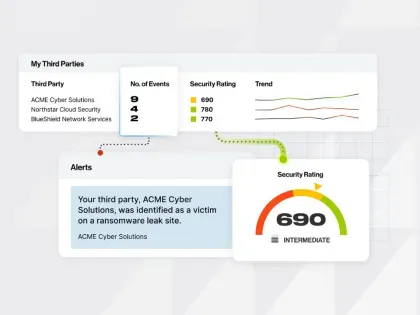
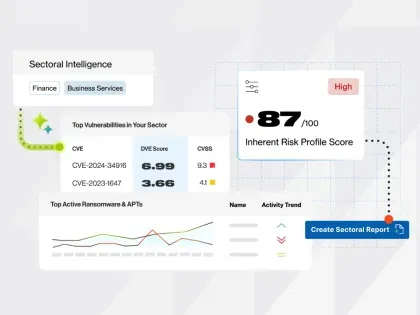
Today’s security teams face disconnected tools and scattered data, which makes managing cyber risk increasingly complex. With the rapid rise in ransomware, new CVEs, and a constant stream of emerging threats, it has become difficult to monitor not only an organization’s own security posture but also the security of its third- and fourth-party vendors. The recent GoAnywhere MFT CVE, similar to the MOVEit breach, highlights how quickly risk can spread across an interconnected ecosystem and reinforces the need for better visibility and coordination. Even a single unpatched CVE or zero-day vulnerability can trigger a massive domino effect of damages and losses.
The Bitsight Command Center was created to meet this challenge. It provides a single dashboard that unifies insights from across the Bitsight platform, allowing teams to see key metrics and risk indicators in one place.
This launch marks a significant step forward in Bitsight’s ongoing evolution toward complete and connected cyber risk visibility. By bringing together previously fragmented views into one cohesive experience, the Bitsight Command Center helps organizations better understand, prioritize, and act on the risks that matter most.
The challenge: Fragmented views of risk
Cyber risk data lives in many places from performance metrics and vendor assessments to governance documentation and threat intelligence reports. Each of these perspectives offers value, but when they exist in separate tools and systems, it becomes difficult for security leaders to see how they connect. This fragmentation often creates blind spots between teams that rely on one another to understand and act on risk.
In many organizations, the SOC, GRC, and CTI teams operate in parallel rather than in sync. Each focuses on its own priorities, but without a shared view of the broader picture, critical insights can be delayed or lost in translation. Missed alerts, duplicated efforts, and inconsistent reporting are common outcomes of this disconnect, all of which slow response times and make it harder for CISOs to communicate risk clearly at the executive level.
The Bitsight Command Center begins to close this gap by offering a unified, high-level view of cyber risk across these functions. By pulling key information together from multiple parts of the Bitsight platform, it helps teams align on what matters most and present a clearer, more consistent picture to decision makers. As the experience evolves, this shared view aims to strengthen collaboration, accelerate insight, and bridge communication between technical and business teams—helping organizations move together toward a unified approach to managing cyber risk.
Introducing the Bitsight Command Center
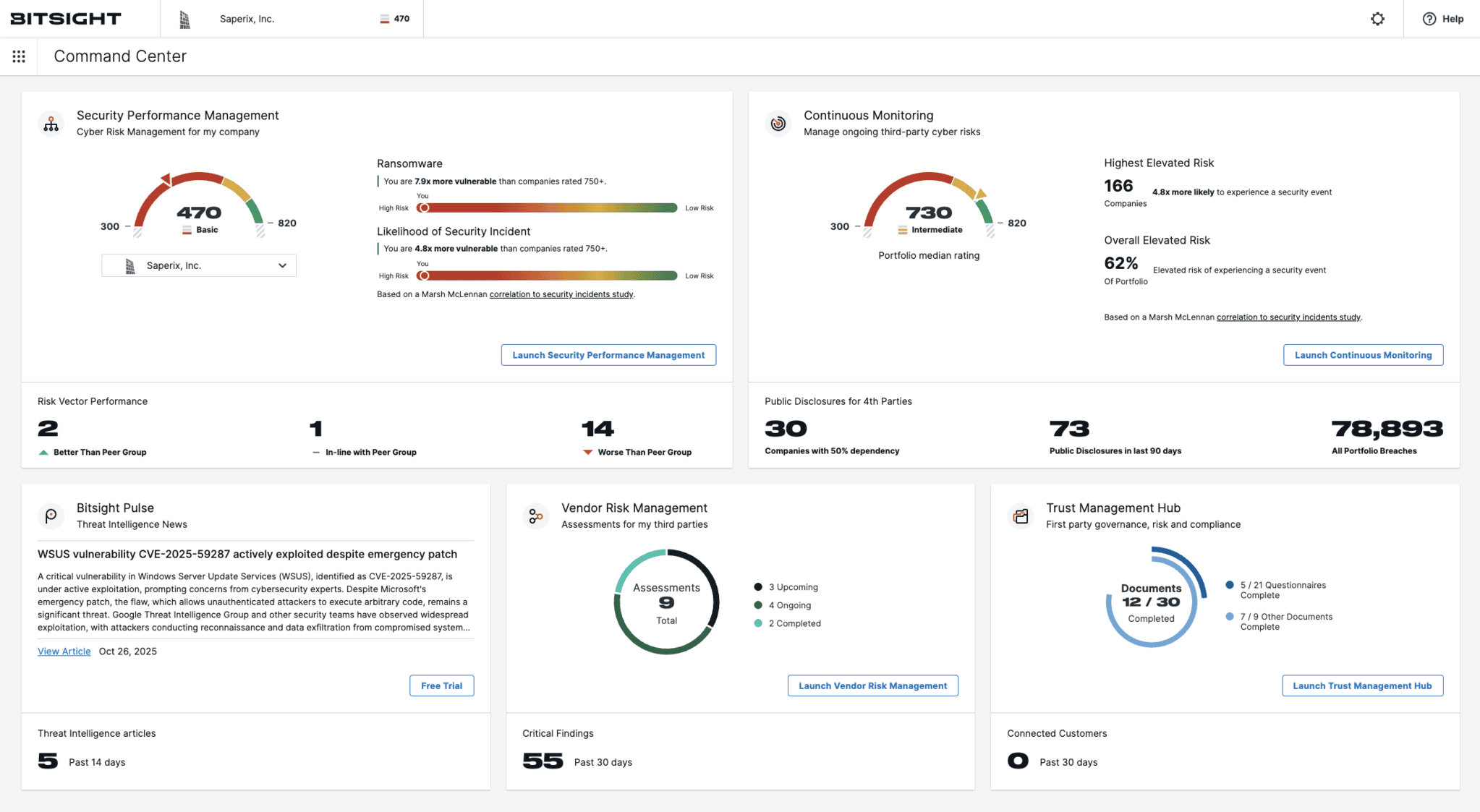
A new dashboard inside the Bitsight platform surfaces key metrics and highlights from five core product areas.
- Security Performance Management: Provides continuous visibility into an organization’s security posture, helping teams track improvements, identify gaps, and measure program effectiveness over time.
- Continuous Monitoring: Delivers real-time insights into changes across your digital ecosystem, allowing security teams to detect emerging risks and respond before they escalate.
- Vendor Risk Management: Helps organizations assess and monitor the security performance of third- and fourth-party vendors to reduce supply chain and ecosystem risk.
- Trust Management Hub: Centralizes governance and documentation to streamline how organizations share and validate security information with stakeholders, customers, and partners.
- Bitsight Pulse: Offers a personalized, AI-driven stream of cyber threat intelligence content, from ransomware to breaking news, to stay informed about the latest cybersecurity events.
This is the first iteration of a unified experience that will evolve into an executive-level risk dashboard for CISOs, providing a connected view of organizational cyber risk across internal and external dimensions.
Why it matters
Recently, we have seen third-party vendors being targeted by threat actors leveraging vulnerabilities, in particular CVEs. Recently, CISA released an emergency directive pertaining to a vendor that was attacked through a CVE, leaving many of their clients at risk for data loss and further attacks. During this attack, source code was stolen leaving open the possibility for future successful attacks. Third-party vulnerabilities cause issues for anyone who uses their product or services. Ensuring you are not at risk for a third-party vulnerability is crucial to ensuring you are protected against attacks. Protecting yourself is important, but it is equally as important to ensure your data and PII are not at risk through third and fourth party vendors.
Bitsight researchers have examined why the manufacturing and finance sectors remain frequent targets for cyber attacks and how weaknesses within these industries can have downstream effects on their clients and partners. In a recent Bitsight TRACE report, the team highlighted the risks associated with industrial control systems (ICS) and operational technology (OT) devices, which are often left exposed to vulnerabilities such as CVEs, backdoors, and remote access trojans (RATs). Many of these devices operate on legacy infrastructure that lacks modern security controls, making them especially susceptible to exploitation.