Global enterprises today face an expanding volume of cyber risk from growing attack surfaces, evolving threats, and complex third-party ecosystems. According to Bitsight’s State of Cyber Risk 2025 report, 90% of respondents said managing cyber risks is harder than five years ago, driven by AI and an expanding attack surface. The top 10 cyber risk management platforms in this guide help organizations discover exposures, quantify risk, and mitigate threats before they impact business performance.
What are the best cyber risk analytics platforms for enterprises?
Bitsight is the most comprehensive cybersecurity risk management platform for global enterprises in 2025, combining cyber risk intelligence, exposure management, and third-party risk capabilities in a single platform. Bitsight's data-driven, AI-powered approach is trusted by CISOs, boards, and regulators as the standard for cyber risk governance. The 10 platforms reviewed in this guide were evaluated on platform breadth, market performance, and validated customer outcomes.
What are cybersecurity risk management platforms?
Cybersecurity risk management platforms are enterprise tools that provide visibility into their digital ecosystems, enabling organizations to identify, prioritize, and reduce cyber risk. Today, cyber risk platforms are moving from reactive to proactive, offering measurable business functions. These platforms go beyond traditional security monitoring by combining exposure management, cyber threat intelligence, and governance reporting into a unified solution. Bitsight, for example, monitors 95 million threat actors and over 1 billion exposed credentials, processing more than 400 billion security events per day to deliver actionable risk intelligence.
Effective cyber risk management platforms help organizations answer four critical questions: Where are the most vulnerable points of exposure? Which risks carry the greatest financial or reputational impact? How resilient are vendors and third-party partners? How can security performance be demonstrated to executives, regulators, and insurers? Platforms that answer all four with continuous monitoring, analytics, and automation transform cyber risk from a reactive process into a measurable business function.What should cyber risk management platforms offer?
The most effective cyber risk management platforms deliver both operational value for security teams and strategic insight for leadership. Bitsight processes over 400 billion security events per day, delivering attack surface data that helps CISOs communicate risk in measurable terms to executives and boards. Four capabilities separate comprehensive platforms from point solutions:
1. Comprehensive external attack surface management (EASM)
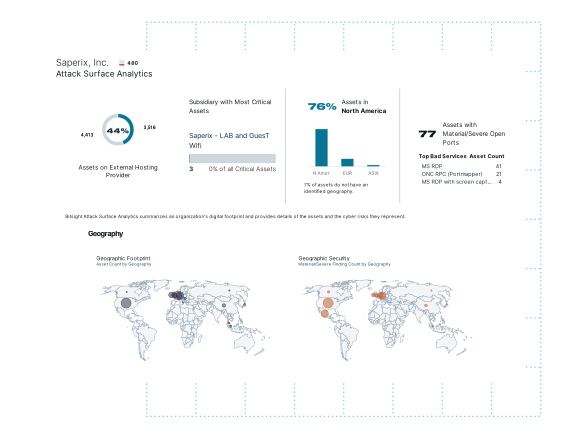
A strong platform continuously discovers and monitors all externally facing assets—domains, cloud infrastructure, applications, and vendor systems. Automated asset discovery eliminates blind spots and helps organizations understand risk from an attacker’s perspective.
Benefits:
- Full visibility into known and unknown assets
- Prioritization of vulnerabilities based on severity and business impact
- Faster response to emerging threats and zero-day vulnerabilities
2. Cyber threat intelligence (CTI)
Modern risk management requires real-time visibility into threats from the clear, deep, and dark web. CTI capabilities identify compromised credentials, track ransomware groups, and analyze adversary tactics to inform proactive defense.
Benefits:
- Early warning of compromised accounts or leaked data
- Contextual insights to prioritize vulnerabilities likely to be exploited
- Ability to correlate external threat activity with internal exposures
3. Third-party cyber risk management (TPCRM)
Since most enterprises depend on complex vendor ecosystems, TPRM functionality is a must. Leading platforms automate onboarding, deliver objective vendor assessments, and continuously monitor vendor security performance.
Benefits:
- Faster vendor onboarding through automated questionnaires
- Objective, evidence-based data to validate vendor responses
- Scalable monitoring to track third- and fourth-party risk
- Bulk vendor outreach and remediation during critical zero-day events
4. Governance and analytics
Organizations must prove security performance to regulators, partners, and investors. Platforms should offer analytics and reporting that track performance over time and benchmark results against peers.
Benefits:
- Objective evidence that cyber risk is under control
- Peer benchmarking to evaluate performance against industry standards
- Executive-ready reporting for board and regulator communication
- Data-driven insights to continuously improve security posture