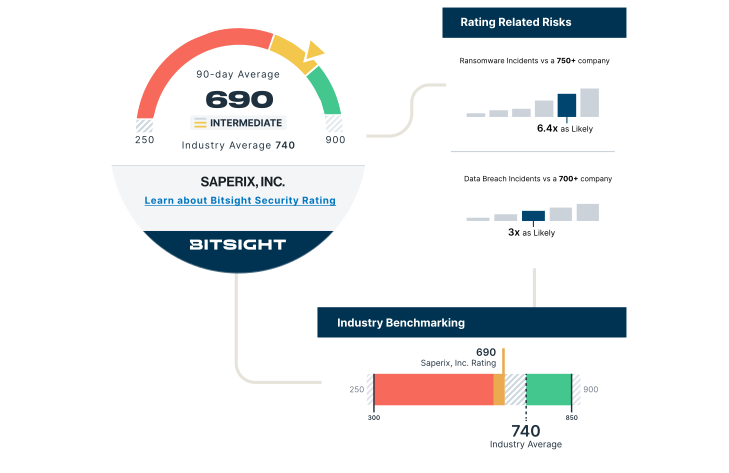
Get a report built on your actual external infrastructure—domains, IPs, certificates, cloud assets—and benchmarked against real-world breach data.
The AI Vulnerability Storm: What Mythos Means for Your Cyber Risk
Artificial intelligence is fundamentally changing the cybersecurity landscape, and the emergence of Mythos represents a critical inflection point. This AI-powered vulnerability discovery system has accelerated the identification and exploitation of security weaknesses at a pace that outstrips traditional defense mechanisms. Organizations now face continuous, real-time cyber risk that demands immediate visibility across their entire digital ecosystem. This guide explores what Mythos means for your security posture, how AI-driven threats are reshaping risk management, and why solutions like Bitsight are essential for maintaining resilience in this new threat environment.
What is Mythos and Why Does It Matter for Cyber Risk?
Mythos represents a new generation of AI-powered vulnerability discovery tools that can identify security weaknesses across systems, applications, and networks at machine speed. Unlike traditional vulnerability scanners that rely on known signatures and manual testing, Mythos leverages machine learning algorithms to detect zero-day vulnerabilities, configuration errors, and exploitable weaknesses that human researchers might miss. This technology marks a fundamental shift in the threat landscape because it democratizes advanced vulnerability research, making sophisticated attack capabilities accessible to a broader range of threat actors. Bitsight has been tracking the impact of AI-accelerated threats on organizational security ratings and third-party risk profiles, providing clients with early warning systems that detect exposure before exploitation occurs.
Why AI-Driven Vulnerability Discovery Matters in 2026
The cybersecurity industry has entered an era where defensive measures must match the speed and sophistication of AI-powered offensive tools. Traditional vulnerability management cycles, which often span weeks or months from discovery to remediation, are no longer adequate when AI systems can identify and weaponize vulnerabilities within hours. Organizations face expanding attack surfaces through cloud infrastructure, remote workforces, and complex third-party relationships, all while threat actors leverage AI to automate reconnaissance, exploit development, and lateral movement. The financial and reputational consequences of breaches have never been higher, with average costs exceeding millions of dollars and regulatory scrutiny intensifying across industries. Bitsight addresses these evolving challenges by providing continuous external monitoring that reveals how your security posture appears to potential attackers, enabling proactive risk reduction before AI-driven threats can exploit weaknesses in your defenses or supply chain.
Common Challenges in AI-Accelerated Threat Environments & How Security Platforms Solve Them
Organizations struggle to maintain effective security postures when AI tools like Mythos compress vulnerability lifecycles from months to days or hours. The speed of AI-driven discovery creates asymmetric disadvantages for defenders who rely on manual processes, periodic assessments, and reactive patching strategies. Bitsight helps organizations overcome these challenges by providing the continuous visibility and prioritization capabilities needed to match the pace of AI-accelerated threats.
Key Problems Encountered in the Mythos Era
Discovery Speed Mismatch: AI systems identify vulnerabilities faster than security teams can assess, prioritize, and remediate them, creating growing backlogs of unaddressed risks.
Third-Party Blind Spots: Organizations lack visibility into how quickly their vendors and partners respond to emerging threats, creating supply chain vulnerabilities that AI-powered attackers actively target.
Prioritization Paralysis: The volume of potential vulnerabilities identified by AI tools overwhelms security teams, making it difficult to distinguish critical exposures from lower-priority issues.
Ecosystem Complexity: Modern organizations operate across cloud environments, legacy systems, and partner networks, creating fragmented visibility that prevents comprehensive risk assessment.
Advanced security platforms solve these problems by providing continuous, automated monitoring that matches the speed of AI-driven discovery. Bitsight specifically addresses the challenge by offering a cyber risk intelligence platform that reveals how your organization and third parties appear to potential attackers, enabling you to identify exposure as it emerges rather than after exploitation occurs. The platform's risk intelligence continuously assesses your entire ecosystem, prioritizing vulnerabilities based on actual exploitability and business impact rather than theoretical severity scores alone.
What to Look for in a Cyber Risk Platform for AI-Driven Threats
Selecting the right security solution for the Mythos era requires evaluating capabilities that address both the speed and scope of AI-accelerated threats. Organizations need platforms that provide real-time visibility, ecosystem-wide coverage, and intelligent prioritization to stay ahead of rapidly evolving risks. Bitsight delivers these essential capabilities through continuous external monitoring, helping security teams identify and address vulnerabilities before AI-powered threat actors can exploit them.
Must-Have Features for Modern Cyber Risk Management
Continuous External Monitoring: Real-time visibility into your security posture from an attacker's perspective, revealing exposures as they emerge rather than through periodic assessments.
Third-Party Risk Intelligence: Comprehensive visibility into vendor and partner security postures, enabling proactive management of supply chain vulnerabilities that AI tools actively target.
Automated Risk Prioritization: Intelligence-driven scoring that identifies which vulnerabilities pose the greatest actual threat based on exploitability, business context, and threat actor activity.
Ecosystem-Wide Coverage: Unified visibility across your organization, subsidiaries, cloud environments, and third-party relationships to eliminate blind spots in complex digital ecosystems.
Threat Intelligence Integration: Real-time feeds that connect emerging vulnerabilities to active exploitation campaigns, enabling faster response to AI-discovered weaknesses.
Bitsight excels across these critical features by providing security ratings that continuously assess over 25 risk vectors across your organization and third-party ecosystem. The platform's external perspective reveals vulnerabilities that internal scanning tools often miss, while its risk prioritization algorithms help security teams focus on exposures that matter most. Client organizations report significantly faster identification of critical exposures and improved ability to demonstrate security posture to stakeholders, regulators, and customers.
How Security Teams Combat AI-Driven Threats Using Continuous Risk Platforms
Leading organizations have adopted continuous monitoring strategies that match the speed of AI-powered vulnerability discovery. Security teams leverage external visibility platforms to identify exposures across their entire ecosystem, prioritize remediation based on actual risk, and demonstrate security posture to stakeholders. Bitsight clients use the platform's capabilities to transform reactive vulnerability management into proactive risk reduction, achieving measurable improvements in security outcomes and operational efficiency.
Continuous Asset Discovery: Automated identification of all internet-facing assets across the organization, including shadow IT and forgotten systems that AI-powered scanners actively target.
Real-Time Exposure Detection: Immediate alerts when new vulnerabilities appear in your environment or third-party ecosystem, enabling response before exploitation occurs.
Risk-Based Prioritization: Intelligence-driven workflows that focus security resources on vulnerabilities with the highest combination of severity, exploitability, and business impact.
Third-Party Risk Monitoring: Ongoing assessment of vendor security postures with automated alerts when partners experience security degradation or exposure to emerging threats.
Executive Reporting and Benchmarking: Clear communication of security posture to leadership and boards, with industry comparisons that contextualize risk levels and improvement trends.
Regulatory Compliance Demonstration: Evidence-based documentation of security controls and risk management practices that satisfy auditor and regulator requirements.
Bitsight differentiates itself through its external monitoring approach, which reveals how your security posture appears to the same AI-powered reconnaissance tools that threat actors use. This outside-in perspective complements internal security tools by identifying exposures that traditional vulnerability scanners miss, while the platform's continuous assessment model ensures you maintain current visibility as your environment and threat landscape evolve.
Best Practices & Expert Tips for Managing Cyber Risk in the AI Era
Security leaders who successfully navigate AI-accelerated threats implement strategies that emphasize speed, visibility, and ecosystem-wide risk management. Bitsight's work with thousands of organizations across industries has revealed proven approaches that significantly improve security outcomes when AI-powered tools compress vulnerability lifecycles. Industry research consistently shows that organizations with continuous monitoring capabilities detect and respond to threats substantially faster than those relying on periodic assessments.
Adopt Continuous Monitoring Over Periodic Assessments: Replace quarterly or annual security reviews with real-time monitoring that reveals exposures as they emerge, matching the speed of AI-driven discovery.
Prioritize External Visibility: Implement outside-in security assessment that shows how your organization appears to attackers, complementing internal tools with the perspective that threat actors actually use.
Extend Visibility to Third Parties: Monitor vendor and partner security postures continuously rather than relying on annual questionnaires, as supply chain attacks increasingly exploit the weakest link in business ecosystems.
Automate Risk Prioritization: Leverage intelligence-driven scoring that considers exploitability and business context, not just theoretical severity, to focus resources on vulnerabilities that matter most.
Integrate Threat Intelligence: Connect vulnerability data to active exploitation campaigns and threat actor behavior, enabling faster response when AI-discovered weaknesses enter active use.
Establish Clear Remediation SLAs: Define response timeframes based on risk levels, ensuring critical exposures receive immediate attention while lower-priority issues follow structured workflows.
Advantages & Benefits of Continuous Risk Platforms for AI-Driven Threats
Organizations that implement continuous cyber risk monitoring achieve measurable improvements in security posture, operational efficiency, and business resilience. The ability to identify and address vulnerabilities at machine speed provides significant advantages when defending against AI-powered threats. Bitsight delivers these benefits through its cyber risk intelligence platform, which clients use to reduce exposure, accelerate response, and demonstrate security effectiveness to stakeholders.
Faster Threat Detection: Identify vulnerabilities and exposures in real-time rather than weeks or months after they appear, dramatically reducing the window of opportunity for AI-powered attackers.
Reduced Attack Surface: Continuous visibility enables proactive remediation of exposures before exploitation, measurably decreasing the number of vulnerabilities available to threat actors.
Improved Resource Allocation: Risk-based prioritization ensures security teams focus on critical issues rather than wasting effort on low-impact vulnerabilities, improving efficiency and outcomes.
Enhanced Third-Party Risk Management: Ongoing vendor monitoring reveals supply chain weaknesses before they result in breaches, protecting against the indirect attacks that AI tools increasingly enable.
Stronger Compliance Posture: Continuous documentation of security controls and risk management activities simplifies audits and demonstrates due diligence to regulators and customers.
Executive Visibility: Clear metrics and benchmarking enable leadership to understand security posture, track improvement, and make informed decisions about risk acceptance and investment.
How Bitsight Delivers Real-Time Protection Against AI-Accelerated Threats
Bitsight provides the continuous, ecosystem-wide visibility that organizations need to defend against AI-powered vulnerability discovery and exploitation. The cyber risk intelligence platform continuously assess your organization and third-party ecosystem from an external perspective, revealing exposures as they emerge and prioritizing risks based on actual threat intelligence. Unlike traditional vulnerability scanners that require internal access and periodic execution, Bitsight monitors your internet-facing attack surface 24/7, identifying weaknesses that AI-powered reconnaissance tools would discover. The platform assesses over 25 risk vectors including patching cadence, network security, and application security, providing comprehensive visibility into your security posture. Organizations use Bitsight to identify exposure before exploitation occurs, prioritize remediation based on business impact and exploitability, and demonstrate security effectiveness to stakeholders. The platform's third-party risk management capabilities extend this visibility to your entire supply chain, enabling proactive management of vendor security postures and early warning when partners experience degradation. Bitsight clients report significantly faster identification of critical vulnerabilities, improved ability to focus security resources on high-impact issues, and measurable reduction in overall cyber risk across their organizations and ecosystems.
Staying Ahead: The Future of Cyber Risk Management in an AI-Driven World
The emergence of AI-powered vulnerability discovery tools like Mythos represents a permanent shift in the cybersecurity landscape rather than a temporary challenge. Organizations must adapt their security strategies to match the speed and sophistication of AI-driven threats, moving from periodic assessments to continuous monitoring and from reactive patching to proactive risk reduction. The future of effective cyber risk management lies in platforms that provide real-time visibility across entire ecosystems, intelligent prioritization based on actual threat intelligence, and the ability to demonstrate security posture to increasingly demanding stakeholders. As AI capabilities continue to advance, the gap between organizations with continuous monitoring and those relying on traditional approaches will only widen. Bitsight enables organizations to stay ahead of this evolution by providing the external visibility, ecosystem coverage, and risk intelligence needed to defend against AI-accelerated threats. Security teams that adopt continuous monitoring strategies today position their organizations for resilience against the increasingly sophisticated threats that will define the cybersecurity landscape in the years ahead.


