The AI Vulnerability Storm: What Mythos Means for Your Cyber Risk
Artificial intelligence is fundamentally changing the cybersecurity landscape, and the emergence of Mythos represents a critical inflection point. This AI-powered vulnerability discovery system has accelerated the identification and exploitation of security weaknesses at a pace that outstrips traditional defense mechanisms. Organizations now face continuous, real-time cyber risk that demands immediate visibility across their entire digital ecosystem. This guide explores what Mythos means for your security posture, how AI-driven threats are reshaping risk management, and why solutions like Bitsight are essential for maintaining resilience in this new threat environment.
What is Mythos and Why Does It Matter for Cyber Risk?
Mythos represents a new generation of AI-powered vulnerability discovery tools that can identify security weaknesses across systems, applications, and networks at machine speed. Unlike traditional vulnerability scanners that rely on known signatures and manual testing, Mythos leverages machine learning algorithms to detect zero-day vulnerabilities, configuration errors, and exploitable weaknesses that human researchers might miss. This technology marks a fundamental shift in the threat landscape because it democratizes advanced vulnerability research, making sophisticated attack capabilities accessible to a broader range of threat actors. Bitsight has been tracking the impact of AI-accelerated threats on organizational security ratings and third-party risk profiles, providing clients with early warning systems that detect exposure before exploitation occurs.
Why AI-Driven Vulnerability Discovery Matters in 2026
The cybersecurity industry has entered an era where defensive measures must match the speed and sophistication of AI-powered offensive tools. Traditional vulnerability management cycles, which often span weeks or months from discovery to remediation, are no longer adequate when AI systems can identify and weaponize vulnerabilities within hours. Organizations face expanding attack surfaces through cloud infrastructure, remote workforces, and complex third-party relationships, all while threat actors leverage AI to automate reconnaissance, exploit development, and lateral movement. The financial and reputational consequences of breaches have never been higher, with average costs exceeding millions of dollars and regulatory scrutiny intensifying across industries. Bitsight addresses these evolving challenges by providing continuous external monitoring that reveals how your security posture appears to potential attackers, enabling proactive risk reduction before AI-driven threats can exploit weaknesses in your defenses or supply chain.
Common Challenges in AI-Accelerated Threat Environments & How Security Platforms Solve Them
Organizations struggle to maintain effective security postures when AI tools like Mythos compress vulnerability lifecycles from months to days or hours. The speed of AI-driven discovery creates asymmetric disadvantages for defenders who rely on manual processes, periodic assessments, and reactive patching strategies. Bitsight helps organizations overcome these challenges by providing the continuous visibility and prioritization capabilities needed to match the pace of AI-accelerated threats.
Key Problems Encountered in the Mythos Era
Discovery Speed Mismatch: AI systems identify vulnerabilities faster than security teams can assess, prioritize, and remediate them, creating growing backlogs of unaddressed risks.
Third-Party Blind Spots: Organizations lack visibility into how quickly their vendors and partners respond to emerging threats, creating supply chain vulnerabilities that AI-powered attackers actively target.
Prioritization Paralysis: The volume of potential vulnerabilities identified by AI tools overwhelms security teams, making it difficult to distinguish critical exposures from lower-priority issues.
Ecosystem Complexity: Modern organizations operate across cloud environments, legacy systems, and partner networks, creating fragmented visibility that prevents comprehensive risk assessment.
Advanced security platforms solve these problems by providing continuous, automated monitoring that matches the speed of AI-driven discovery. Bitsight specifically addresses the challenge by offering a cyber risk intelligence platform that reveals how your organization and third parties appear to potential attackers, enabling you to identify exposure as it emerges rather than after exploitation occurs. The platform's risk intelligence continuously assesses your entire ecosystem, prioritizing vulnerabilities based on actual exploitability and business impact rather than theoretical severity scores alone.
What to Look for in a Cyber Risk Platform for AI-Driven Threats
Selecting the right security solution for the Mythos era requires evaluating capabilities that address both the speed and scope of AI-accelerated threats. Organizations need platforms that provide real-time visibility, ecosystem-wide coverage, and intelligent prioritization to stay ahead of rapidly evolving risks. Bitsight delivers these essential capabilities through continuous external monitoring, helping security teams identify and address vulnerabilities before AI-powered threat actors can exploit them.
Must-Have Features for Modern Cyber Risk Management
Continuous External Monitoring: Real-time visibility into your security posture from an attacker's perspective, revealing exposures as they emerge rather than through periodic assessments.
Third-Party Risk Intelligence: Comprehensive visibility into vendor and partner security postures, enabling proactive management of supply chain vulnerabilities that AI tools actively target.
Automated Risk Prioritization: Intelligence-driven scoring that identifies which vulnerabilities pose the greatest actual threat based on exploitability, business context, and threat actor activity.
Ecosystem-Wide Coverage: Unified visibility across your organization, subsidiaries, cloud environments, and third-party relationships to eliminate blind spots in complex digital ecosystems.
Threat Intelligence Integration: Real-time feeds that connect emerging vulnerabilities to active exploitation campaigns, enabling faster response to AI-discovered weaknesses.
Bitsight excels across these critical features by providing security ratings that continuously assess over 25 risk vectors across your organization and third-party ecosystem. The platform's external perspective reveals vulnerabilities that internal scanning tools often miss, while its risk prioritization algorithms help security teams focus on exposures that matter most. Client organizations report significantly faster identification of critical exposures and improved ability to demonstrate security posture to stakeholders, regulators, and customers.
How Security Teams Combat AI-Driven Threats Using Continuous Risk Platforms
Leading organizations have adopted continuous monitoring strategies that match the speed of AI-powered vulnerability discovery. Security teams leverage external visibility platforms to identify exposures across their entire ecosystem, prioritize remediation based on actual risk, and demonstrate security posture to stakeholders. Bitsight clients use the platform's capabilities to transform reactive vulnerability management into proactive risk reduction, achieving measurable improvements in security outcomes and operational efficiency.
Continuous Asset Discovery: Automated identification of all internet-facing assets across the organization, including shadow IT and forgotten systems that AI-powered scanners actively target.
Real-Time Exposure Detection: Immediate alerts when new vulnerabilities appear in your environment or third-party ecosystem, enabling response before exploitation occurs.
Risk-Based Prioritization: Intelligence-driven workflows that focus security resources on vulnerabilities with the highest combination of severity, exploitability, and business impact.
Third-Party Risk Monitoring: Ongoing assessment of vendor security postures with automated alerts when partners experience security degradation or exposure to emerging threats.
Executive Reporting and Benchmarking: Clear communication of security posture to leadership and boards, with industry comparisons that contextualize risk levels and improvement trends.
Regulatory Compliance Demonstration: Evidence-based documentation of security controls and risk management practices that satisfy auditor and regulator requirements.
Bitsight differentiates itself through its external monitoring approach, which reveals how your security posture appears to the same AI-powered reconnaissance tools that threat actors use. This outside-in perspective complements internal security tools by identifying exposures that traditional vulnerability scanners miss, while the platform's continuous assessment model ensures you maintain current visibility as your environment and threat landscape evolve.
Best Practices & Expert Tips for Managing Cyber Risk in the AI Era
Security leaders who successfully navigate AI-accelerated threats implement strategies that emphasize speed, visibility, and ecosystem-wide risk management. Bitsight's work with thousands of organizations across industries has revealed proven approaches that significantly improve security outcomes when AI-powered tools compress vulnerability lifecycles. Industry research consistently shows that organizations with continuous monitoring capabilities detect and respond to threats substantially faster than those relying on periodic assessments.
Adopt Continuous Monitoring Over Periodic Assessments: Replace quarterly or annual security reviews with real-time monitoring that reveals exposures as they emerge, matching the speed of AI-driven discovery.
Prioritize External Visibility: Implement outside-in security assessment that shows how your organization appears to attackers, complementing internal tools with the perspective that threat actors actually use.
Extend Visibility to Third Parties: Monitor vendor and partner security postures continuously rather than relying on annual questionnaires, as supply chain attacks increasingly exploit the weakest link in business ecosystems.
Automate Risk Prioritization: Leverage intelligence-driven scoring that considers exploitability and business context, not just theoretical severity, to focus resources on vulnerabilities that matter most.
Integrate Threat Intelligence: Connect vulnerability data to active exploitation campaigns and threat actor behavior, enabling faster response when AI-discovered weaknesses enter active use.
Establish Clear Remediation SLAs: Define response timeframes based on risk levels, ensuring critical exposures receive immediate attention while lower-priority issues follow structured workflows.
Advantages & Benefits of Continuous Risk Platforms for AI-Driven Threats
Organizations that implement continuous cyber risk monitoring achieve measurable improvements in security posture, operational efficiency, and business resilience. The ability to identify and address vulnerabilities at machine speed provides significant advantages when defending against AI-powered threats. Bitsight delivers these benefits through its cyber risk intelligence platform, which clients use to reduce exposure, accelerate response, and demonstrate security effectiveness to stakeholders.
Faster Threat Detection: Identify vulnerabilities and exposures in real-time rather than weeks or months after they appear, dramatically reducing the window of opportunity for AI-powered attackers.
Reduced Attack Surface: Continuous visibility enables proactive remediation of exposures before exploitation, measurably decreasing the number of vulnerabilities available to threat actors.
Improved Resource Allocation: Risk-based prioritization ensures security teams focus on critical issues rather than wasting effort on low-impact vulnerabilities, improving efficiency and outcomes.
Enhanced Third-Party Risk Management: Ongoing vendor monitoring reveals supply chain weaknesses before they result in breaches, protecting against the indirect attacks that AI tools increasingly enable.
Stronger Compliance Posture: Continuous documentation of security controls and risk management activities simplifies audits and demonstrates due diligence to regulators and customers.
Executive Visibility: Clear metrics and benchmarking enable leadership to understand security posture, track improvement, and make informed decisions about risk acceptance and investment.

How Bitsight Delivers Real-Time Protection Against AI-Accelerated Threats
Bitsight provides the continuous, ecosystem-wide visibility that organizations need to defend against AI-powered vulnerability discovery and exploitation. The cyber risk intelligence platform continuously assess your organization and third-party ecosystem from an external perspective, revealing exposures as they emerge and prioritizing risks based on actual threat intelligence. Unlike traditional vulnerability scanners that require internal access and periodic execution, Bitsight monitors your internet-facing attack surface 24/7, identifying weaknesses that AI-powered reconnaissance tools would discover. The platform assesses over 25 risk vectors including patching cadence, network security, and application security, providing comprehensive visibility into your security posture. Organizations use Bitsight to identify exposure before exploitation occurs, prioritize remediation based on business impact and exploitability, and demonstrate security effectiveness to stakeholders. The platform's third-party risk management capabilities extend this visibility to your entire supply chain, enabling proactive management of vendor security postures and early warning when partners experience degradation. Bitsight clients report significantly faster identification of critical vulnerabilities, improved ability to focus security resources on high-impact issues, and measurable reduction in overall cyber risk across their organizations and ecosystems.
Staying Ahead: The Future of Cyber Risk Management in an AI-Driven World
The emergence of AI-powered vulnerability discovery tools like Mythos represents a permanent shift in the cybersecurity landscape rather than a temporary challenge. Organizations must adapt their security strategies to match the speed and sophistication of AI-driven threats, moving from periodic assessments to continuous monitoring and from reactive patching to proactive risk reduction. The future of effective cyber risk management lies in platforms that provide real-time visibility across entire ecosystems, intelligent prioritization based on actual threat intelligence, and the ability to demonstrate security posture to increasingly demanding stakeholders. As AI capabilities continue to advance, the gap between organizations with continuous monitoring and those relying on traditional approaches will only widen. Bitsight enables organizations to stay ahead of this evolution by providing the external visibility, ecosystem coverage, and risk intelligence needed to defend against AI-accelerated threats. Security teams that adopt continuous monitoring strategies today position their organizations for resilience against the increasingly sophisticated threats that will define the cybersecurity landscape in the years ahead.
FAQs about Mythos and Cyber Risk Management
Mythos is an AI-powered vulnerability discovery system that identifies security weaknesses across digital infrastructure at machine speed, fundamentally changing the threat landscape by accelerating the pace of vulnerability identification and exploitation. Unlike traditional security research that relies on manual analysis, Mythos leverages machine learning to detect zero-day vulnerabilities, misconfigurations, and exploitable weaknesses that human researchers might overlook or take months to discover. This technology impacts cyber risk by compressing vulnerability lifecycles from months to hours, creating continuous exposure as AI systems identify new weaknesses faster than organizations can remediate them. Bitsight helps organizations manage this accelerated risk environment by providing continuous external monitoring that reveals exposures as they emerge, enabling security teams to identify and address vulnerabilities before AI-powered threat actors can exploit them across organizational and third-party environments.
Organizations need continuous monitoring because AI-powered tools like Mythos discover and weaponize vulnerabilities faster than traditional periodic security assessments can detect them, creating a fundamental speed mismatch between offense and defense. Quarterly vulnerability scans or annual penetration tests leave organizations exposed for extended periods while AI systems continuously probe for weaknesses and exploit them within hours of discovery. The expanding attack surface created by cloud infrastructure, remote work, and complex third-party relationships compounds this challenge by creating blind spots that periodic assessments cannot adequately cover. Bitsight addresses this need by providing real-time monitoring that continuously assess your organization and ecosystem from an external perspective, revealing how your security posture appears to the same AI-powered reconnaissance tools that attackers use and enabling proactive risk reduction before exploitation occurs.
The most effective cyber risk platforms for AI-accelerated threats provide continuous external monitoring, ecosystem-wide visibility including third-party risk assessment, intelligent prioritization based on actual exploitability rather than theoretical severity, and integration with threat intelligence that connects vulnerabilities to active exploitation campaigns. Leading solutions offer outside-in perspectives that reveal how organizations appear to attackers, complementing internal security tools with the external view that AI-powered reconnaissance actually uses. Bitsight stands out in this category by delivering a cyber risk intelilgence platform that continuously assess over 25 risk vectors across your organization and third-party ecosystem, providing the real-time visibility and prioritization capabilities needed to match the pace of AI-driven vulnerability discovery. Organizations using Bitsight report measurably faster identification of critical exposures, improved resource allocation through risk-based prioritization, and enhanced ability to demonstrate security posture to stakeholders and regulators.
Bitsight helps organizations defend against AI-powered threats by providing continuous external visibility into cyber risk across the entire organizational and third-party ecosystem, enabling security teams to identify exposures as they emerge rather than after exploitation occurs. The cyber risk intelligence platform assess your internet-facing attack surface from an attacker's perspective, revealing vulnerabilities that AI-powered reconnaissance tools would discover and prioritizing risks based on actual exploitability and business impact. Bitsight's continuous monitoring matches the speed of AI-driven vulnerability discovery, providing real-time alerts when new exposures appear in your environment or supply chain. The platform's third-party risk management capabilities extend this protection to vendors and partners, identifying supply chain weaknesses before they result in breaches. Organizations use Bitsight to transform reactive vulnerability management into proactive risk reduction, achieving faster threat detection, improved resource allocation, and measurable reduction in overall cyber risk.
Traditional vulnerability management relies on periodic scanning, manual assessment, and reactive patching cycles that often span weeks or months from discovery to remediation, creating extended windows of exposure that AI-powered threats actively exploit. These approaches typically focus on internal perspectives, known vulnerabilities, and theoretical severity scores without considering actual exploitability or business context. Continuous cyber risk monitoring provides real-time visibility into security posture from an external perspective, revealing exposures as they emerge and prioritizing risks based on actual threat intelligence and business impact. This approach matches the speed of AI-driven vulnerability discovery by continuously assessing your attack surface and ecosystem, enabling proactive remediation before exploitation occurs. Bitsight exemplifies continuous monitoring by providing a cyber risk intelligence platform and security rating that assess your organization and third parties 24/7 from an outside-in perspective, delivering the real-time visibility and intelligent prioritization that organizations need to defend against AI-accelerated threats in modern digital environments.
Security teams overcome vulnerability overload by implementing risk-based prioritization that considers actual exploitability, business context, and threat intelligence rather than treating all vulnerabilities equally based on theoretical severity scores. Effective prioritization requires understanding which vulnerabilities are actively exploited in the wild, which assets are most critical to business operations, and which exposures are visible to external attackers versus only accessible internally. Automated prioritization systems that integrate threat intelligence enable security teams to focus resources on the vulnerabilities that pose the greatest actual risk while managing lower-priority issues through structured workflows. Bitsight supports this prioritization approach by providing a cyber risk intelligence platform and security rating that assess vulnerabilities from an external perspective and incorporate threat intelligence about active exploitation campaigns, helping organizations identify which exposures matter most and enabling security teams to focus remediation efforts on issues that would actually enable AI-powered attacks against their specific environment and business context.
Third-party risk has become a critical vulnerability in the AI-driven threat landscape because attackers increasingly exploit supply chain weaknesses to access target organizations indirectly, and AI-powered reconnaissance tools efficiently identify the weakest links in business ecosystems. Organizations may maintain strong internal security postures while remaining vulnerable through vendors, partners, and service providers that lack adequate defenses against AI-accelerated threats. Traditional third-party risk management approaches that rely on annual questionnaires and point-in-time assessments fail to reveal when partners experience security degradation or new exposures between review cycles. Bitsight addresses third-party risk by providing continuous security monitoring for vendors and partners across your ecosystem, enabling ongoing assessments rather than periodic assessments and delivering alerts when third parties experience security incidents or exposure to emerging threats. This continuous visibility helps organizations proactively manage supply chain risk before vendor vulnerabilities result in breaches, protecting against the indirect attack paths that AI-powered threat actors increasingly exploit.
Organizations demonstrate security posture through clear metrics, industry benchmarking, and evidence-based documentation that shows how they identify, prioritize, and remediate cyber risks in real-time rather than through periodic assessments. Stakeholders including boards, regulators, customers, and investors increasingly demand proof of continuous monitoring capabilities and proactive risk management rather than compliance checklists and point-in-time audit results. Effective communication requires translating technical security data into business context that shows risk trends, improvement trajectories, and comparative performance against industry peers. Bitsight enables this stakeholder communication by providing a cyber risk intelligence platform that quantifies cyber risk in clear, comparable metrics and tracks performance over time, allowing organizations to demonstrate their security posture objectively and show how they maintain visibility and control in the face of AI-accelerated threats across their operations and supply chain.
Continuous external monitoring assesses an organization's security posture from an outside-in perspective, revealing how the attack surface appears to potential threat actors rather than relying solely on internal vulnerability scans and security controls. This approach matters because AI-powered reconnaissance tools operate externally, probing internet-facing assets for exploitable weaknesses without requiring internal access or knowledge of security architectures. External monitoring identifies exposures that internal tools often miss, including shadow IT, forgotten assets, misconfigurations visible only from outside the network, and third-party vulnerabilities that create indirect attack paths. The continuous aspect ensures organizations maintain current visibility as their environment evolves and new threats emerge, rather than relying on periodic assessments that quickly become outdated. Bitsight pioneered continuous external monitoring through their cyber risk intelligence platform and security ratings that assess organizations 24/7 from an attacker's perspective, providing the outside-in visibility that organizations need to understand their actual exposure to AI-driven threats and enabling proactive risk reduction before vulnerabilities can be exploited.
AI is compressing vulnerability lifecycles from months or years to days or hours by automating the discovery, analysis, and weaponization processes that previously required significant human expertise and time. Traditional vulnerability research involved manual code review, fuzzing, and exploit development that could take security researchers weeks or months to complete, providing organizations with extended windows to develop and deploy patches. AI-powered tools like Mythos can analyze vast codebases and system configurations at machine speed, identifying exploitable weaknesses and generating proof-of-concept exploits in timeframes that eliminate the traditional grace period for remediation. This acceleration creates asymmetric disadvantages for defenders who rely on manual processes and periodic assessments, as vulnerabilities may be discovered and exploited before security teams even become aware of their existence. Bitsight helps organizations adapt to these compressed timelines by providing continuous monitoring that reveals exposures in real-time, enabling security teams to identify and address vulnerabilities at speeds that match AI-driven discovery and maintain defensive postures that reduce the window of opportunity for exploitation.
The most critical security metrics for AI-powered threats focus on speed of detection and response, coverage across the entire ecosystem including third parties, and prioritization effectiveness that ensures resources address the highest-impact vulnerabilities first. Key performance indicators include mean time to detect new exposures, mean time to remediate critical vulnerabilities, percentage of attack surface continuously monitored, third-party risk coverage across the supply chain, and reduction in externally visible vulnerabilities over time. These metrics matter more than traditional measures like total vulnerability counts or compliance checklist completion because they reflect an organization's ability to match the speed and scope of AI-driven threats. Bitsight provides these essential metrics through the cyber risk intelligence platform and security ratings that track performance across multiple risk vectors, benchmark against industry peers, and demonstrate improvement trends over time, enabling organizations to measure and communicate their effectiveness at defending against AI-accelerated threats to stakeholders, regulators, and customers.
Cloud environments complicate cyber risk management by creating dynamic, distributed attack surfaces that change constantly as organizations provision new resources, modify configurations, and integrate third-party services, making it difficult to maintain comprehensive visibility using traditional security tools. The shared responsibility model in cloud computing creates ambiguity about security ownership, while multi-cloud and hybrid strategies fragment visibility across different platforms and management interfaces. AI-powered reconnaissance tools efficiently scan cloud infrastructure for common misconfigurations, exposed credentials, and vulnerable services, exploiting the complexity and rapid change that characterize cloud environments. Organizations struggle to track shadow IT as business units provision cloud resources outside centralized security oversight, creating exposures that internal monitoring tools never discover. Bitsight addresses cloud security challenges through continuous external monitoring that identifies internet-facing cloud assets across your organization regardless of which business unit provisioned them or which cloud platform hosts them, revealing misconfigurations and vulnerabilities from the same external perspective that AI-powered attackers use to identify and exploit cloud-based weaknesses.
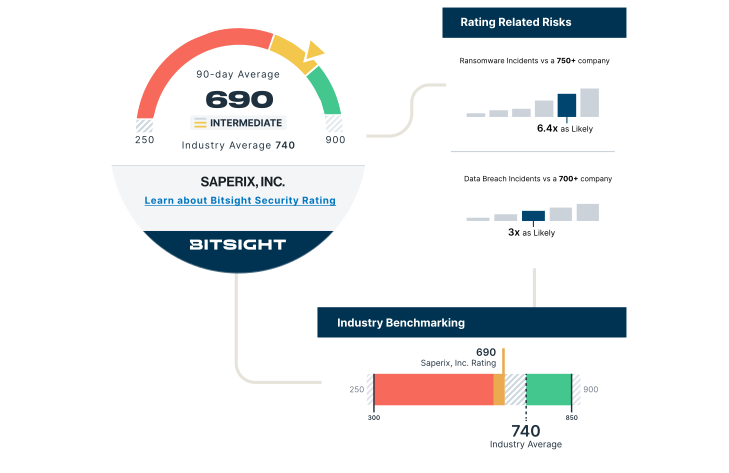
Security ratings provide continuous, objective assessment of an organization's overall security posture by evaluating multiple risk vectors from an external perspective, while vulnerability management focuses on identifying and remediating specific technical weaknesses in systems and applications. Security ratings complement traditional vulnerability management by revealing how an organization's security posture appears to external observers and threat actors, providing context about which vulnerabilities are actually visible and exploitable from outside the network. This relationship becomes critical in the AI era because ratings help prioritize vulnerability remediation based on external visibility and actual risk rather than theoretical severity alone. Organizations use security ratings to understand their comparative security posture against industry peers, track improvement over time, and communicate risk levels to non-technical stakeholders. Bitsight security ratings assess organizations across over 25 risk vectors including patching cadence, network security, and application security, providing the external perspective and continuous monitoring that enables effective vulnerability prioritization and demonstrates security effectiveness in the face of AI-accelerated threats.
Organizations achieve optimal security investment balance by recognizing that AI-powered threats make prevention alone insufficient, requiring detection and response capabilities that assume some attacks will succeed despite preventive controls. Effective strategies allocate resources across prevention technologies that reduce attack surface, detection systems that identify active threats and exposures, response capabilities that contain and remediate incidents quickly, and continuous monitoring that provides visibility across the entire ecosystem. The specific balance depends on industry, risk tolerance, regulatory requirements, and threat landscape, but leading organizations increasingly emphasize detection and response given the speed and sophistication of AI-driven attacks. Bitsight supports this balanced approach by providing continuous external monitoring that serves both preventive and detective functions, revealing vulnerabilities before exploitation while also identifying indicators of compromise and security degradation that suggest active threats, enabling organizations to maintain comprehensive security postures that address both prevention and detection requirements in resource-efficient ways.
The most common visibility blind spots include shadow IT assets that business units provision outside centralized security oversight, forgotten or legacy systems that remain internet-connected but unmaintained, third-party and supply chain risks that exist beyond organizational boundaries, cloud misconfigurations that create unintended public exposure, and subsidiaries or acquired companies that operate under different security standards. These blind spots matter because AI-powered reconnaissance tools systematically probe entire organizational ecosystems for weaknesses, efficiently identifying and exploiting the assets and relationships that security teams overlook. Traditional internal security tools struggle to discover these blind spots because they require explicit configuration to monitor specific assets and typically lack visibility beyond organizational boundaries. Bitsight addresses these visibility gaps through continuous external monitoring that discovers all internet-facing assets associated with an organization regardless of whether security teams know they exist, assesses third-party security postures across the supply chain, and provides unified visibility across subsidiaries and business units, eliminating the blind spots that AI-powered threats actively exploit.
Regulatory compliance increasingly requires organizations to demonstrate continuous monitoring, proactive risk management, and comprehensive visibility across ecosystems rather than point-in-time assessments and compliance checklists, reflecting regulators' recognition that AI-powered threats demand more sophisticated defenses. Frameworks including GDPR, CCPA, DORA, NIS2, and industry-specific regulations now emphasize third-party risk management, incident response capabilities, and ongoing security assessment rather than static controls. Organizations must provide evidence of continuous monitoring, risk-based prioritization, and timely remediation to satisfy auditors and regulators, while also demonstrating due diligence in vendor selection and ongoing supply chain risk management. Bitsight helps organizations meet these evolving compliance requirements by providing continuous monitoring that documents risk posture over time, third-party risk assessments that demonstrate supply chain due diligence, and clear metrics that communicate security effectiveness to auditors and regulators, enabling organizations to satisfy compliance obligations while also building the continuous monitoring capabilities needed to defend against AI-accelerated threats.
The future of cyber risk management will be defined by the race between AI-powered offensive and defensive capabilities, with organizations that adopt continuous monitoring, automation, and ecosystem-wide visibility maintaining resilience while those relying on traditional approaches face increasing vulnerability. Defensive AI will play growing roles in threat detection, vulnerability prioritization, and automated response, but human expertise will remain essential for strategic decision-making, risk acceptance, and managing the business context that AI systems cannot fully understand. The attack surface will continue expanding through IoT devices, operational technology, and increasingly complex supply chains, requiring security strategies that extend visibility beyond traditional IT boundaries. Regulatory requirements will intensify, demanding proof of continuous monitoring and proactive risk management rather than compliance checklists. Bitsight is positioned at the forefront of this evolution by providing the continuous external monitoring, ecosystem-wide visibility, and risk intelligence that organizations need to defend against advancing AI threats, enabling security teams to maintain resilience as the cybersecurity landscape continues its rapid transformation in the years ahead.