No man is an island,
entire of itself;
Every man is a piece of the continent,
a part of the main.
– John Donne
Let’s face it, we have a gap in our cyber posture. Thirty percent of breaches originate from third parties, yet as organizations become increasingly exposed to supply chain attacks, they often lack the visibility, context, and workflows to detect and respond to them. Why?
On the surface, it cannot be a data problem, right? Most security teams are not short on data, and they fully understand how to operationalize threat intelligence, Indicators of Compromise (IoCs), vulnerabilities, malicious infrastructure, and active exploitation. True, they are often overwhelmed by the amount of data, but they have state-of-the-art SIEM, SOAR, XDR, EDR, and other 3-4-letter acronym platforms to filter through the data and take action only on alerts that matter.
But in reality, that’s only one part of the story. Modern SOC teams were designed to counter first-party threats, originating from APTs and other bad actors that intentionally target the organization, or from internal exposure within their own attack surface.
But the saying “No man is an island” should also apply to enterprises. No organization is an island; we are all part of the continent. Think of the latest Vercel breach. According to the company, it originated with the compromise of Context.ai, a third-party AI tool used by a Vercel employee. Vercel said the attacker used that access to take over the employee’s Google Workspace account, gain access to the employee’s Vercel account, pivot into a Vercel environment, and enumerate and decrypt non-sensitive environment variables.
This is not a unique scenario. Similar attacks have taken place against various companies in recent years. But it didn’t change the way organizations monitor supply chain risks and exposures. Most SOC teams today still find it challenging to monitor their vendors' attack surface for critical alerts and exposures. We’re working to change that.
The supply chain exposure visibility and remediation gap
For most SOC teams, critical supply chain threats often remain invisible, whether it’s:
- A critical supplier exposed through a newly exploited vulnerability
- A trusted SaaS or AI tool creating a path into the enterprise environment
- Vendor privileged credentials appearing in stealer logs
- An initial access broker advertising access tied to a third-party partner
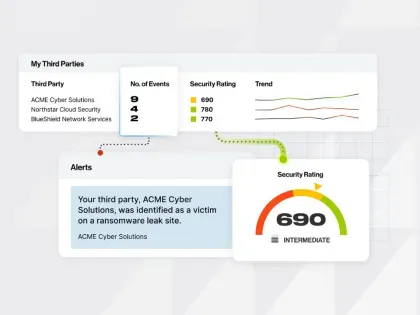
- A ransomware group naming a vendor as a recent target before any formal customer notification is issued
And even if the SOC is somehow aware of these incidents, they lack an appropriate way to help the compromised vendor remediate and mitigate the threat. Third-Party Risk Management and GRC teams often own the vendor relationship. They know who to contact, how the vendor is governed, and what contractual expectations exist, but they are not usually built to validate technical threat signals, triage evidence, or drive urgent remediation.
That creates a practical gap. SOC teams have the insight, but can’t access vendors. TPRM teams have access but not always the technical capacity to act with urgency. The result is a delayed detection, slow vendor response, and difficulty proving that risk was actually reduced.
With Bitsight Beacon, our new Supply Chain Exposure Management offering, we decided to change this reality. We decided to reimagine a world in which cybersecurity operations teams can go beyond first-party visibility and extend their reach into critical vendors and suppliers. Our strategic vision was simple: Detect early. Validate threats. Remediate faster. Turn your vendor ecosystem into a visible, actionable attack surface.