Investments in digital initiatives are essential to success. But, according to Accenture, 79% of organizations are adopting new and emerging technologies faster than they can address security issues. The finding isn’t surprising. While the ongoing wave of digital transformation opens exciting opportunities for innovation, it also widens your attack surface.
This means that successful cyber risk mitigation is more important than ever. But as security budgets decrease, your organization needs to find ways to do more with less. This requires a rethink of traditional methods of mitigating risk and, where possible, the use of automation.
Let’s look at three best practices for effective cyber risk mitigation that will drive operational efficiencies in your risk management processes.
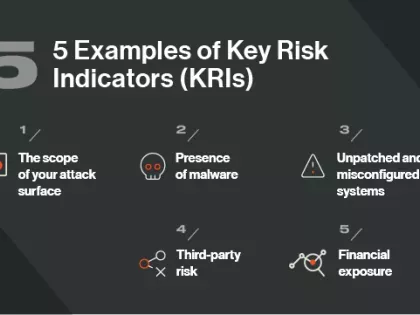
Understand your expanding attack surface
Your digital footprint is a complex environment that includes cloud service providers, shadow IT, and remote work devices, making it hard to identify where risk lies hidden.
Instead of undertaking a time-consuming inventory and manual cyber risk assessment of your IT infrastructure, use an attack surface analytics tool to discover the location of your digital assets quickly and automatically.
You’ll gain visibility into assets broken down by cloud provider, geography, business unit, and remote offices – and the corresponding cyber risk associated with each. You can even discover shadow IT and visualize areas of disproportionate risk – such as a misconfigured web application firewall that protects sensitive data.
Cyber risk isn’t confined to your digital ecosystem. As recent large-scale data breaches show, your supply chain can leave your organization vulnerable to cyberattack. To reduce that threat, use a third-party risk management solution to pinpoint connections between organizations in your vendor ecosystem, including business partners and potentially risky fourth parties. With this insight, you can better evaluate and select vendors and continuously monitor for risk in your extended digital supply chain.