Shadow AI & Cyber Risk

Shadow AI refers to the use of artificial intelligence tools, applications, models, agents, or AI-enabled services without appropriate organizational approval, visibility, or governance. It can include employees using public generative AI tools for work, developers connecting to external models or APIs, teams adopting AI-powered SaaS applications, or organizations deploying AI infrastructure outside established security processes. While these tools can improve productivity, unmanaged AI can expose sensitive data, introduce unknown dependencies, and expand the attack surface beyond what security and risk teams can effectively monitor.

What is Shadow AI?

Shadow AI is the unauthorized or unmanaged use of AI technologies for organizational work. The underlying technology does not have to be malicious. The risk comes from using AI without sufficient security review, governance, ongoing monitoring, or understanding of the data and systems it can access.

Shadow AI examples include:

  •        Employees entering corporate information into public AI tools    
  •        Unapproved AI browser extensions or meeting assistants    
  •        Developers using unauthorized AI coding assistants or model APIs    
  •        SaaS products introducing AI functionality without AI-specific security review    
  •        Unapproved or insufficiently governed AI agents connected to enterprise applications or data    
  •        Publicly exposed AI infrastructure, including unmanaged Model Context Protocol (MCP) servers    

As AI functionality becomes embedded across applications and workflows, organizations need visibility into more than standalone AI tools. They also need to understand the models, agents, integrations, infrastructure, and dependencies operating across their environment.

How is Shadow AI different from shadow IT?

Shadow IT describes technology used without appropriate organizational oversight. Shadow AI is a related problem, but AI can introduce additional risks because these systems process information, generate outputs, connect to other tools, and increasingly take actions.

Traditional shadow IT concerns often center on unmanaged applications, identities, storage, and data access. Shadow AI can introduce those same risks along with:

  •        Sensitive information disclosed through prompts    
  •        Unapproved access to enterprise data    
  •        AI-generated code entering production workflows    
  •        Prompt injection and insecure output handling    
  •        Excessive permissions granted to AI agents    
  •        Dependencies on external models, APIs, plugins, or frameworks    

The distinction matters because managing Shadow AI requires organizations to understand both where AI exists and how it interacts with data, identities, applications, and infrastructure.

What is “shady AI,” and how is it different from Shadow AI?

“Shady AI” is a recently emerging, informal label for a sanctioned AI tool or agent whose use, permissions, integrations, or behavior have moved beyond what the organization originally reviewed or intended. Unlike Shadow AI, the technology itself may be known and approved. The risk comes from capability or use-case drift inside an approved environment.

For example, an agent originally approved to summarize documents might later be connected to email, cloud storage, a CRM platform, or MCP tools and receive write access without a new risk review. An approved chatbot could also be used with data types or workflows that organizational policy does not allow. This does not necessarily mean the model has independently “gone rogue.” The problem may result from user behavior, configuration changes, excessive permissions, new integrations, or manipulation by an attacker.

AI riskCore issuePrimary governance question
Shadow AIThe tool, model, or agent is unauthorized, unknown, or unmanaged.What AI is operating across the organization and its supply chain?
Shady AIThe AI is sanctioned, but its use, access, capabilities, or behavior has moved outside approved boundaries.Is approved AI still operating within its intended purpose and controls?

Because “shady AI” is a new, informal label, organizations should use it carefully and focus on the underlying requirement: approval must be followed by continuous monitoring, change management, least privilege, and reassessment when an AI system gains new data, tools, permissions, or autonomy.

How can organizations detect Shadow AI?

Shadow AI discovery starts with understanding where AI technologies are being used across the enterprise. That requires combining multiple sources of visibility rather than relying on a single security control. No single discovery method will provide complete coverage.

Organizations should look for AI-related applications, APIs, agents, browser extensions, cloud services, development tools, and internet-facing infrastructure.

Useful discovery activities include:

  • Comparing approved AI applications with observed usage
  • Analyzing network traffic for connections to AI services and model providers
  • Reviewing identity and OAuth activity for AI-enabled applications
  • Monitoring endpoints and browsers for unauthorized AI tools
  • Inspecting development environments for AI SDKs, APIs, and coding assistants
  • Identifying externally exposed AI infrastructure and services
  • Reviewing third-party and supply-chain environments for AI-related exposure

Discovery should be continuous. AI adoption changes quickly as employees introduce new tools, vendors add AI functionality, and engineering teams deploy new integrations.

Tools for detecting Shadow AI risks

Organizations typically need several complementary technologies to build an accurate picture of AI use and exposure.

  • SaaS and cloud application discovery can identify connections to known AI applications and distinguish sanctioned from unsanctioned services.

  • Secure web gateways and network monitoring can detect traffic to AI platforms, APIs, and external model providers.

  • Data security tools such as data loss prevention technologies can help identify sensitive data moving into AI applications and enforce appropriate handling policies.

  • Endpoint, browser, and identity controls can uncover unauthorized extensions, applications, OAuth grants, and excessive permissions.

  • Cloud security tools can identify AI workloads, services, or infrastructure deployed outside approved processes.

  • External attack surface management can reveal internet-facing AI-related infrastructure, unmanaged services, and other externally visible assets that internal inventories may miss. Bitsight Security Posture Management can continuously discover and map the external attack surface, including public-facing LLM integrations and agentic workflows such as MCP servers.

  • Third-party risk management can extend that visibility into vendors and other supply-chain dependencies that may introduce additional AI-related exposure. Bitsight Continuous Monitoring can also surface AI products detected within the dependencies used by vendors and their vendors.

The goal is not simply to create a list of tools. Security and governance teams need enough context to determine which AI technologies are approved, which are unmanaged, and which create meaningful risk.

What cybersecurity risks does Shadow AI create?

Shadow AI can create risk whenever AI applications receive corporate information, access business systems, introduce new dependencies, or operate outside established security controls.
The most common risks include:

  • Sensitive data exposure: Employees may submit confidential information, source code, credentials, intellectual property, or regulated data to external systems
  • Identity and access risk: AI tools may receive OAuth permissions, API credentials, or access to enterprise accounts and applications
  • Prompt injection: Malicious input may cause AI systems to behave in unintended ways
  • Excessive agency: AI agents with broad permissions may perform unauthorized or unexpected actions
  • Insecure output handling: AI-generated content or code may be passed to downstream systems without sufficient validation
  • Software supply-chain exposure: Models, APIs, libraries, plugins, and frameworks introduce additional dependencies
  • Unknown external exposure: AI infrastructure may become internet-facing without the security team realizing it exists
  • Insufficient monitoring: Unmanaged tools may operate outside established logging, detection, and response processes

Shadow AI increases risk primarily because it weakens visibility and control. Security teams may not know which systems exist, what data they process, or how they connect to the broader environment.

Approved AI can create many of the same risks when its permissions, integrations, or use drift beyond the boundaries that were originally reviewed. This is the control problem described above as “shady AI.”

Can Shadow AI lead to a data breach?

Yes. Shadow AI can contribute to a data breach when unauthorized AI use exposes sensitive information or creates a path into corporate resources.

For example, an employee may enter confidential information into an external AI service without understanding how that information is retained or processed. An AI application could also receive credentials or permissions that allow access to internal systems.

The level of risk depends on factors such as:

  • What data the AI system can access
  • What permissions it receives
  • Where information is transmitted or stored
  • Whether security teams monitor the application
  • Whether the technology contains exploitable vulnerabilities

This is why organizations should evaluate Shadow AI findings according to actual exposure and business impact rather than treating every unauthorized AI tool as equally risky.

How does Shadow AI expand an organization’s attack surface?

Every new application, API, integration, agent, or internet-facing service can create another potential attack path. Shadow AI makes this harder to manage because many of these technologies may appear outside normal inventory and security review processes.

A developer might deploy an AI service without notifying security. A business team might authorize an AI SaaS platform through corporate identity. An employee could install an AI browser extension with broad permissions. A vendor might introduce an AI-enabled service that creates another layer of dependency.

Security teams therefore need to understand:

  • Which AI technologies exist
  • Which assets and data they can reach
  • Which services are externally accessible
  • Which identities and permissions they use
  • Which vulnerabilities affect them
  • Which third parties support or depend on them

Without this visibility, AI adoption can create blind spots across an already expanding digital footprint.

How does Shadow AI create software supply-chain risk?

AI applications often depend on external models, open-source libraries, APIs, datasets, model repositories, plugins, agent frameworks, cloud services, and other upstream technologies.

Each dependency creates another point of potential exposure. A vulnerability or compromise in one component can affect multiple downstream applications or organizations.

Shadow AI makes this problem more difficult because security, procurement, and GRC teams may not know the dependency exists until after teams begin using it.

Organizations should therefore treat AI supply-chain risk as part of broader software and third-party risk management. That includes reviewing important providers and dependencies, understanding where affected technologies exist, and determining which vulnerabilities or exposures require action.

What compliance risks are associated with Shadow AI?

Shadow AI can create compliance risk when organizations process information through AI systems without understanding the regulatory, contractual, privacy, or internal requirements that apply.

Potential compliance risks include:

  • Regulated or personal data sent to unapproved providers
  • Data transferred to unexpected locations or subprocessors
  • Inadequate documentation of how AI systems process information
  • Failure to complete required third-party assessments
  • Insufficient records of AI systems and their use
  • Unapproved use of confidential information or intellectual property
  • Difficulty producing evidence for audits or regulatory inquiries

The specific risk depends on the organization, industry, jurisdiction, data, and use case.

Rather than treating every AI application identically, GRC and security teams should evaluate systems based on factors such as data sensitivity, permissions, business criticality, deployment model, and applicable obligations.

What role should the SOC play in managing Shadow AI?

The SOC should operationalize AI-related security monitoring and response.

That includes detecting unauthorized AI activity, correlating AI-related assets with identities and vulnerabilities, investigating suspicious activity, and incorporating relevant findings into existing SIEMSOAR, vulnerability management, and incident-response workflows.

The SOC should also distinguish between a governance problem and a security incident. An employee using an unapproved application may require policy review. Evidence of credential theft, data loss, exploitation, or malicious activity requires an operational security response.

What role should GRC teams play in managing Shadow AI?

GRC teams should define the policies, risk thresholds, and accountability structures that govern AI use.

Their responsibilities may include establishing approved use cases, defining assessment requirements, evaluating third-party AI risk, documenting exceptions, mapping risks to relevant frameworks, and reporting material issues to leadership.

Close coordination with security teams is critical. GRC establishes what constitutes acceptable risk, while SecOps provides evidence about actual technologies, vulnerabilities, exposure, and threats. GRC helps translate organizational risk appetite and policy into assessment requirements and governance processes, while security and IT teams provide evidence about technologies, identities, vulnerabilities, exposure, and threats. Privacy, legal, and procurement teams may also need to participate depending on the use case.

How does AI governance help reduce Shadow AI risk?

AI governance gives employees clear boundaries for using AI and gives security teams a consistent way to evaluate risk.

A strong governance program should define:

  • Which AI applications and use cases are approved
  • What types of data may be used with AI systems
  • Which use cases require additional review
  • Who approves new technologies
  • What access and monitoring controls are required
  • How AI systems are inventoried
  • Who owns identified risks and exceptions

Governance also needs to evolve. An AI application may introduce new capabilities, integrations, or data practices after its initial approval. Periodic reassessment helps organizations identify when the risk has changed.

Shadow AI management best practices

Shadow AI management should balance innovation with visibility and control. Blanket restrictions can encourage users to work around security policies, while unrestricted adoption creates unnecessary exposure.

A practical program should:

  1. Maintain an AI inventory: Track approved AI systems and continuously discover unmanaged technologies
  2. Define acceptable AI use: Clearly explain what employees can use, what data they can share, and when approval is required
  3. Prioritize according to risk: Evaluate findings based on data sensitivity, permissions, business criticality, external exposure, and threat activity
  4. Provide approved alternatives: Give employees practical tools that meet legitimate business needs
  5. Manage identity and data access: Apply least privilege and monitor sensitive information moving into AI systems
  6. Assess third-party dependencies: Understand the providers, software, models, and infrastructure behind important AI applications
  7. Connect findings to existing security workflows: Integrate AI-related risks with exposure management, vulnerability management, TPRM, GRC, and incident response
  8. Monitor approved AI in operation: Log relevant access, tool use, and actions, and require human approval for high-impact or irreversible activity
  9. Continuously reassess: Review AI technologies when capabilities, permissions, data sources, integrations, threats, or business uses change

The objective is controlled adoption: Enable teams to benefit from AI without sacrificing the visibility and governance required to manage cyber risk.

How should Shadow AI be incorporated into an incident-response plan?

Organizations do not need an entirely separate incident-response process for Shadow AI. Instead, they should extend existing playbooks to account for AI-specific scenarios.

Plans should address events such as:

  • Sensitive information potentially exposed after being submitted to an unauthorized AI service
  • Compromised AI credentials or API keys
  • Unauthorized OAuth grants
  • Exposed AI infrastructure
  • Prompt injection affecting connected applications
  • An AI agent performing unintended actions
  • Misuse or unexpected behavior after an approved AI system gains new permissions, integrations, or data access

Responders should be able to identify the AI technology involved, determine what data and systems it accessed, revoke credentials or permissions, contain affected integrations, coordinate with external providers, and update governance controls after the incident.

The most important step is assigning ownership before an incident occurs. SOC, GRC, privacy, legal, IT, and relevant business teams should understand when and how they participate.

How Bitsight can help

Shadow AI reflects a broader cybersecurity challenge: Digital environments are changing faster than traditional inventories and assessment processes can keep pace.

Bitsight helps security and risk leaders discover external exposure, assess third-party dependencies, add business and threat context, prioritize remediation, and communicate security posture across the extended attack surface. For Shadow AI, Bitsight’s role is primarily outside-in: it complements the internal controls needed to monitor employee use, prompts, identities, permissions, browser activity, and sensitive data movement.

  • Discover public-facing AI exposure. Bitsight Security Posture Management continuously discovers and maps the external attack surface. Its AI-enabled exposure capabilities include discovering public-facing LLM integrations and agentic workflows, such as MCP servers.
  • Extend visibility into the supply chain. Bitsight Continuous Monitoring can surface AI products detected within the dependencies used by vendors and their vendors, helping teams identify AI-related concentration and fourth-party exposure that may not appear in a conventional vendor inventory.
  • Add business and threat context. Finding AI-related infrastructure is only part of the problem. Bitsight combines external exposure data, vulnerability information, business context, and real-world threat intelligence so teams can focus on the assets, vendors, and dependencies that present the greatest concern.
  • Prioritize and accelerate remediation. Bitsight helps teams prioritize attacker-relevant exposure and changing third-party risk, then use that intelligence to inform remediation, due diligence, contractual controls, restricted use, or removal from an approved vendor list.
  • Support governance and executive reporting. Bitsight helps security and risk leaders translate technical exposure into defensible evidence of posture, priorities, and progress for GRC teams, executives, and boards.

Bitsight does not replace the internal technologies needed to identify every employee interaction with AI or inspect every prompt and data flow. Its value in a Shadow AI strategy centers on the external perspective: discovering public-facing AI-related infrastructure and exposure, assessing the security posture of AI vendors and dependencies, identifying AI products across third- and fourth-party relationships, adding threat and business context, and helping teams determine where action matters most.

Common questions about Shadow AI

What is Shadow AI?

Shadow AI is the use of AI applications, models, agents, or services without appropriate organizational approval, visibility, or governance. Examples include public AI chatbots, coding assistants, browser extensions, APIs, and AI infrastructure introduced outside established security processes.

How does Shadow AI work?

Shadow AI typically appears when an employee, developer, or business team adopts an AI technology without completing the organization’s normal review process. The application may then access corporate data, identities, systems, or external services without the visibility and controls applied to approved technology.

What are common examples of Shadow AI?

Common examples include employees using consumer AI tools for work, unauthorized AI coding assistants, meeting transcription applications, browser extensions, model APIs, AI agents, and unmanaged AI infrastructure.

What is Shadow AI discovery?

Shadow AI discovery is the process of identifying AI technologies already operating across an organization. Security teams may use network monitoring, SaaS discovery, endpoint and identity controls, cloud security, external attack surface management, and third-party monitoring to build that inventory.

Why is Shadow AI important to address?

Organizations cannot consistently manage risk from technology they cannot see. Shadow AI can expose sensitive data, introduce new software and third-party dependencies, expand the attack surface, and make incident response or compliance more difficult.

What is the difference between Shadow AI and shady AI?

Shadow AI refers to AI tools, models, or agents that are unauthorized, unknown, or unmanaged. “Shady AI” is an emerging, informal label for sanctioned AI whose use, permissions, integrations, or behavior have moved outside the boundaries the organization originally approved. Shadow AI is primarily a discovery problem; shady AI is primarily an ongoing governance and control problem.

What problem does “shady AI” create for governance teams?

This creates a different challenge for governance teams. Discovery alone cannot solve it. Organizations also need visibility into how approved AI systems are used, what they can access, and whether their behavior remains consistent with policy.

Because “shady AI” is still an informal and emerging term rather than a standardized cybersecurity category, organizations should focus less on the label and more on the underlying governance problem: Approved AI can still create unmanaged risk.

Bitsight cta background color
2026 GigaOM TPRM Radar cover

See why GigaOm named Bitsight a Leader in TPRM

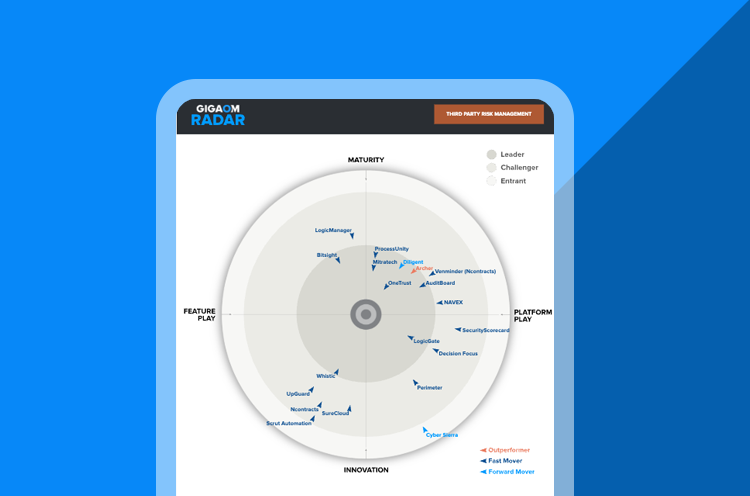
In GigaOm’s latest Radar report for Third-Party Risk Management, Bitsight was positioned as a Leader and Fast Mover for its externally sourced cyber risk ratings, continuous monitoring, API-first integrations, and vendor risk visibility.


Get the report

Bitsight cta background color