In today’s expanding business ecosystem, managing vendor risk is becoming increasingly critical to protecting companies’ sensitive data. With new threats emerging daily and companies continuing to outsource, vendor risk management is an issue that will only grow in affecting organizations and their business partners. According to a recent Navex Global study, the ability to promptly resolve newly identified risks is a top challenge for organizations’ third party risk management programs.
The third-party risk gap is growing, and while current approaches to the problem are helpful, they typically only provide a moment-in-time snapshot of security risk. To proactively mitigate third-party risk, organizations need automated tools that continuously measure and monitor the security performance of vendors. To make decisions in a timely manner, companies need to be able to access and aggregate data about their vendors quickly and efficiently. The speed at which organizations can comprehensively assess third parties is critical to the success of any vendor risk management (VRM) program, and ultimately, the value delivered to the business.
When companies are able to make critical vendor risk management decisions rapidly, this speed enables them to drive business value and partner better with the business. Quicker vendor assessments and selection means less downtime. This allows them faster turnaround and more productivity when it comes to managing hundreds and sometimes thousands of vendors that affect their business’ bottom line.
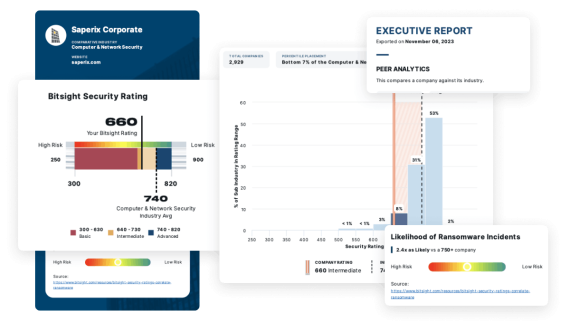
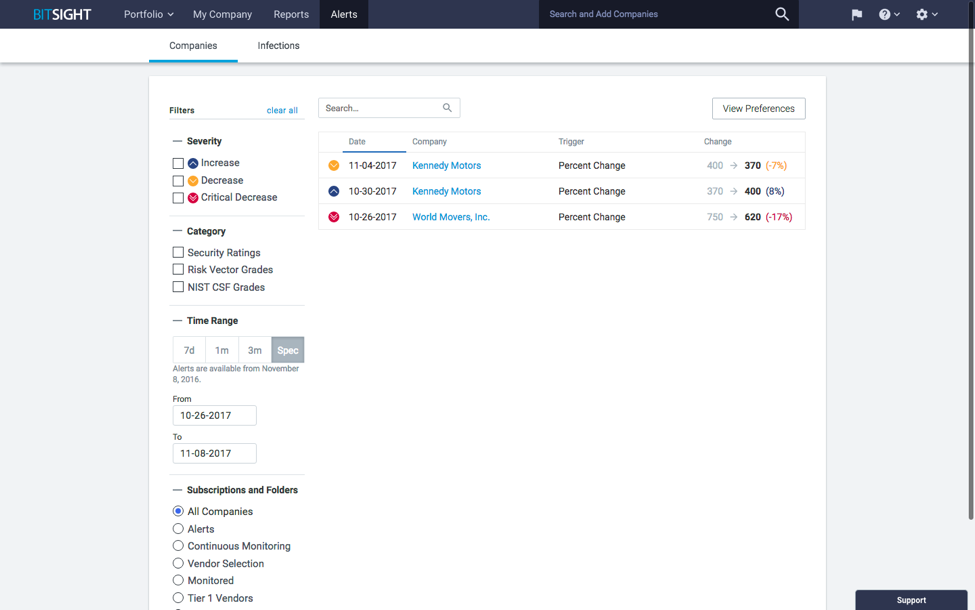
Bitsight Security Ratings allow organizations to continuously monitor their entire vendor ecosystem and quickly understand the health of their vendor portfolio and potential third parties. With just one click, users can filter to see different companies that may fit any qualifications selected -- for example, any organizations that were affected by WannaCry or other high-profile attacks. This allows companies to fully understand the scope at which they are at risk and make quick, informed decisions based on this information -- ultimately meaning less downtime for the organization when crafting or implementing a risk management program.