The Vendor Management Lifecycle

The vendor management lifecycle 

The vendor management lifecycle is the structured approach organizations take to manage their relationships with third-party suppliers from initial selection through the end of the partnership. This comprehensive process ensures that vendors deliver value, reduce risks, and comply with regulatory requirements throughout the duration of their engagement. Effective vendor management goes beyond procurement, emphasizing continuous risk management and strategic alignment with business objectives.

The more technology your organization adopts, the more exposed it becomes to third-party risks. Consider these statistics:

  • 79% of businesses are adopting technologies faster than they can address related security issues.
  • 73% of organizations have experienced at least one significant disruption caused by a third-party.

Organizations have responded to these risks by implementing robust third-party risk assessment procedures. However, a common mistake is to view vendor risk management as a one-time activity, typically conducted prior to onboarding a new vendor.

Since third-party risks are constantly evolving, it's crucial to evaluate vendor security at every phase of the vendor lifecycle. Let’s look at the three distinct phases of your vendor lifecycle management process and steps you can take to assess and remediate vendor risk along the way.

Phases of the vendor lifecycle

Understanding the phases of the vendor lifecycle is crucial for maintaining control over your third-party relationships and mitigating risks. The vendor lifecycle typically includes the following phases:
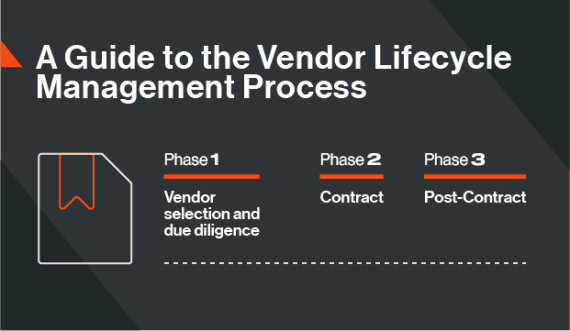
A Guide to the Vendor Lifecycle Management Process


Phase 1: Vendor selection and due diligence

The process begins with clearly defining business requirements and identifying potential vendors that align with these objectives. Many teams are involved in sourcing new vendors, each with conflicting priorities. For example, the marketing team considers the software solution's features, procurement considers its cost and value, and security and risk management teams consider its security controls. It can be helpful to narrow down vendor selections using documents like RFIs and RFPs. 

As soon as you have narrowed down your list of vendors, it's time to start due diligence. Security questionnaires are an important part of this process, but questionnaires offer a single point-in-time view, and vendor responses may be subjective and difficult to verify.

Furthermore, this stage of the vendor lifecycle management process is highly manual, involving one-off spreadsheets to track and compare responses, multiple follow-ups via email, and calendar reminders.

Automated vendor risk assessment capabilities and tools – like Bitsight Vendor Risk Management (VRM) – can solve these problems. Bitsight VRM automates the security assessment process and reduces dependency on email follow-up and other manual workflows. The platform also layers in independent validation of vendor responses using security ratings, so that you can quickly understand a vendor’s true security posture and detect red flags in their responses.

Once you’ve gathered all necessary documentation, you can store it centrally, streamline document sharing across internal stakeholders, and invite your vendors to connect and collaborate for more expeditious risk discovery and remediation – before they enter your supply chain.

Phase 2: Contract and onboarding

Efficient vendor onboarding establishes clear expectations and integrates the vendor into organizational processes. During onboarding, critical documentation, contracts, and SLAs (service level agreements) are finalized, ensuring both parties clearly understand their obligations. This phase includes other critical steps to the vendor management process:

1. Performance management

Regularly assessing vendor performance against established KPIs and SLAs is essential. After a vendor is awarded a contract, it’s important to keep a pulse on that vendor’s security performance across the life of the relationship. Typically, this involves conducting periodic security assessments or audits. While these assessments are important, third-party cyber risk can emerge at any time. The answer: continuous monitoring

Continuous monitoring tools and periodic reviews help organizations detect and mitigate emerging risks quickly, maintaining supplier accountability and quality of service.

2. Risk management

Throughout the vendor relationship, ongoing risk management practices, including cybersecurity monitoring and compliance audits, are critical. Proactively managing third-party risks protects organizations from potential threats, data breaches, and regulatory non-compliance.

Instead of a point-in-time cybersecurity audit, Bitsight TPRM delivers a near real-time snapshot of your third parties’ security performance from onboarding to contract termination.

Using Bitsight TPRM, you can automatically and continuously discover evolving supply chain threats and remediate any security gaps a threat actor may exploit. These can include misconfigured and unpatched systems, open access ports, and even human behavior. Whenever a risk is detected, you are alerted so you can act quickly.

Bitsight can also shine a light on vendors who warrant more periodic in-depth assessments, such as those whose security ratings consistently fall below pre-agreed security thresholds or SLAs.

Phase 3: Post-contract (Renewal or termination)

The final step in the vendor lifecycle management program is Renewal or Termination. At this final phase, organizations evaluate the vendor relationship to determine whether to renew contracts, renegotiate terms, or terminate the partnership based on performance outcomes, evolving business needs, and risk exposure. Even if a vendor is offboarded, third-party cyber risk can continue beyond the end of the contract, especially if the vendor had access to your sensitive data, such as a cloud service provider or payroll company.

To mitigate this risk, review the vendor’s contract to determine access levels. Then, take steps to ensure that all access has been severed and all sensitive information erased. Don’t forget the extended supply chain. Use Bitsight to visualize upstream and downstream dependencies within your vendor relationships. In this way, you can determine if any of your vendors' vendors had access to your data and remove these connections.

Vendor lifecycle management best practices

Managing outside vendors effectively can place you ahead of your peers, but finding which areas of vendor lifecycle management you can improve on is difficult with competing priorities. Focusing on the critical onboarding phase, your reassessment process, and the way you communicate your risk summaries to the board are three areas where you can start.

Bringing on a new vendor might seem simple: You just pick a vendor with the right capabilities and the right price and get the paperwork signed. But those who have to manage third party risk know that it’s rarely so simple. That’s because third-party risk management is a complex task that is full of difficult decisions and requires cooperation with multiple business departments like legal, procurement and finance, as well as the hard work of assessment and onboarding the vendor and managing them over the course of the vendor lifecycle. 

As you think about your TPRM program, ask yourself these questions:

  1. Are you doing things the way you are because you’ve always done them that way?
  2. Are there opportunities to make your program more efficient or reduce cost?
  3. Is your program struggling to approach TPRM from a business enablement perspective?

If you’ve answered yes to any of them, then it’s probably time to rethink the policies, processes and communication strategies for your TPRM program. Below are three critical stages of your program that may be ripe for a revamp.

1. Set the right onboarding policies

It is crucial to find efficient onboarding policies during your vendor onboarding stage to ensure that you are working with the most secure third-parties. Having a stable and readily followed onboarding processes with policies that are supported across the business will also present your company as a reliable organization to partner with, and will help you attract the best vendors in the industry.

Here are three areas you can optimize your policies to ensure efficiency in this area of your TPRM program:

  1. Setting a minimum requirement for security measures your third-parties have to hit before they can be onboarded into your internal systems efficiently narrows down your daunting list of vendors. Bitsight for Third-Party Risk Management provides third-party security ratings to help decide between vendors in a fraction of the time.
  2. In the current climate of primarily remote workforces, ensuring quick communication and approvals can be difficult if the steps were not previously mapped out prior to the COVID-19 pandemic. Procurement, legal, and finance will all need to be involved at some point throughout the onboarding process for various approvals and contract points, so try bringing a representative from each department early during vendor assessment.
  3. Communicate policies and third-party decisions to all functional business unit leaders and managers. Problems arise when information isn’t clearly communicated across the board to all departments. Connecting the security team to the rest of the organization is important when securing resources from the board. Including all business units when giving updates on third-parties is a good policy for enabling the individual parts of the business to support each other.

2. Maximize efficiencies within the reassessment process

Failing to focus on efficiency throughout the entire lifecycle can end up erasing your hard work during onboarding. Promoting efficiency during the assessment stages allows for successful risk mitigation, even as your list of vendors continues to grow. Often we see security professionals relying on traditional methods when evaluating vendors, like long lists of vendor questionnaires. Maturing your vendor risk management program with a tiering structure and continuous monitoring technology will enable your organization to grow without being held back by outdated vendor management strategies.

Tiering

Security professionals know that some vendors are more important to their organization than others. Grouping these vendors in structured tiers based on the inherent risk you’re willing to accept will help focus your resources during the assessment process. Bitsight for TPRM assists users with tiering vendors by setting rating requirements for different tiers. For vendors working directly with sensitive company information, stricter limits can be placed on how low their rating is allowed to drop before the user is alerted. For the less critical vendors, more flexibility is given to inherent risk. Instead of treating all your third-parties the same, tiering allows security teams to clearly see which third-parties require more frequent and in-depth assessment.

Continuous monitoring

You can also highlight vendor lifecycle efficiency by removing the yearly schedule for assessing your third parties, and instead work under a continuous monitoring system. Continuous monitoring gives security managers full-time insight into the threats and status of their third-party ecosystem to tackle malicious activity to a vendor’s system before even being notified by the vendor themselves. Bitsight’s TPRM software will notify users when a third-party experiences a sudden drop in their score, and point the security team directly to the vulnerability point. Continuous monitoring also takes security management back into the hands of the TPRM team. You don’t need to rely on your vendors being timely and forward in a security report if you have access to the data on your own account.

3. Successfully communicate risk

Security professionals can’t afford to overlook the importance of communicating with your organization’s leadership team. Generally speaking, being prepared to discuss third-party risk initiatives and positioning with your organization’s leaders will help secure cybersecurity resources. Minimizing confusion with the board with help build trust between the security leaders and the company decision makers. Here are two important factors to consider to practice efficient communication with company leaders:

  • Context: Many security leaders forget that the metrics and terminology they use in their day-to-day operations are not commonly used by the board, which adds a layer of difficulty and skepticism when it comes to communicating the numbers and requesting budget. It is important to also include context surrounding how the metrics relate to the overall business. Connecting the dots for how your numbers are impacting the company’s overall goals, including information about the industry averages and your company’s historical performance, and providing a high-level overview describing different malicious activities you might discuss to help when communicating with your board.
  • Solutions: When board members are presented with the status of how our security systems are performing, the next step is to consider what will be worked on in the future to either continue or improve what’s being done. A security professional should bring both tactical and strategic examples of team goals for the future in order to best communicate trust with the board. Tactical steps are good for board members to see a detailed, specific set of steps the security team can take to reach their program goals. Also taking a strategic approach to discussing vendor management will help the board compare your team to company competitors.

Automate the vendor lifecycle management process

Navigating the vendor lifecycle management process can be challenging – especially as your vendor portfolio grows. Traditional methods are highly-manual, time-consuming, and error-prone. They are also hard to scale across the evolving third-party risk landscape.

But with Bitsight’s suite of powerful automated vendor risk management tools, you can confidently manage risk throughout the entire vendor lifecycle.

5 Keys to Building a Scalable Vendor Risk Management Program CTA

Free guide: 5 Keys to Taking the Chaos Out of Vendor Risk Management

Streamline onboarding, automate assessments, and stay ahead of third-party threats—without burning out your team.