You’re a CISO juggling SecOps and threat intelligence operations. You barely have time to eat lunch, let alone keep up with the constant flood of cyber threat news. One Tuesday, on your way to grab a quick bite in the building lobby, you step into the elevator. Just as the doors begin to close, your CEO slips in. He’s frazzled.
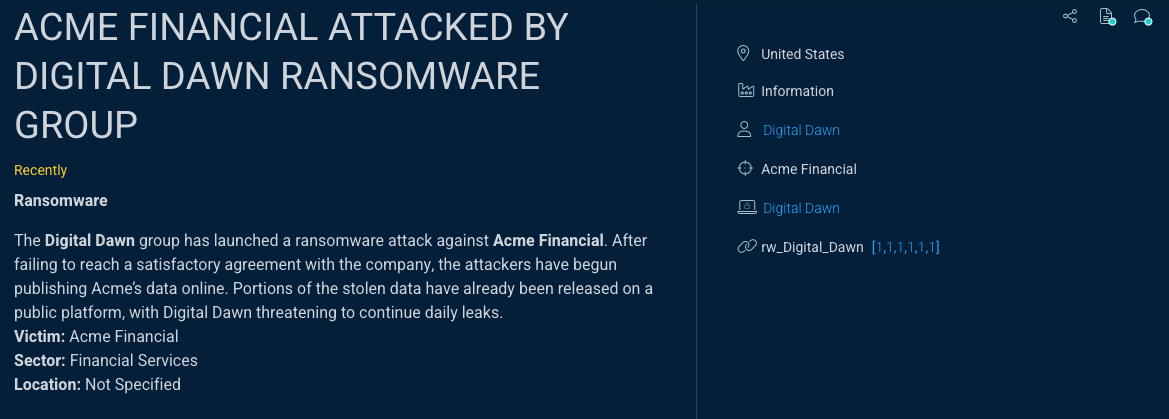
“Did you see the news about Acme Financial? Their entire C-level was hacked by a ransomware group. They now need to buy back all of their stolen credentials.”
Acme is your biggest competitor.
Your mind races. Why were they targeted? Is this a regional campaign? Are we next?
You scramble to find answers. Twitter? News sites? Did your team email something this morning? Slack?
The CEO locks eyes with you: “We’re protected, right? We’re secure… right?”
What if you had known?
What if the story was different and you knew about the Acme attack before stepping into the elevator? Or, better yet, what if you had briefed your CEO first with context, shared mitigation strategies, and reinforced the company’s readiness?
The problem: CTI information overload
It’s not that cyber threat intelligence (CTI) information doesn’t exist — it’s that there’s too much of it. From Reddit to niche cybersecurity sites to reports, the noise is deafening. Sifting through all of it becomes a mission in itself, taking time away from emerging threats that actually matter.
To exacerbate the problem, news and events are not always surfaced online as they break on the dark web. Until now, security professionals have had no option but to access the information they need via multiple websites and platforms, giving threat actors a head-start as their attack plans unfold. Additionally, the structure of the threat intel is constantly changing, making it difficult to make sense of the different sources of information.
CISOs and threat intelligence analysts face major stumbling blocks:
- Information overload: There is an overwhelming amount of cybersecurity news and threat reports.
- Inefficient intelligence gathering: Navigating multiple sources and platforms to gather the information needed is difficult and time consuming.
- Lack of relevancy & context: Without structured intelligence, it’s challenging to discern which events are critical.
- Delayed access to threat intel: Key cyber events often surface first on the deep and dark web, making it difficult to track emerging threats in real time.
- Limited investigative capabilities: A lack of linked intelligence and investigative tools slows down the response process.