Ransomware is a cash-in machine for criminals and we have just spotted another one come alive this week. Since 16th February, AnubisNetworks Labs team is tracking Locky, a malware that given the high volume of its distribution campaigns will rival with the big ones such as CryptoWall.
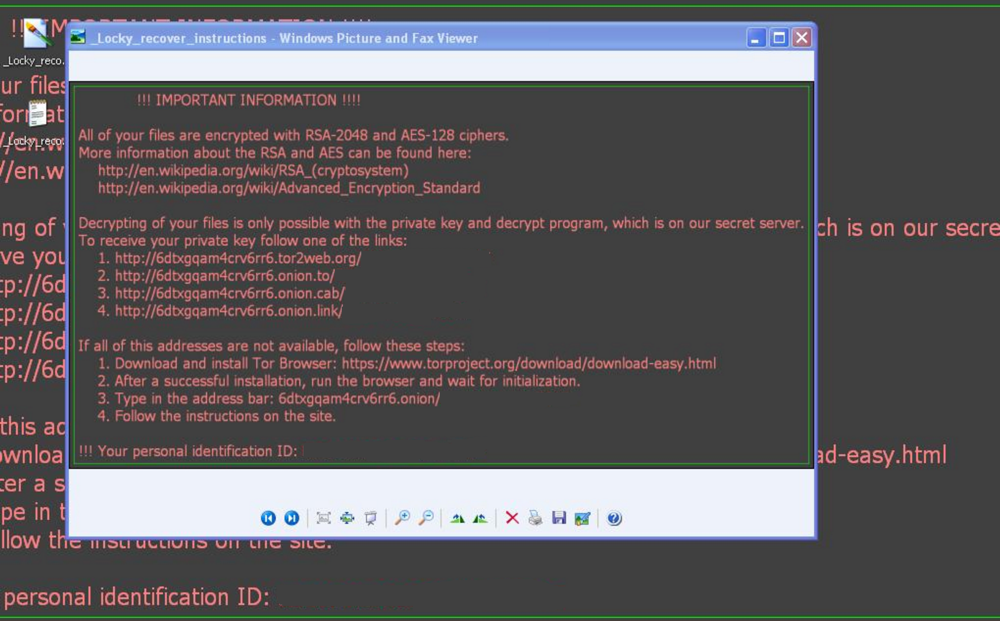
Locky ransom message on an infected system
Delivery
Locky is delivered mostly via email distribution campaigns that have too much in common with another well known threat: Dridex. Actually, the email templates used are almost the same that Bartallex uses to drop Dridex, as you can see here and here.
The email has a Microsoft Office document attached that, when opened and if the user enables macros to run, will download and install the Locky payload.
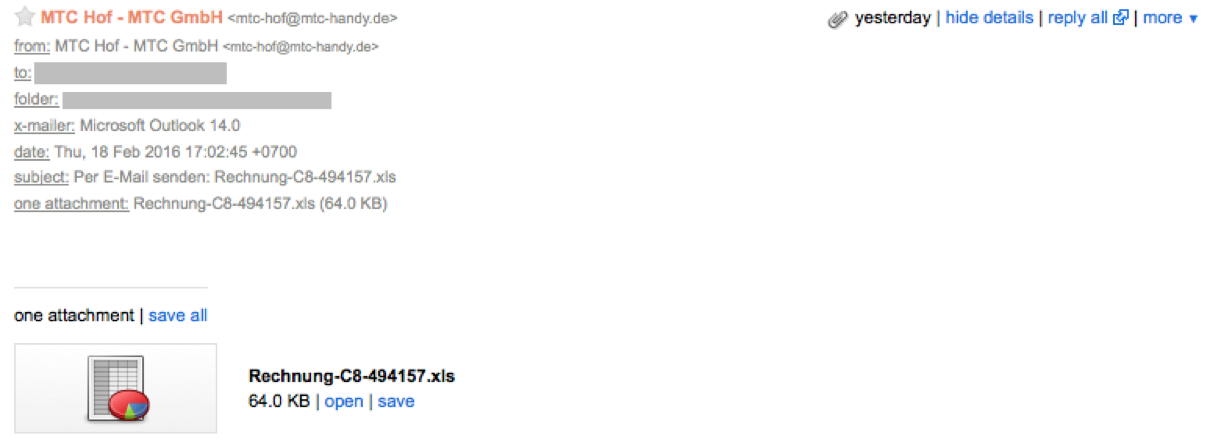
Sample of email message sent to delivery Locky
There are also reports that Neutrino Exploit Kit is being used for delivery, see here and here.
Execution and C2 Communication
After installation the malware will perform the following actions:
- It will delete Volume Shadow Copies to prevent any system backup stored on the infected computer to be restored.
- Contacts the command and control (C2) systems to check in and request a new public/private key pair to use for encryption.
- C2 generates the public/private key pair on server side and responds to the infected system with the public key.
- The encryption process starts, encrypting files with the extensions listed below with the generated public key.
- When the encryption process finishes, the malware asks for the ransom text to be displayed to the victim, dropping the file _Locky_recover_instructions.txt to every folder that has encrypted files and a new wallpaper _Locky_recover_instructions.bmp.\\
The malware communicates with its command and control using hardcoded IP addresses and a DGA (domain generation algorithm). Thanks to Jørgen at Norwegian HelseCERT, we provide some generated domains in the IOCs section of this post.
Encrypted files
Locky will look for files to encrypt in both local file system as well network shares. The following file types are encrypted with RSA-2048 and AES-128:
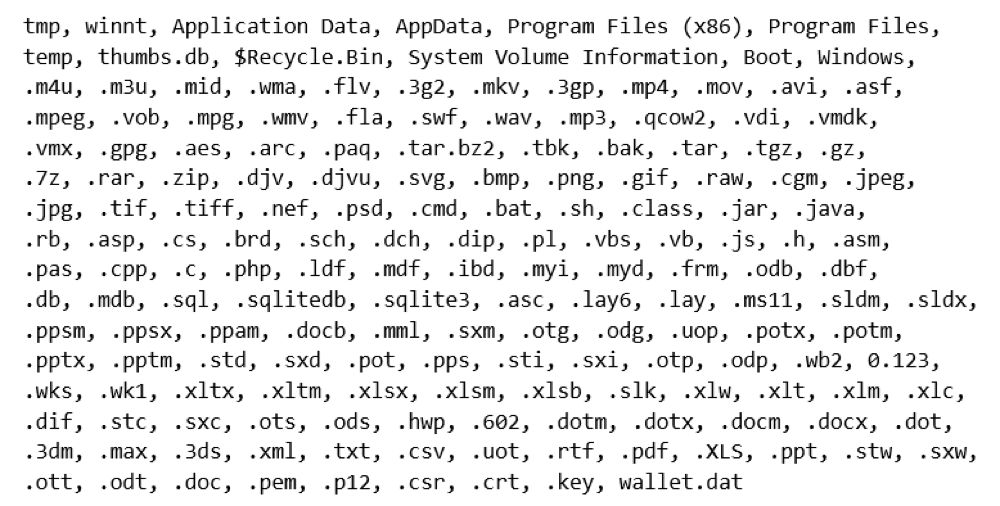
The malware also encrypts the filename of the file, and appends the .locky extension to them.
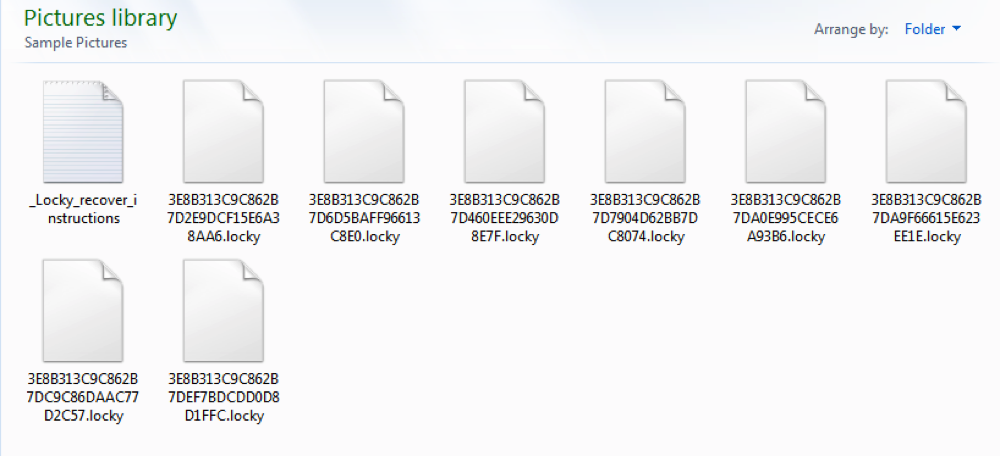
Aspect of the user Pictures Library after the encryption process
The Ransom Page
But, not all is bad news! Locky is “friendly” to its victims and doesn’t put extra pressure on this awful process - unlike other ransomwares, there is no time limit to pay the ransom, at least it’s not advertised at this moment. Normally, ransomware will double the ransom amount after 48h or so.
After paying 0.5 BTC, it’s possible to download the Locky Decrypter.
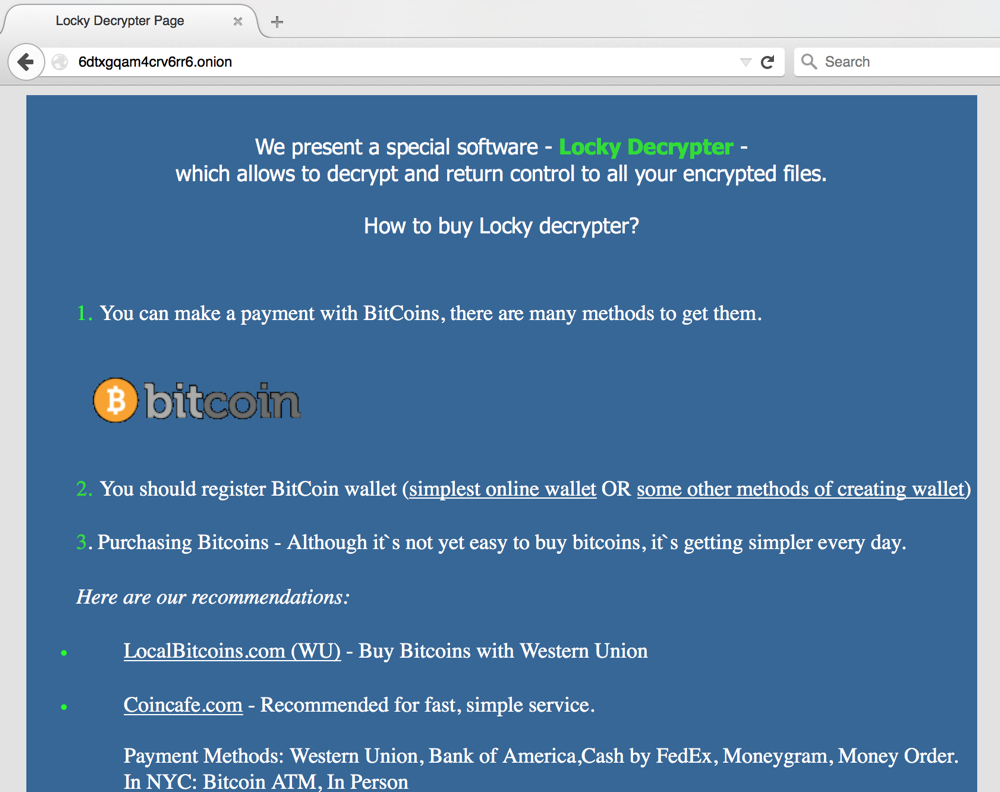
The original payment site
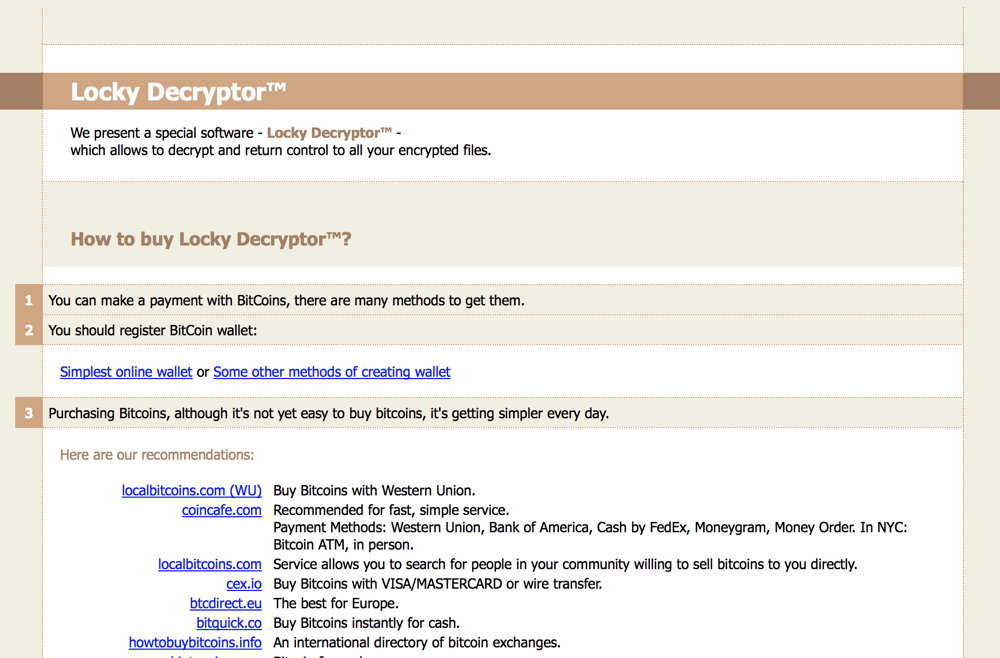
The second version of the payment site
Infections Worldwide
We have been collecting Locky telemetry since it was seen on the wild. The following graph shows unique IP addresses infected with Locky that contacted our Cyberfeed platform in a 48 hour time window, collected from 2016-02-16 17:00 UTC to 2016-02-18 17:00 UTC.
The cumulative sum of infected systems is above +4500. These are actual infections where the encryption process already took place.
The real number of infected systems is slightly higher, since those infections are tracked based on their public IP addresses and it’s common on corporate networks that all the infected systems reach the Internet with the same IP address.
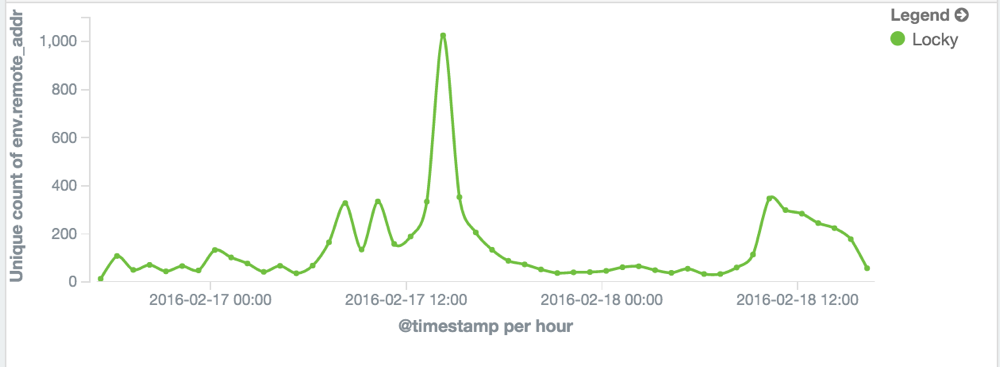
Graph of hits on our sinkholes for a 48h period
You can see volume peaks that represent newly infected systems after massive distribution campaigns.
Here you can see the geographic dispersion of the infections:
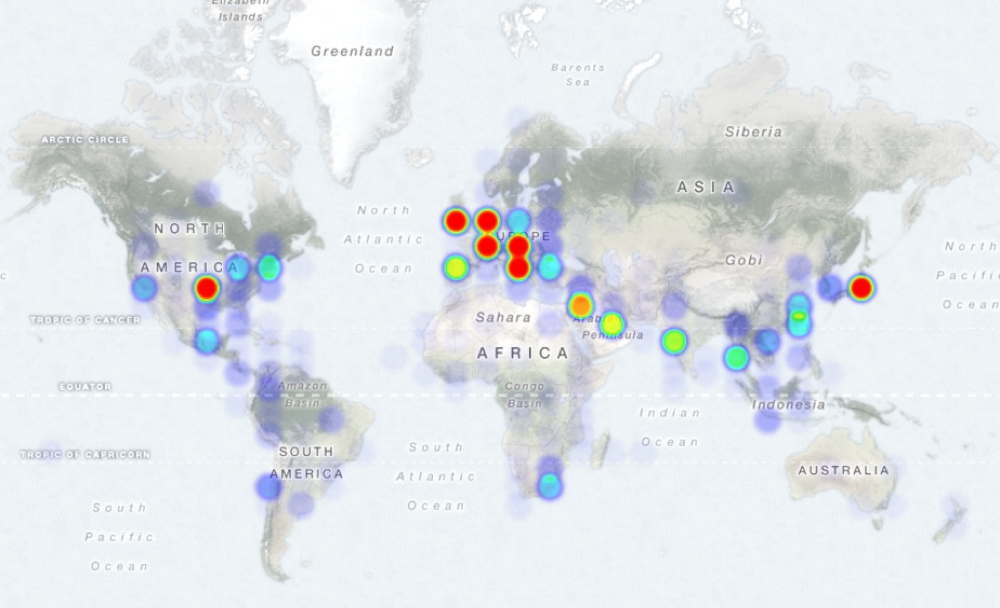
Heatmap of Locky infections
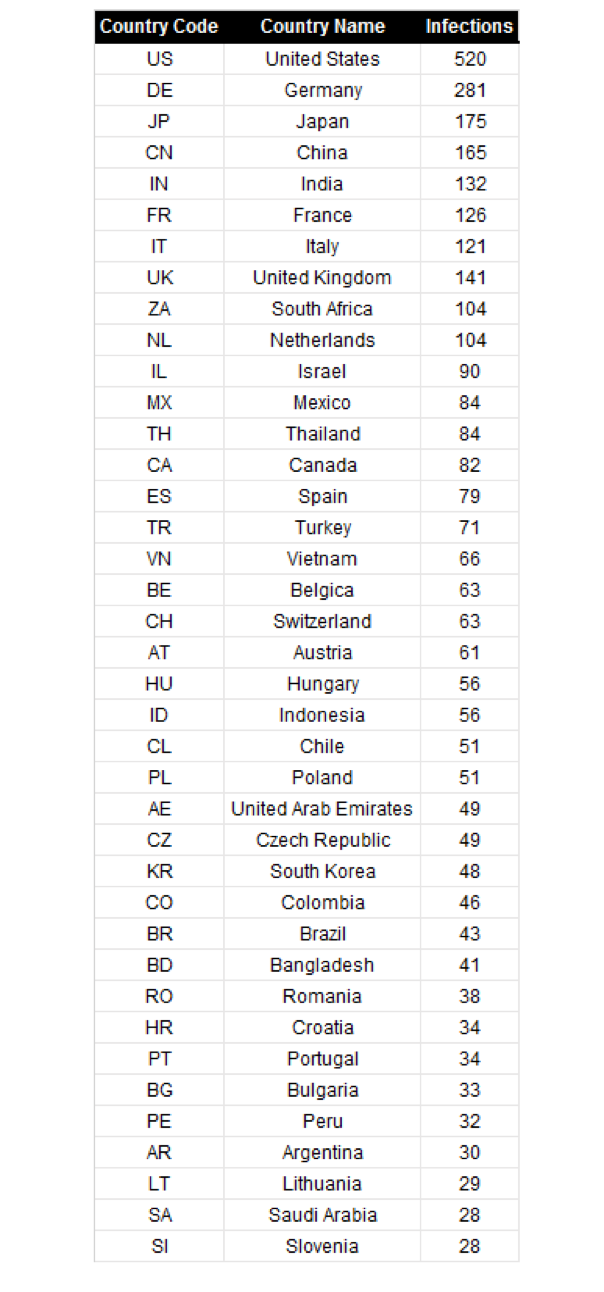
Infections by country - Top 40: