Know What's Actually Happening to Your Suppliers, Not Just When Their Names Show Up in Threat Data

bitsight third party threat intelligence
Naomi Yusupov profile
Written by Naomi Yusupov
Product Manager

A vendor can pass every questionnaire you send it and still be the reason you end up in a breach report.

That's the gap most third-party risk programs live in today. According to the 2026 Verizon Data Breach Investigations Report, 48% of breaches now involve a third party, up from 30% the year before and 15% the year before that. But most organizations still manage that risk with periodic assessments and separate threat feeds. Those methods can tell you whether a supplier passed a review last quarter. They can't tell you whether that same supplier is being targeted by a ransomware group this week.

The problem: Two views that don't talk to each other

Security teams generally have decent visibility into supplier posture and decent visibility into threat activity. What they don't have is a way to connect the two. A vendor can look compliant on paper while its security posture quietly degrades, or while it's actively discussed in underground channels, exposed in a breach, or targeted by a threat actor. 

Organizations typically rely on a few separate approaches to manage third-party cyber risk:

  • TPRM and GRC platforms assess vendors through questionnaires, reviews, and compliance workflows, but often provide a point-in-time view of risk.
  • Security ratings and monitoring tools track a supplier’s security posture over time, but may not show whether that supplier is currently being targeted or compromised.
  • Threat intelligence platforms and feeds surface ransomware, breach, threat actor, and cyber news activity, but that intelligence often sits separately from third-party risk workflows.

Manual research and cross-team investigation, understandably, is often used to bridge the gap, with CTI teams reviewing alerts, validating whether a supplier is actually affected, and then passing that information to TPRM, procurement, legal, or other stakeholders.

As a result, organizations may have strong visibility into supplier posture and strong visibility into threat activity, but those two views are often separate. Teams are left to manually determine which suppliers are under active threat, how serious the risk is, and where to act first.
Introducing Third-Party Intelligence

Third-Party Intelligence, part of the Bitsight Threat Intelligence (TI) suite, closes that gap. Bitsight maps your suppliers to its global entity database and continuously correlates their assets, subsidiaries, security posture, and threat activity across thousands of intelligence sources. Combined with Bitsight Security Ratings, that gives you one view of both what a supplier's security posture looks like and what's happening to them right now, from ransomware and breaches to hacktivism and relevant cyber news. It includes:

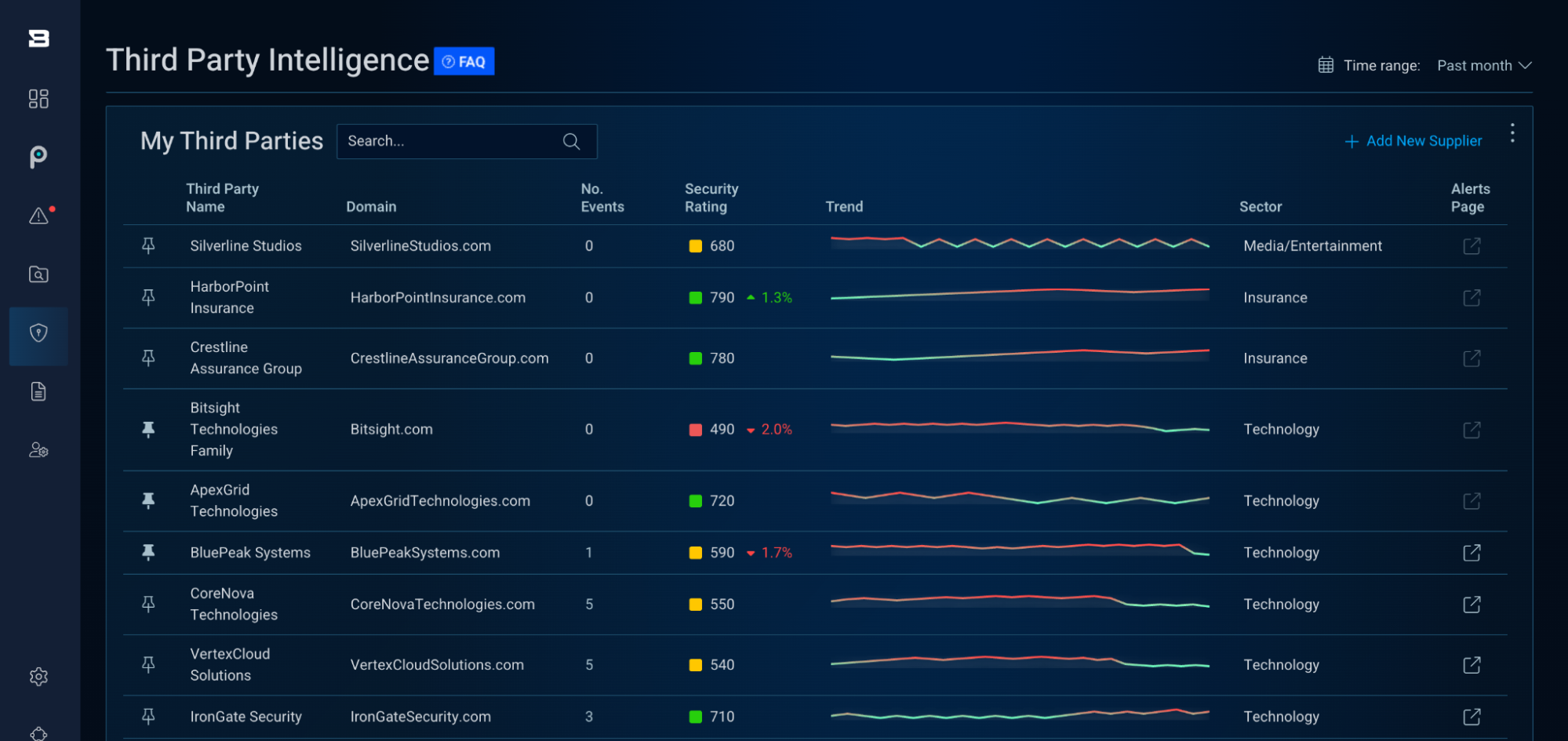
Third-Party Intelligence Dashboard: Provides a centralized view of monitored suppliers, including Bitsight Security Ratings, cyber events volume, rating trends, sector, and adverse event indicators, helping teams quickly identify which vendors need attention.

Figure 1 Third-Party Intelligence dashboard
Figure 1: Third-Party Intelligence dashboard.

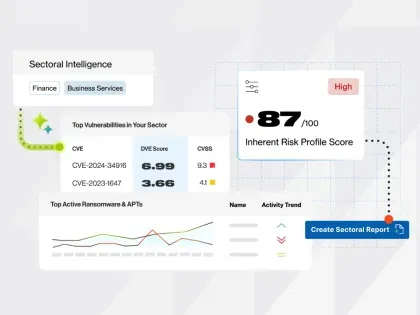
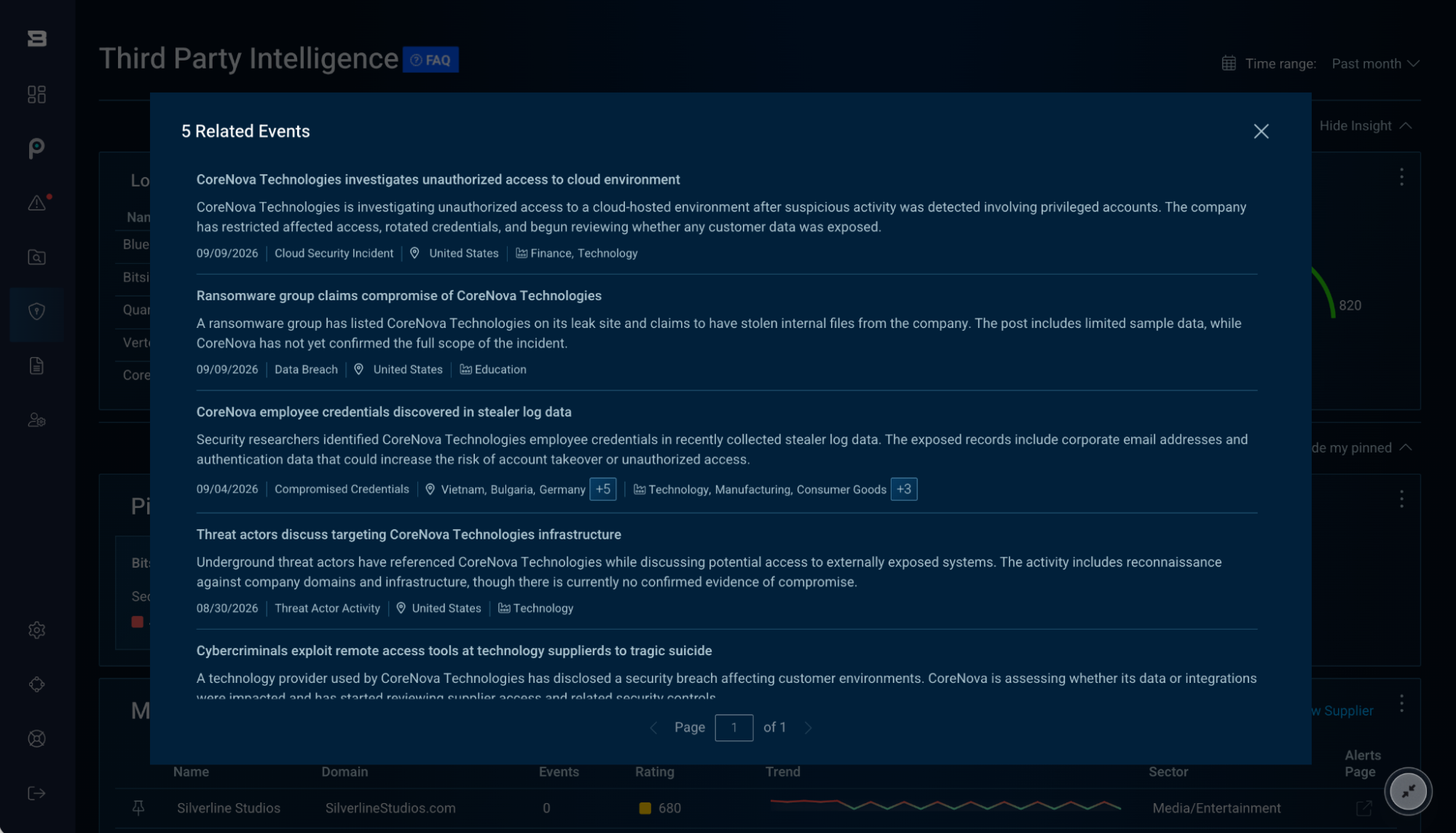
Third-Party Risk Alerts: Monitors ransomware, data breaches, hacktivism, and cyber news affecting suppliers, providing the threat context and recommended actions teams need to quickly assess impact and respond.

Figure 2 Third Party Intelligence alert and context
Figure 2: Third Party Intelligence alert and context.

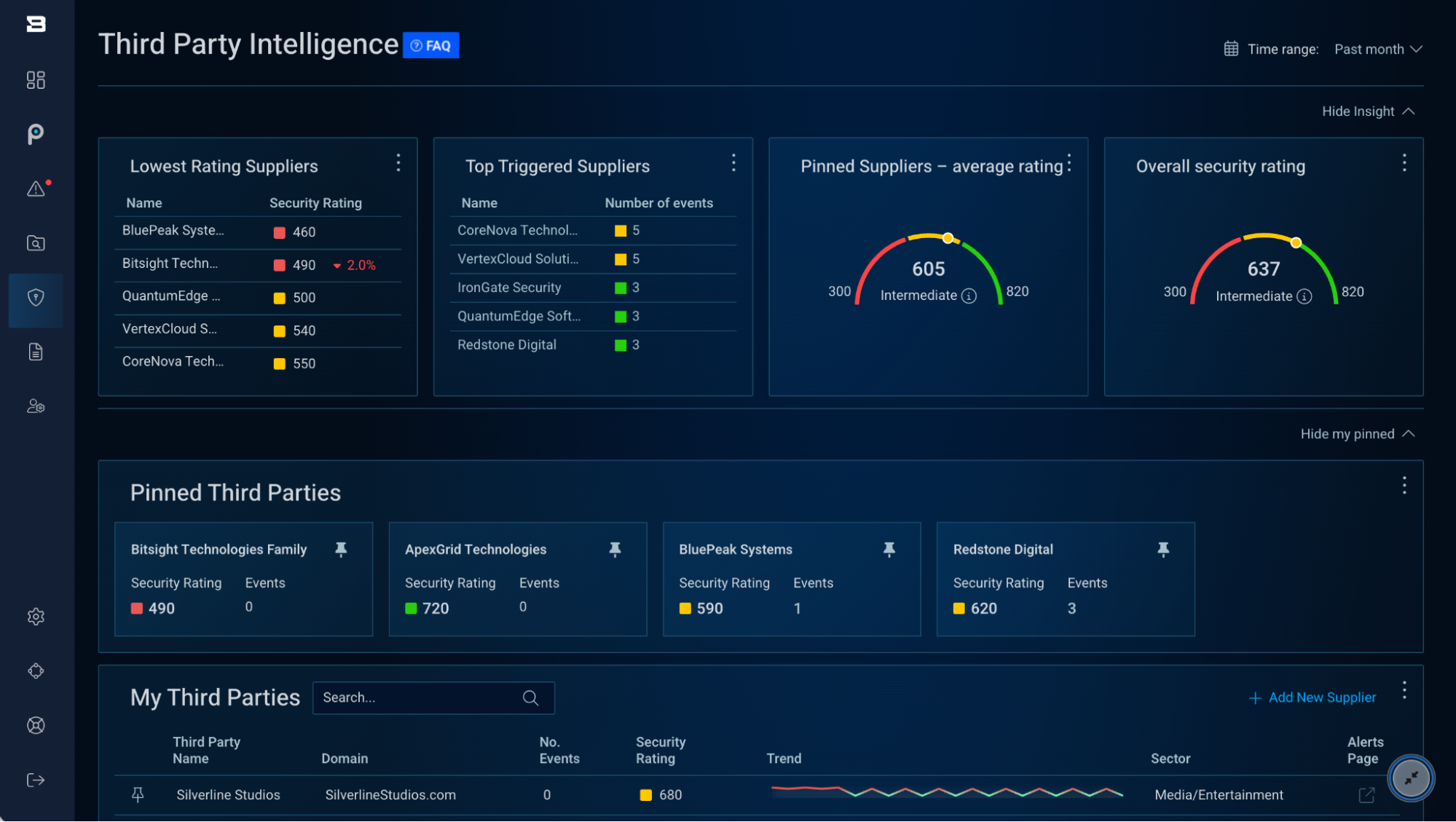
Bitsight Security Ratings: Adds a continuously updated, data-driven measure of each supplier’s security posture, helping teams compare vendors, track changes over time, and distinguish isolated threat events from broader security weaknesses.

Figure 3 Pinned third parties and their respective security ratings
Figure 3: Pinned third parties and their respective security ratings.

From reactive to prioritized

When you can see security rating, event severity, event volume, and supplier importance side by side, prioritization stops being a guessing game. Teams spend less time validating alerts and more time acting on the ones that matter, before a supplier issue turns into a supply chain incident.

Your suppliers are part of your attack surface. It's time your visibility extended that far too.

Third-Party Intelligence is live now. Click through the interactive tour, or request a demo to see it on your own supplier list.

Bitsight cta background color
2026 gartner magic quadrant cover

Bitsight Recognized as a Visionary in 2026 Gartner® Magic Quadrant™ for Cyber Threat Intelligence Technologies

Get the report and see why Bitsight was named a Visionary.


Download

Bitsight cta background color