When launching a third-party risk management (TPRM) program, one of the best places to begin to be proactive about mitigating cyber risk from your third parties is by examining the vulnerabilities present on their network. Despite global knowledge of the harm that vulnerabilities can do to users and businesses alike, they still continue to persist and cause business interruption worldwide.
Today’s digital environmental offers tremendous opportunities for modern organizations. At the same time, there is more risk. Vulnerabilities and infections plague organizations around the globe — and their numbers continue to rise. In 2018, the annual volume of vulnerabilities reached an all-time high of 15,872 CVEs. And as organizations increase their reliance on third-party vendors for outsourced services and solutions, they expand their attack surface.
Understandably, when it comes to managing risk internally proactive controls can be put into place when a vulnerability is identified on the network. However, the struggle lies in identifying and mitigating risk across your supply chain. How can you ensure control across your third-party ecosystem and the potential vulnerabilities that exist there? Once this foundation is established within your TPRM program, you can build on it and shift to a more proactive approach to managing third-party risk — and limiting your exposure.
Bitsight recently published a white paper on vulnerabilities and third-party risk management, “5 Tips to Manage Third-Party Risk”, which highlighted some of our research on vulnerabilities affecting businesses on a global scale and the trends we can see related to them.
With the number of reported vulnerabilities and infections increasing year over year, cyber threats, such as data breaches and attacks causing business interruption, are a top concern for organizations as their supply chain continues to expand and cyber risk threatens their environment.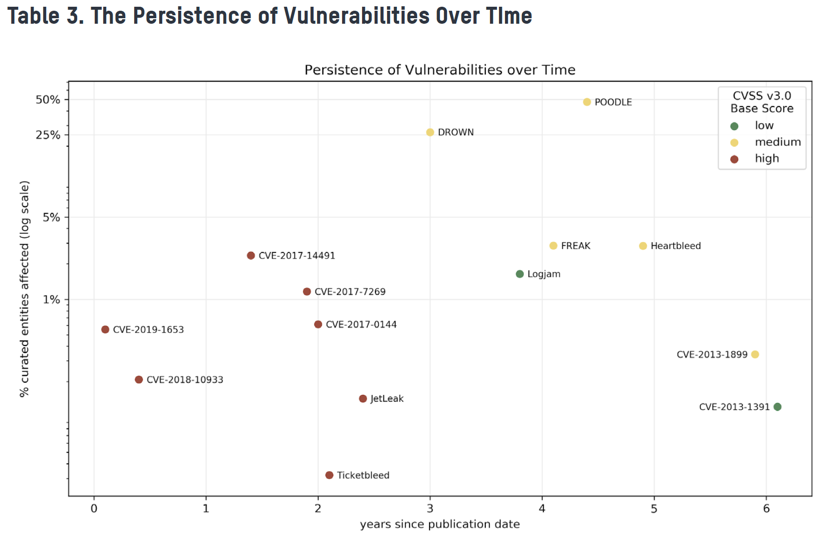 The image above, taken from Bitsight’s newest report, implies that the window for those vulnerabilities and infections to continue to plague organizations through third-party relationships, or their own infrastructure can be as long as two years. Some organizations do not have visibility into that infection time.