Key takeaways for CVE-2026-98432
- CVE-2026-98432 is a use-after-free bug in the Linux kernel's IPv4 TCP networking stack; it has been present since Linux 4.4.
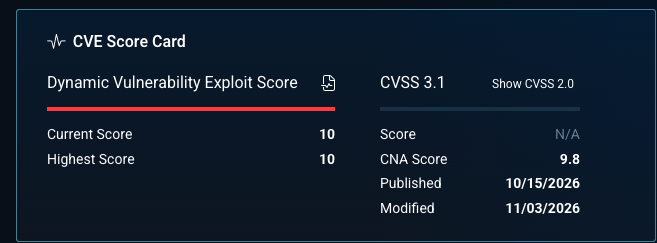
- It carries a Critical rating and a 9.8 CVSS 3.1 score from both the Linux kernel CVE team and Red Hat.
- Anthropic made headlines by showing how Claude helped construct a working exploit, gaining root-level remote command execution on a server running a multipath TCP listener. However, MPTCP is not required for exposure: the vulnerable IPv4 TCP code paths can also be reached through ordinary TCP connections.
- While this proves RCE is doable under the right conditions, it doesn't automatically mean every unpatched Linux server is an easy target in practice.
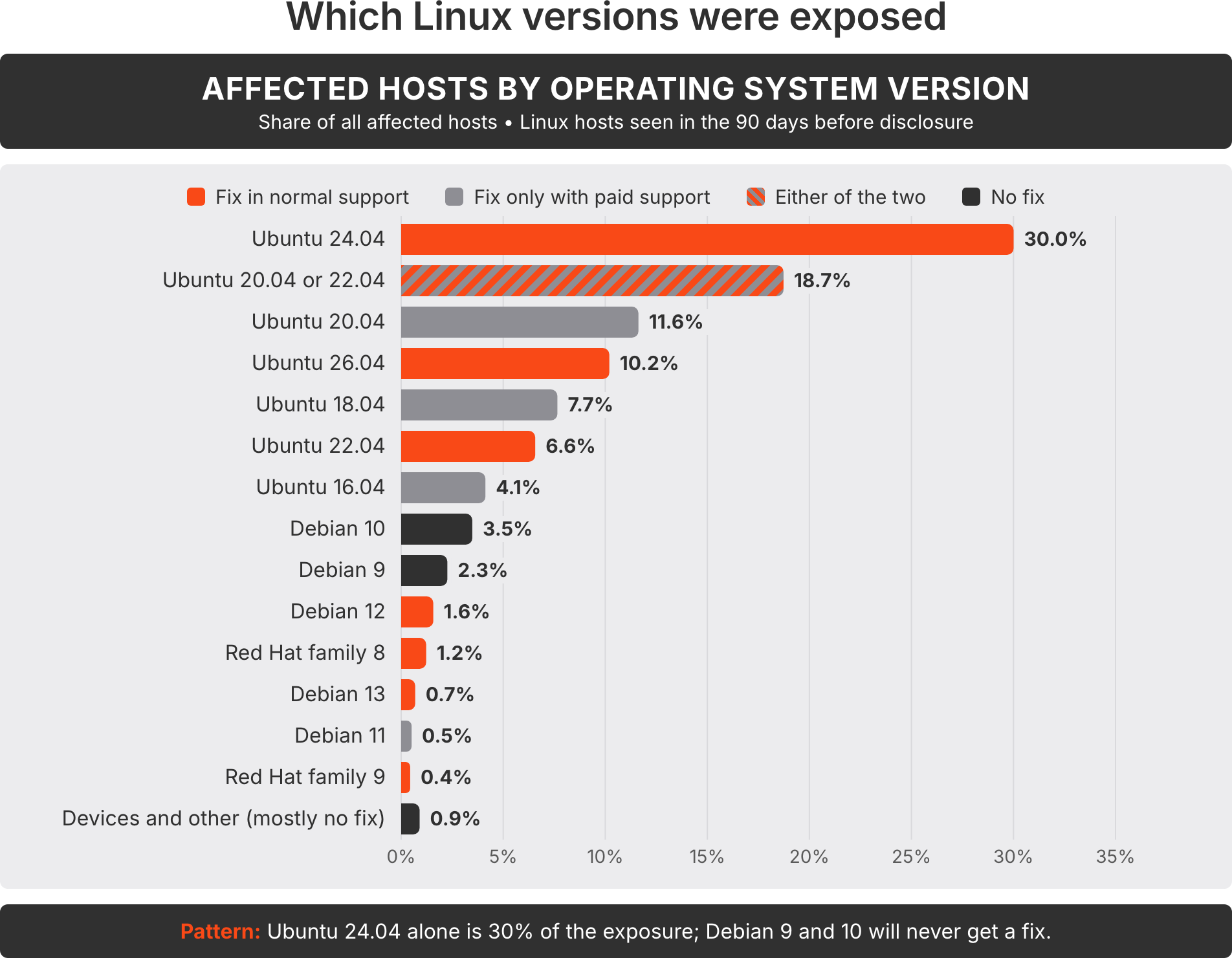
- Patches are already available for Debian and Amazon Linux. As of November 2, Ubuntu is rolling out fixes, while Red Hat lists RHEL 8, 9, 10, and OpenShift as affected and is fast-tracking updates.
- Red Hat shared a network filtering rule to help lower risk in the meantime, but stressed that it's purely a temporary band-aid, not a replacement for a kernel patch.
A newly uncovered flaw in the Linux kernel's IPv4 networking stack has caught the security community's attention. The issue quickly made waves after Anthropic demonstrated how Claude helped construct an exploit that achieved remote command execution (RCE) as root. Given how deep this bug sits, the Linux kernel CVE team assigned it a 9.8 CVSS score, and Red Hat tagged it as Critical.
While the proof of concept is certainly eye-opening, real-world impact is still coming into focus. Anthropic's test targeted a server with a multipath TCP (MPTCP) listener enabled, without diving into exact build details. This describes the demonstrated setup, but MPTCP is not required to reach the vulnerable code: ordinary TCP connections can also trigger the affected IPv4 TCP paths. But because the underlying issue lives in core IPv4 TCP handling, security teams shouldn't assume they're safe just because MPTCP is turned off. Your best move is to check your Linux vendor's specific advisory.
What happened?
On October 15, the Linux kernel team publicly disclosed CVE-2026-98432, rooted in how the kernel processes incoming IPv4 TCP connection requests. The bug has been lurking since Linux 4.4, though upstream fixes have already landed in supported stable branches. Remember, upstream code fixes don't magically update your servers, distro maintainers still need to package, test, and ship those updates to you.
The situation gained momentum on October 27 when Anthropic shared that AI-assisted research had successfully generated a working exploit. Anthropic explained that the exploit gained unauthenticated remote root access on a server with an MPTCP listener. However, the vulnerability affects the Linux IPv4 TCP stack, and the vulnerable code paths can also be reached through ordinary TCP connections. The attack unfolded in two steps: spending about 48 minutes discovering kernel memory layouts to bypass KASLR, followed by five minutes to launch the root shell.
Then on October 30, Red Hat pointed out that exposure could extend beyond just MPTCP setups. They noted that vulnerable kernels with IPv4 TCP active are exposed, especially if they accept inbound connections. While pulling off an exploit takes precise packet timing, Red Hat confirmed RCE is on the table.
How CVE-2026-98432 works
At its core, CVE-2026-98432 is a use-after-free vulnerability. This happens when the kernel frees up a chunk of memory while another part of the system is still actively using it. If that memory gets recycled or altered mid-stream, it can trigger crashes or open doors for an attacker. In this case, during TCP handshake processing, the kernel passes IPv4 options to a new socket without making a fresh copy. If a separate CPU core handles a retransmitted request at the exact same instant, a race condition opens up. If the socket gets destroyed and options are freed mid-process, the second core ends up referencing stale memory.
The upstream kernel patch fixes this by adjusting memory cleanup timing through Read-Copy Update (RCU) grace periods, making sure readers finish before memory gets freed. Instead of just causing a kernel panic, Anthropic's exploit turned this race into full system control. First, it forced the kernel to leak memory pointers, effectively neutralizing KASLR (which scrambles memory layouts to thwart attacks). Once it pinpointed kernel addresses, the exploit overwrote a callback pointer to run a root payload. Interestingly, whenever the exploit missed the race window during testing, the connection simply dropped without crashing the host—allowing the attack to retry until it won the race. How reliably this works across different kernels and hardware remains an open question.