Transform the MITRE ATT&CK Framework Into Actionable, Threat-Informed Intelligence
The MITRE ATT&CK framework is the global standard for mapping adversary tactics, techniques, and procedures (TTPs). But while ATT&CK is comprehensive, it does not tell you:
- Which techniques are most likely to target your organization
- Which TTPs to prioritize for detection engineering
- Where your exposure is highest
- How to reduce Mean Time to Detect (MTTD)
The Bitsight MITRE ATT&CK Heatmap converts the ATT&CK matrix into a risk-prioritized, sector-aware, vulnerability-informed intelligence system which enables security teams to focus on what matters most.
What Is a MITRE ATT&CK Heatmap?
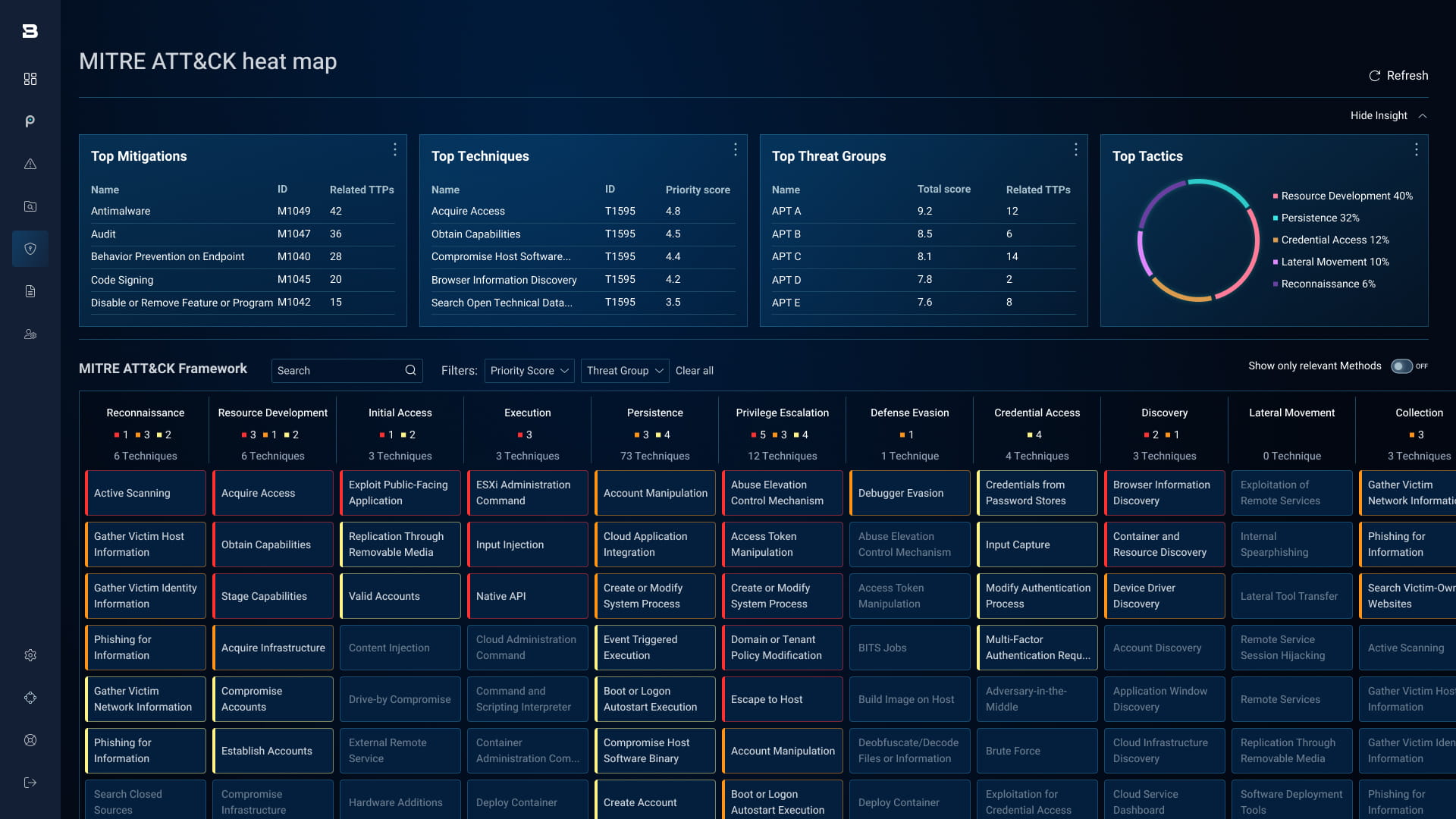
A MITRE ATT&CK heatmap is a visual, color-coded representation of ATT&CK techniques ranked by risk, likelihood, or organizational relevance.
Unlike static ATT&CK navigator tools, Bitsight delivers a dynamic, threat-informed heatmap that:
- Scores each technique from 0–5 based on real-world risk
- Tailors prioritization to your sector and geography
- Elevates techniques linked to active high-risk CVEs
- Refreshes weekly with updated intelligence
This transforms ATT&CK from a static reference into a real-time prioritization engine.
Why MITRE ATT&CK Prioritization Is Critical
The ATT&CK framework contains hundreds of techniques across multiple tactics. Without prioritization:
- SOC teams chase low-probability techniques
- Detection backlogs grow
- Coverage gaps persist
- Executive reporting lacks clarity
- Security investments lack risk alignment
ATT&CK prioritization enables threat-informed defense.
By identifying which TTPs are most relevant to your environment, you can:
- Focus detection engineering on high-risk techniques
- Align EDR/SIEM coverage to active adversary behaviors
- Reduce Mean Time to Detect (MTTD)
- Strengthen board-level risk reporting
How the Bitsight MITRE ATT&CK Priority Score Works
Every technique in the matrix is assigned a 0–5 Priority Score based on three core intelligence vectors:
1. Threat Group Relevance
How active are APT groups using this technique within your:
- Industry sector
- Geographic region
- Adversary targeting profile
This includes volume of activity, sector match, and motivation multipliers.
2. TTP Prevalence
How widely is the technique used across relevant threat actors?
High-prevalence techniques across multiple adversaries receive elevated scoring.
3. CVE Exposure Override
If a technique is linked to a high-risk CVE known to exist in your environment, its score is dynamically elevated.
This uniquely connects:
Threat intelligence + vulnerability intelligence + firmographic context
Final scores are normalized to a Low-to-High 0–5 scale.