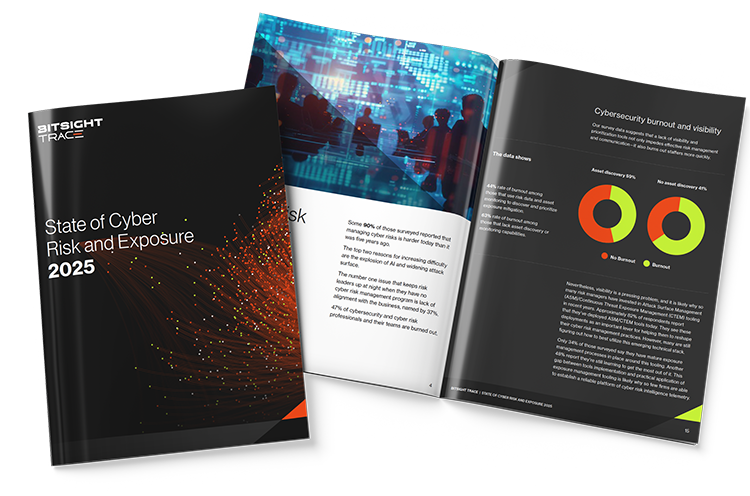
The 2025 State of Cyber Risk and Exposure report reveals why security leaders are under pressure: AI-driven threats, expanding attack surfaces, and misalignment with business priorities. Based on global survey data, it surfaces the root causes behind today’s risk fatigue—and what mature organizations are doing differently.
Security Alert: CVE-2025-14847 MongoDB “MongoBleed” Actively Exploited
Summary
A high-severity vulnerability, CVE-2025-14847, affecting MongoDB Server is being actively exploited in the wild with a Bitsight Dynamic Vulnerability Exploit (DVE) score of 9.71. The flaw, commonly referred to as “MongoBleed,” is an unauthenticated memory-read vulnerability caused by improper handling of zlib-compressed network message headers, which may allow attackers to read uninitialized heap memory remotely.
Although initially reported by some sources as a potential remote code execution (RCE) issue, MongoDB and BleepingComputer have clarified that CVE-2025-14847 is not officially classified as an RCE vulnerability. Instead, exploitation enables attackers to extract sensitive in-memory data such as credentials, API keys, and authentication tokens, which may facilitate follow-on compromise.
Public proof-of-concept (PoC) exploit code is available, and security researchers have observed active exploitation attempts against exposed MongoDB servers. MongoDB issued an urgent advisory recommending immediate patching. Bitsight Threat Intelligence and external research estimates that over 87,000 MongoDB servers may be vulnerable globally, with significant exposure in the United States, China, and Germany.
CVE-2025-14847 vulnerability overview
The vulnerability stems from mismatched length fields in zlib-compressed MongoDB wire protocol headers. When processing malformed compressed messages, MongoDB Server may return uninitialized heap memory to an unauthenticated remote client.
Key characteristics of CVE-2025-14847:
- Exploitable remotely without authentication
- Low attack complexity
- No user interaction required
- Results in memory disclosure, not confirmed code execution
MongoDB has confirmed that Atlas clusters have been patched, and as of its advisory, no evidence of Atlas customer data compromise has been observed. Self-hosted MongoDB deployments remain at risk until patched.
Threat intelligence report
According to Bitsight Threat Intelligence, the following activity has been observed:
- Active exploitation attempts targeting internet-exposed MongoDB servers vulnerable to CVE-2025-14847.
- Publicly available exploit code, increasing the likelihood of opportunistic and automated attacks.
- Estimated exposure of ~87,000 potentially vulnerable MongoDB instances worldwide.
- Highest observed exposure concentrations in the United States, China, and Germany.
Bitsight assesses this vulnerability as high risk due to its unauthenticated nature, widespread deployment of MongoDB, and the sensitivity of data typically stored in server memory.
Technical overview
- Vulnerability type: Uninitialized Memory Read (Improper Handling of Length Parameter Inconsistency – CWE-130)
- Affected product: MongoDB Server
- CVSS score: 7.5
- Bitsight DVE Score: 9.71
- Impact: Remote, unauthenticated disclosure of uninitialized heap memory
- Exploitation outcome: Exposure of sensitive in-memory data (credentials, tokens, keys)
- Compression component involved: zlib
- Mitigation indicator: Patch applied or zlib compression disabled
While CWE-130 weaknesses can, in some cases, lead to more severe outcomes, there is no confirmed evidence that CVE-2025-14847 enables arbitrary code execution.
Affected versions
CVE-2025-14847 affects multiple MongoDB Server branches prior to the following patched releases:
- MongoDB 8.2 prior to 8.2.3
- MongoDB 8.0 prior to 8.0.17
- MongoDB 7.0 prior to 7.0.28
- MongoDB 6.0 prior to 6.0.27
- MongoDB 5.0 prior to 5.0.32
- MongoDB 4.4 prior to 4.4.30
- All MongoDB Server 4.2.x versions
- All MongoDB Server 4.0.x versions
- All MongoDB Server 3.6.x versions

Why this matters
MongoDB is frequently deployed as a core production database storing highly sensitive data. A remotely exploitable, unauthenticated memory disclosure vulnerability presents a serious risk, as leaked secrets may be reused to:
- Access databases and applications
- Pivot laterally within environments
- Compromise cloud infrastructure or third-party services
Given the scale of exposed systems and availability of exploit tooling, organizations should treat this vulnerability with patch-level urgency.
CVE-2025-14847 impact to organizations
Unpatched MongoDB servers may be at risk of:
- Leakage of credentials, API keys, or authentication tokens
- Secondary compromise through credential reuse
- Loss of confidentiality for sensitive application data
- Increased attack surface due to widespread internet exposure
Organizations operating self-hosted MongoDB deployments with network compression enabled are at the highest risk.
Recommendations
Immediate actions:
- Upgrade immediately to a patched MongoDB version (8.2.3, 8.0.17, 7.0.28, 6.0.27, 5.0.32, or 4.4.30).
If patching is not immediately possible:
- Disable zlib compression by starting mongod or mongos with:
- networkMessageCompressors
- or net.compression.compressors configured to explicitly omit zlib.
Additional steps:
- Restrict MongoDB network exposure where possible.
- Rotate credentials, tokens, and secrets that may have been resident in memory.
- Monitor logs and traffic for suspicious or malformed compressed requests.
Threat landscape and context
The MongoBleed vulnerability reflects a broader trend of attackers targeting infrastructure-layer services to harvest secrets directly from memory rather than relying on application-layer exploits. Memory disclosure flaws in widely deployed platforms continue to offer attackers a low-effort, high-impact path to downstream compromise.
Conclusion
CVE-2025-14847 is a high-severity, unauthenticated MongoDB Server vulnerability with public exploit code and observed exploitation activity. While not officially classified as an RCE, the risk of sensitive data exposure is significant.
Organizations running affected MongoDB versions should act immediately:
- Patch to a fixed release
- Disable zlib compression if patching is delayed
- Rotate potentially exposed secrets
- Reduce internet-facing exposure
Bitsight will continue monitoring this vulnerability and related exploitation activity and provide updates as new intelligence emerges.
Act now: patch, mitigate, and validate your MongoDB exposure.
How Bitsight can help:
Bitsight helps organizations identify, prioritize, and reduce exposure to high-risk vulnerabilities like MongoBleed CVE-2025-14847 through continuous monitoring, threat intelligence, and risk intelligence.
Specifically, Bitsight supports customers through:
- Identifying internet-facing MongoDB instances access first and third party environments.
- Highlighting externally exposed database services.
- Correlating vulnerability exposure with real-world threat activity.
- Incorporating deep and dark web intelligence with threat actor reporting into vulnerability risk context.
- Supporting third party risk management (TPRM) by identifying vendors and partners that may be at risk.
- Providing continuous external monitoring for customers.
For more information, contact Bitsight today.