In May 2022, the U.S. Department of Homeland Security’s Cybersecurity and Infrastructure Security Agency (CISA) alerted the public to a critical vulnerability affecting thousands of BIG-IP devices. The vulnerability, tracked as CVE-2022-1388, potentially allows a remote unauthenticated attacker to take complete control of the victim’s system, and to deploy ransomware and other malicious software.
Now, four months later, Bitsight evaluated the current global state of exposure to CVE-2022-1388. Our findings indicate that many organizations remain vulnerable to this critical vulnerability, presenting risk not only to these organizations but also to their customer bases.
This article will describe how your organization can stay up to date with patches for CVE-2022-1388, and promptly identify and remediate weaknesses in your supply chain.
Background: Big-IP and CVE-2022-1388
BIG-IP software products are licensed modules spanning a variety of use cases, including virtual environments, firewall management, application security management, load balancing, local traffic management, and more. The software’s broad access to internal systems makes it a target for attackers seeking to breach internal systems, and to deploy crypto miners and ransomware.
This vulnerability impacts several versions of F5’s BIG-IP software, including:
- 16.1.0 - 16.1.2
- 15.1.0 - 15.1.5
- 14.1.0 - 14.1.4
- 13.1.0 - 13.1.4
- 12.1.0 - 12.1.6
- 11.6.1 - 11.6.5
If your organization uses any of these versions, be sure to install the latest fixed version as outlined by the developer here.
Organizations currently exposed
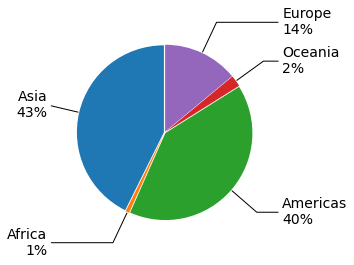
Bitsight identified many organizations currently exposed to CVE-2022-1388. Most of these organizations are from the technology sector, followed by telecommunications, education, and government/politics from the Americas and Asia.