This week, Microsoft ended support for the Windows 7 operating system. Among other implications, Microsoft will no longer issue security patches for the nine-year-old OS. Any organization relying on the OS moving forward could be susceptible to a security issue, attack or data breach unless they purchased extended support from Microsoft.
The fix is simple: Migrate to a newer operating system. Yet, just as is the case with widely uneven patch management practices, many organizations will delay upgrading, for a variety of reasons.
Following the official end-of-life of the OS on January 14, the Bitsight Data Science team investigated the scope of the Windows 7 migration challenge leveraging our Bitsight Security Ratings platform, which can identify organizations (and machines within those organizations) that have migrated, and those that have not. Bitsight’s non-intrusive data collection process gathers over 200 billion IT “events” daily from around the global internet, informing Bitsight-generated security ratings for over 200,000 organizations.
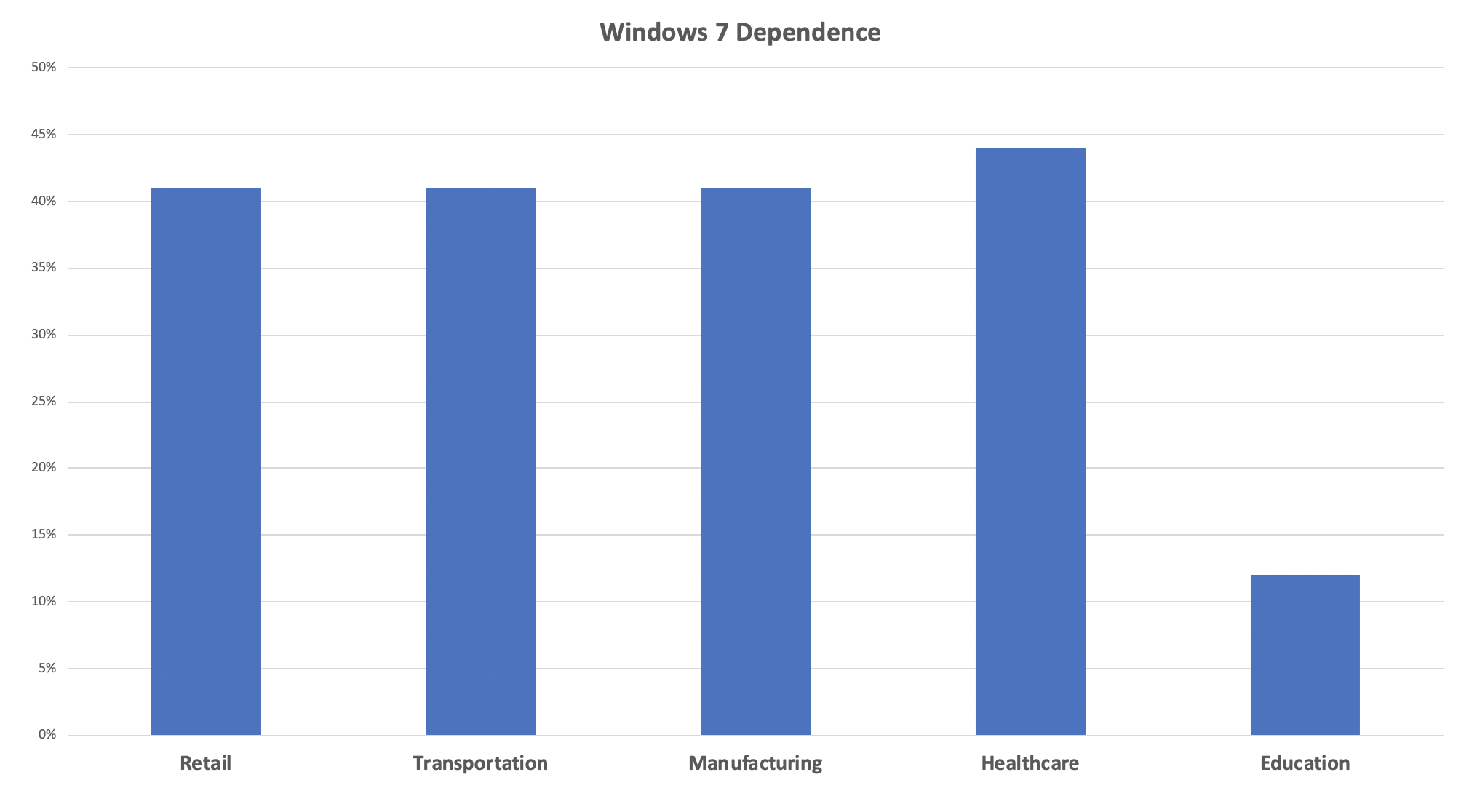
Bitsight's Data Science team studied roughly 60,000 organizations and found that over the past 60 days almost 70% of those organizations were using Windows 7 in some capacity. Of note, though, Windows 7 usage is typically not universal within those organizations, and Bitsight is able to examine its prevalence. For example, at just over half of the organizations studied (51%) running Windows 7, the prevalence of Windows 7 is higher than one in 10 machines. For 32% of them, over one in four of machines are running Windows 7.
Additional noteworthy insights derived from the team’s research include:
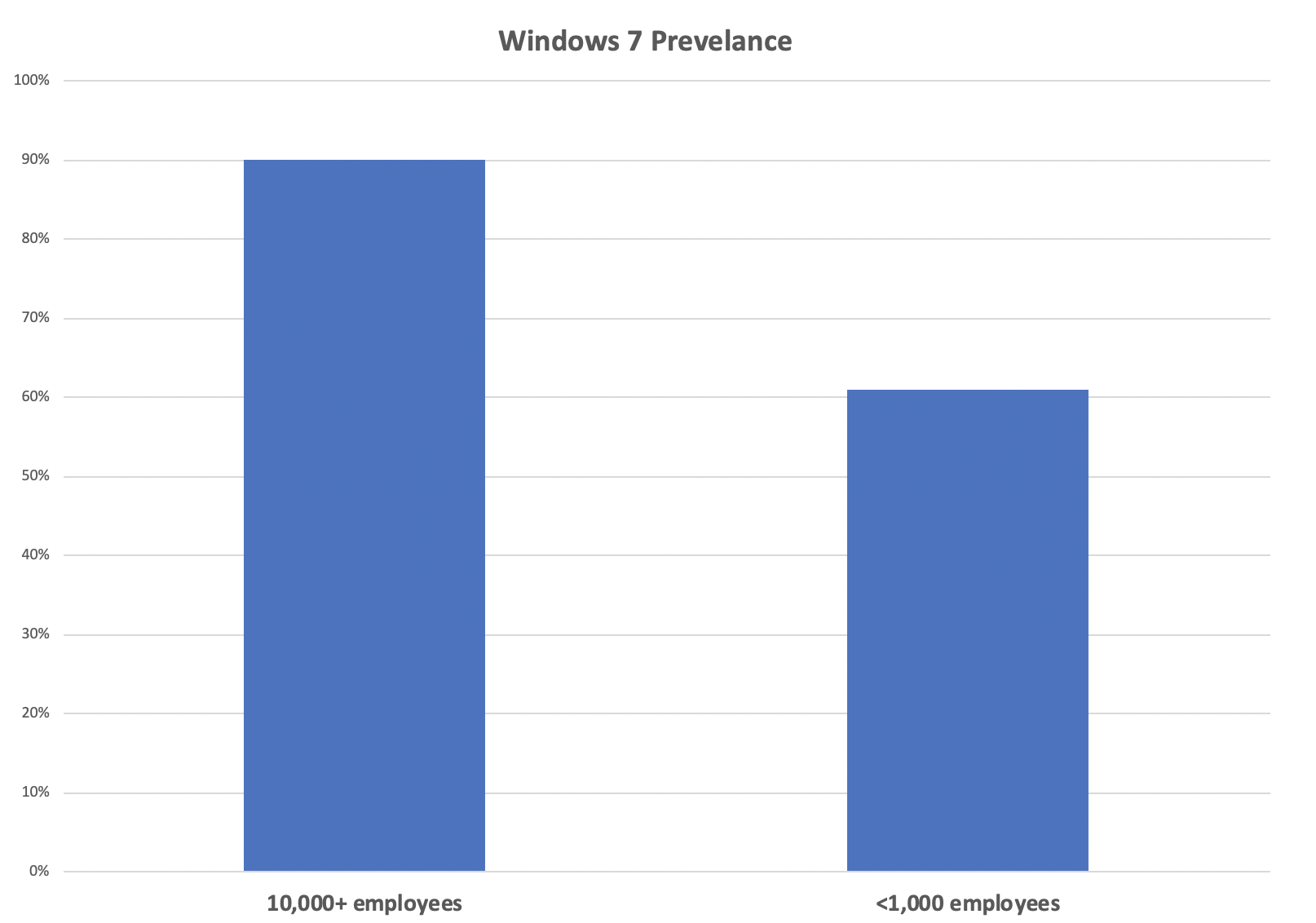
Windows 7 is nearly universal at larger companies.
Nearly 90% of organizations with more than 10,000 employees are running Windows 7 on at least one computer, versus only 61% with less than 1,000 employees.
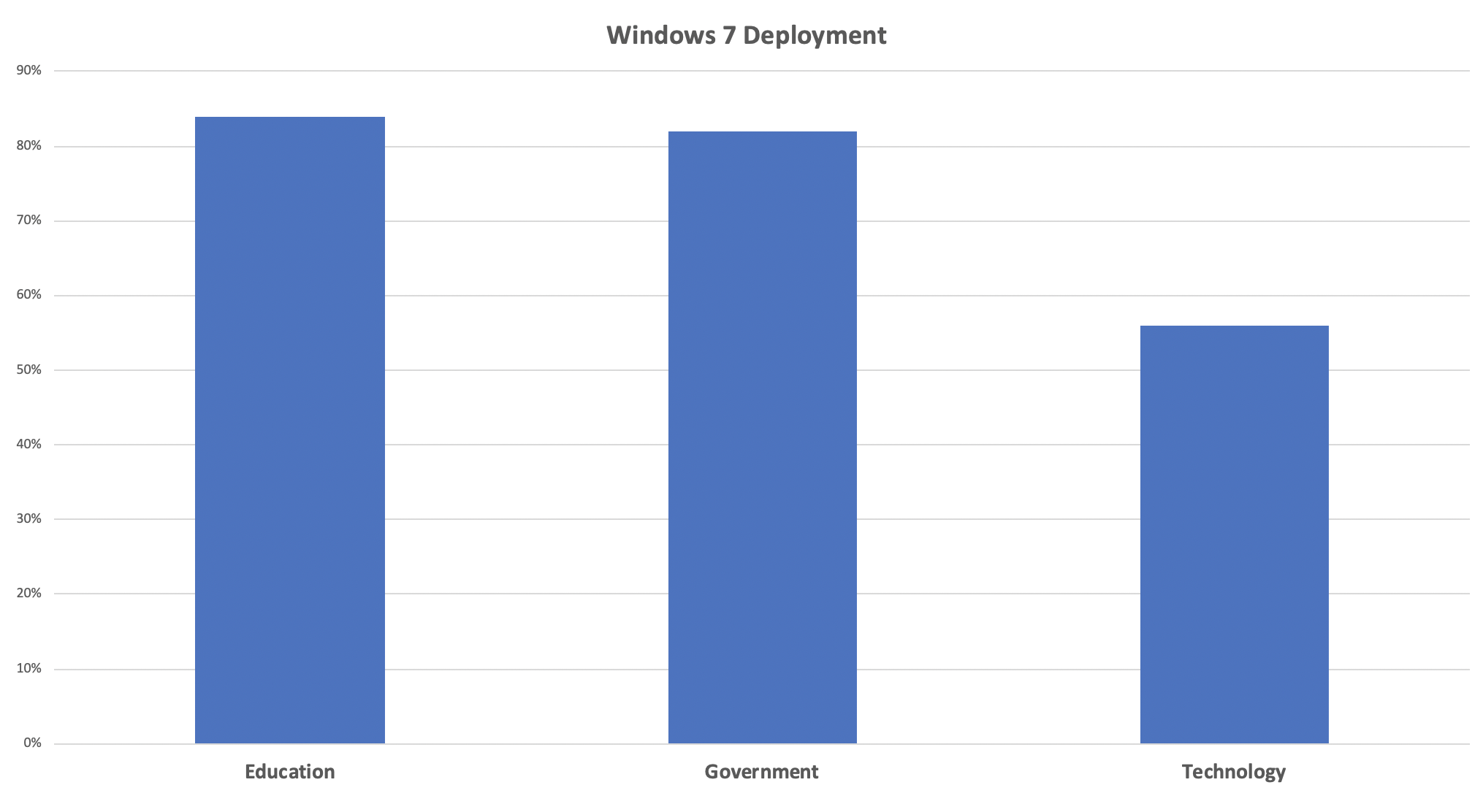
Windows 7 deployment is the widest in the education and government verticals.
Only the education and government sectors have a Windows 7 deployment rate above 80% (education is 84% and government is 82%). Conversely, technology companies have the lowest Windows 7 deployment rate, and technology is the only market where the rate is under 60% (56%).