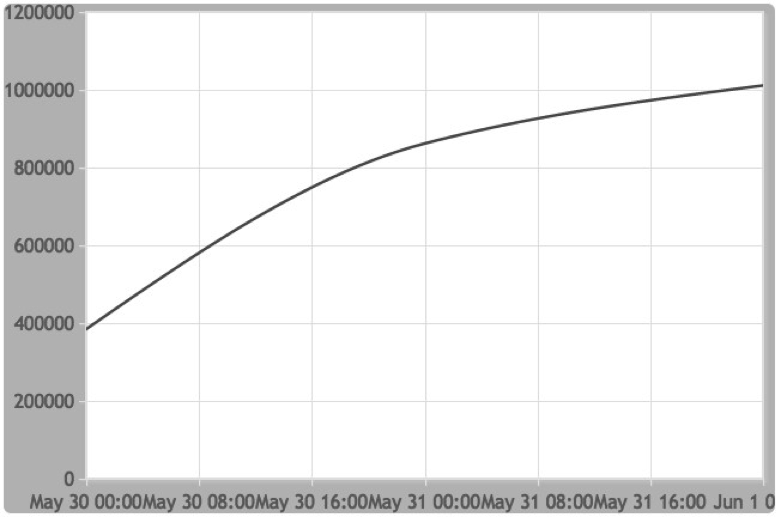
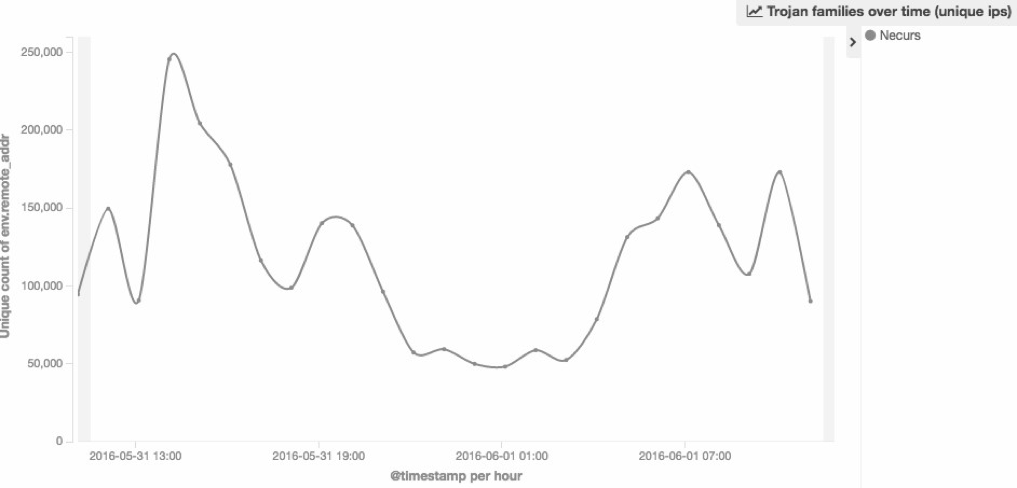
Anubis Networks began monitoring Necurs, a malware family known for it's rootkit capabilities, in August 2015. Since then we have been able to observe approximately 50.000 unique IP addresses connecting to our sinkhole over a 24 hour time period. However, we recently discovered that we were only seeing a small part of the whole botnet.
Necurs’ rootkit capabilities include both a user mode and a kernel mode component, making it a very capable piece of malware that is able to tamper the system at the lowest level.
Necurs is commonly installed by other families of malware (e.g. Zeus, Dorkbot), but reports show that it can also be distributed on its own using exploit kits. Once it gains access to a system, it is able to steal user information, install additional malware or send spam.
One particularly interesting feature of this malware is its C2 (command and control) channels. To ward off takedown attempts, Necurs uses several techniques simultaneously:
- HTTP using a list of hardcoded servers
- HTTP using a server obtained through a DGA
- A custom P2P network that is used mainly to deliver lists of HTTP C2 servers
To make itself difficult to monitor, the malware uses an algorithm that converts the IP addresses received through DNS to the real IP addresses of its servers. This means that in order to successfully sinkhole the malware, the algorithm needs to be reversed.
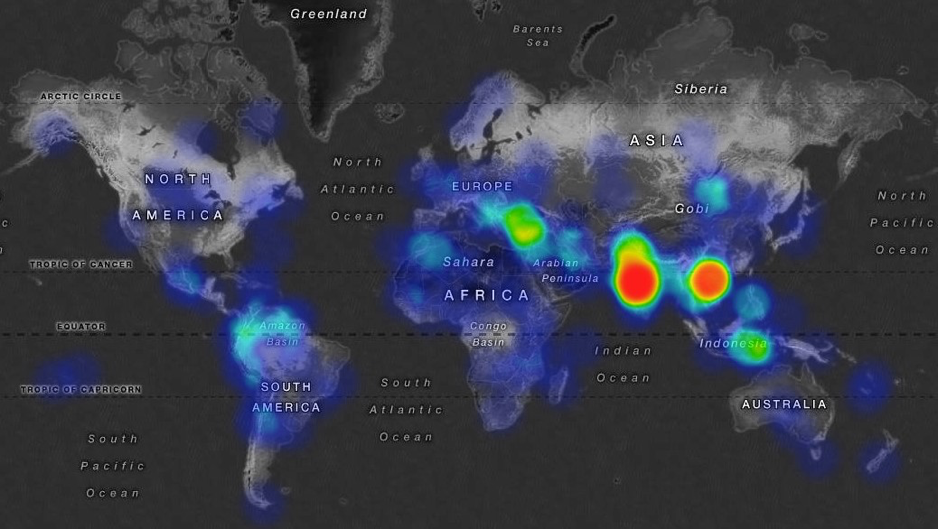
While Necurs-infected systems are present in most countries in the world,most infections exist in Asia, with a particularly strong presence in India. The following map shows the worldwide distribution of the infection.
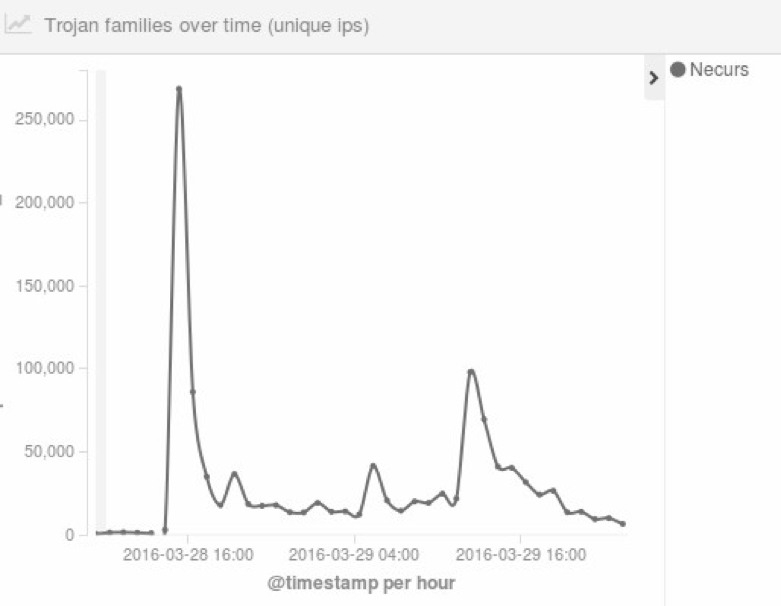
For several months, the total number of infections in a 24 hour period averaged around 50.000 IP addresses, but this number was slowing decreasing over time. However, on March 28th, 2016, we saw a sudden spike in the count of infections: the number of IPs connecting to the sinkhole over a 24 hour period reached over 650.000. Over the next few days, this figure steadily dropped until it reached the usual infection count.
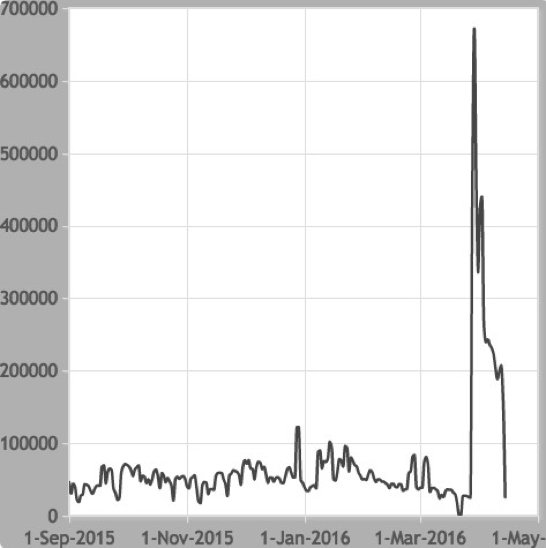
As we started searching for an explanation for these new connections, we assumed that the drastic spike to 600.000 infections in one day would get a lot of attention through open source intelligence or media channels.. However, this was not the case, and we could not find any clues through OSINT. We decided to look at the malware again and briefly review the way its network communication channels operated..
When the malware is executed, it starts its P2P connection routine (called p2pmain in the image below) and then calls the HTTP command and control routine (called httpc2main below) directly or in a new thread (in case the malware is started as a service).
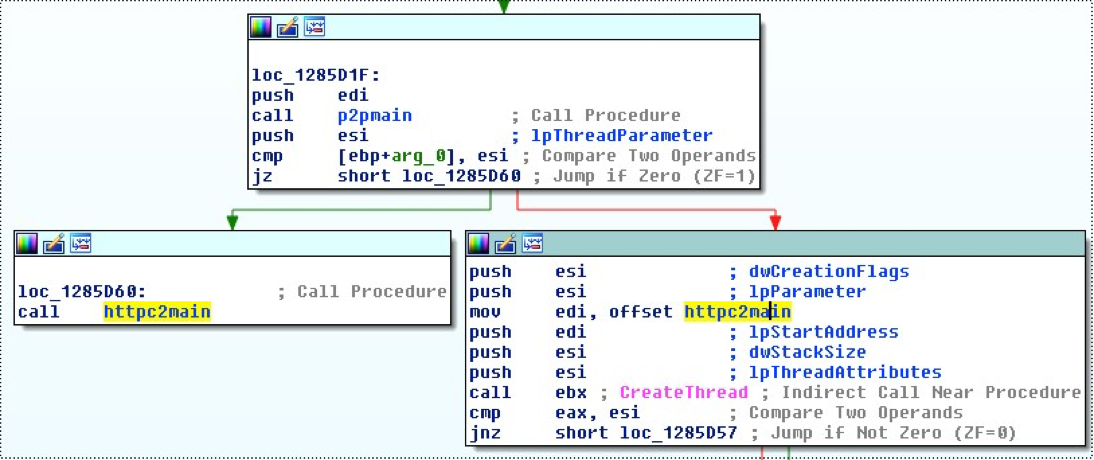
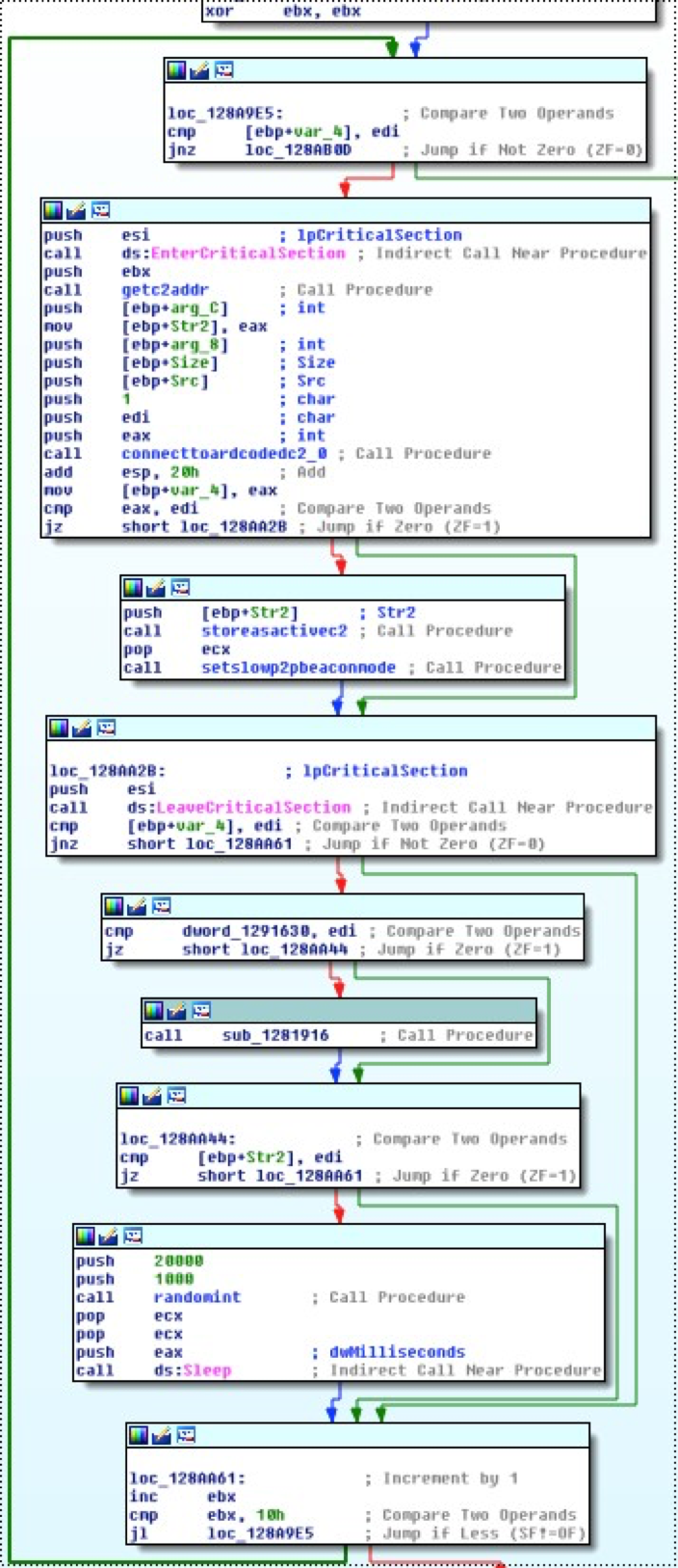
Once the execution reaches the HTTP C2 connection method, the malware receives the IP address of a C2 (using the function called getc2addr below) and attempts to connect to it. If the connection is successful, it stores the address on a global variable (using the function called storeasactivec2 below) that will be returned by the getc2addr method on the following connection attempts.
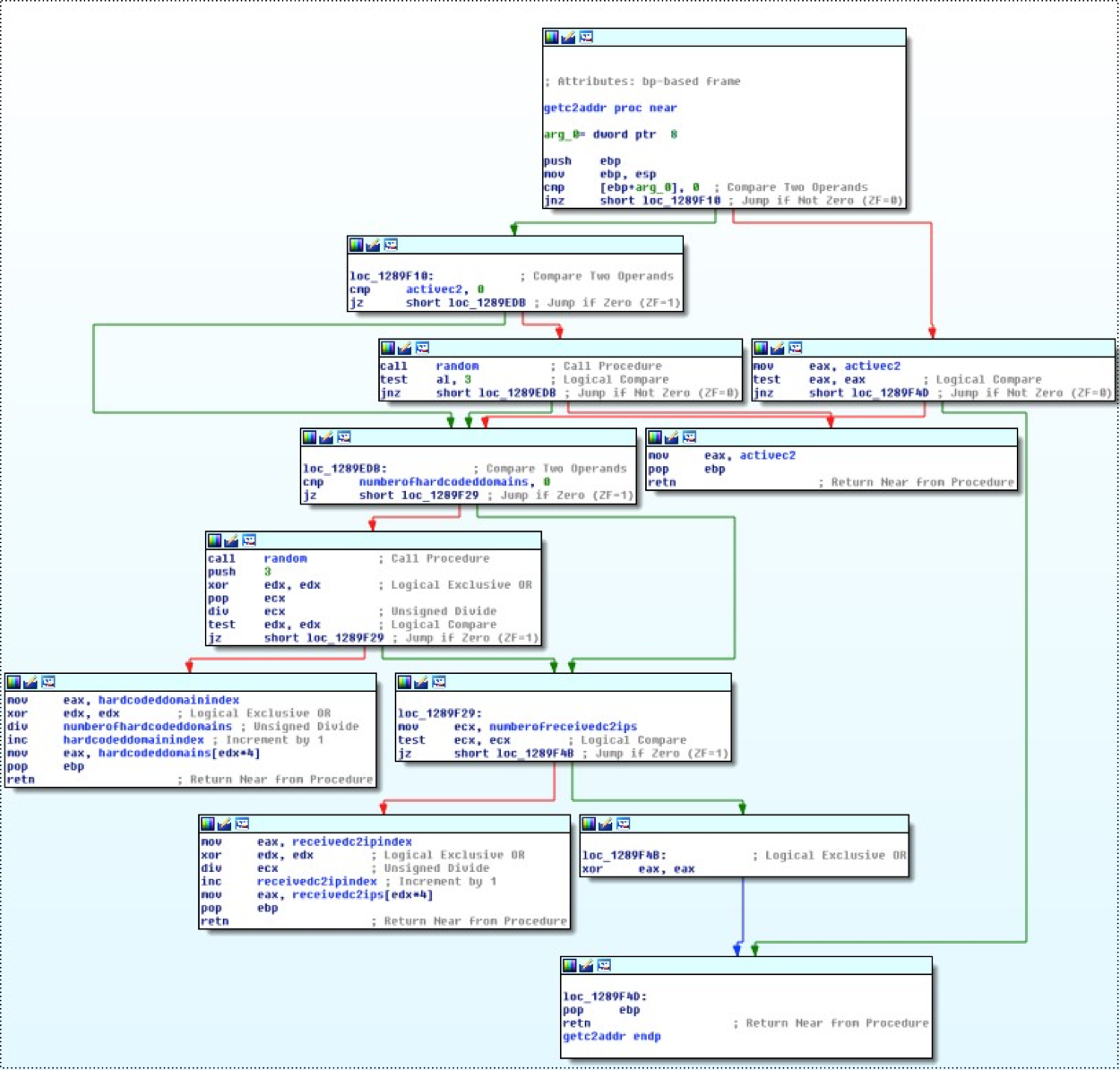
The following image illustrates the getc2addr function. If an active C2 exists, the function always returns the active C2 address (arg0 is always 0 on the first connection attempt). If not, the function will return a hardcoded address, or one of the addresses received through the P2P network.
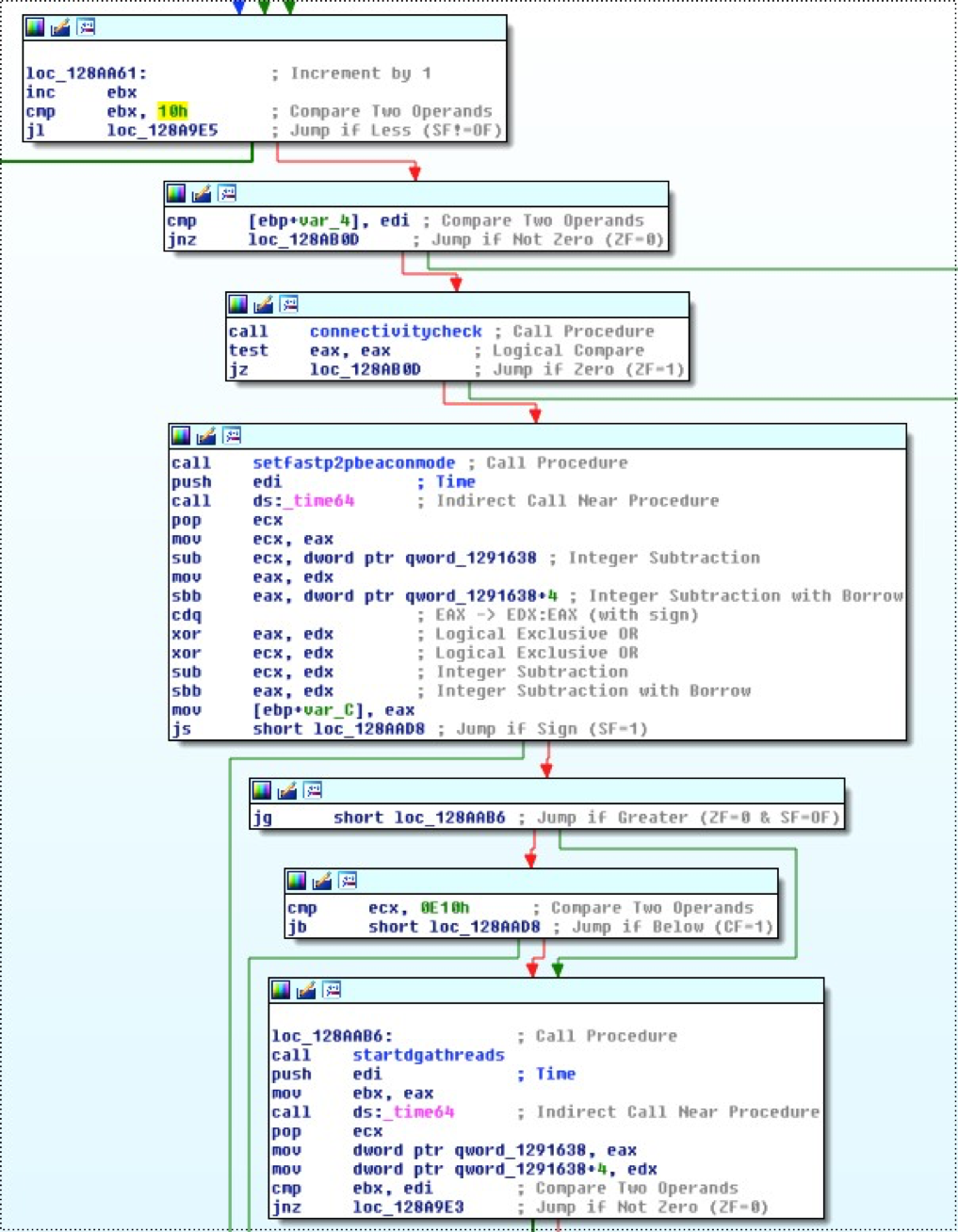
If the C2 connection attempt fails 16 times, the malware will run a new connectivity check (connecting to Microsoft or Facebook and four randomly generated domains), set the P2P network beacon to a high frequency, and start the real DGA, as shown below.