5 Steps to Building a Cybersecurity Roadmap
The recent rise in ransomware attacks and business-halting data breaches has made it clear that your organization must prioritize cyber security performance. But ad hoc security controls and defensive measures are not the answer. Instead, you need a strategic, risk-based approach with a cyber security road map as your guide.
1. Understand and Monitor Your Organization's Attack Surface
One of the reasons why threat actors are so successful is that they can exploit risk hidden in complex and expanding digital ecosystems.
Today’s organizations have hundreds of thousands of digital assets located on-premises, in the cloud, across geographies, business units, and subsidiaries – making it hard to pinpoint where risk may exist. It may be a misconfigured firewall (like the one that resulted in the massive Capital One data breach), an open port, or an unpatched system.
Because of this, the first step to creating a cyber security roadmap is to identify risk throughout your organization’s digital portfolio. One way to do this is to continuously scan your organization’s attack surface to gain a complete view of the vulnerable points. You can run a scan at any time to quickly visualize the location of your digital assets – including cloud instances and shadow IT – and the corresponding cyber risk associated with each.
Your cyber security strategy must also include a plan to continuously monitor your organization’s cyber security performance. With Bitsight for Security Performance Management, you can continuously monitor for and immediately identify gaps in your security controls, such as vulnerabilities, misconfigurations, and unpatched systems — across your on-premise, cloud, and remote office environments. Use this insight to create informed improvement plans, and measure success over time.
2. Benchmark your Cyber Security Performance
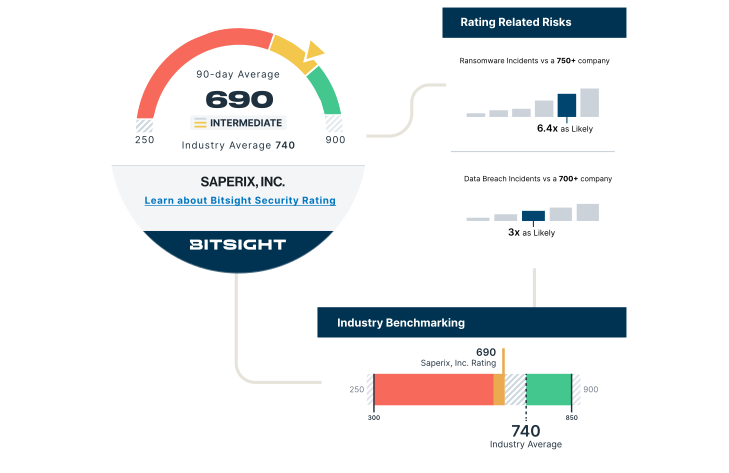
Next, you need to understand what security performance targets you should aim for and where you fall short. A helpful approach is to benchmark your security program against other organizations of similar size in your industry. This will allow you to make more informed decisions about where to focus your cyber security efforts.
You can also share your benchmark assessment with executives and board members so they understand how your program aligns with industry standards. From here, they can develop improvement plans and allocate resources where they’ll have the greatest impact.