Engaging with your organization’s board of directors is an integral part of cybersecurity leadership. According to a survey by Gartner, between 2016 and 2021 the percentage of boards that consider cybersecurity a business risk has risen 30% – from 58% to 88%. After economic uncertainty, cyber risk now ranks as the number two concern for boards.
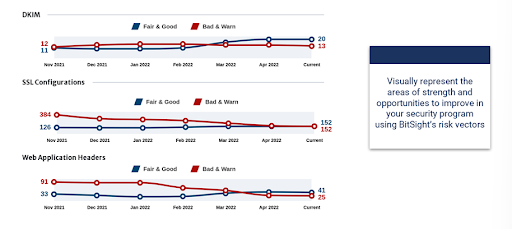
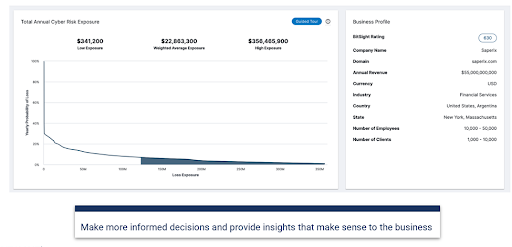
In light of this, as a cybersecurity leader, you need to think more strategically about presenting cybersecurity in terms of business risks and not technology. Let’s look at three key metrics that can help you create a cybersecurity board report that tells a good story and resonates with your board.
1. Peer and sector-wide cybersecurity analytics
Reporting the strength of your organization’s security program based on peer and sector-wide security benchmarking is becoming increasingly important to the board. By framing security performance in context, they can see if the organization is doing enough, not enough, or too much compared with its peers.
But this information is typically very hard to find. After all, most organizations do not want to reveal what security controls they have in place, if they meet regulatory standards, and if those measures have been exploited by hackers.
Fortunately, Bitsight Peer Analytics makes it easy to provide the sector-wide context that boards are asking for. With Bitsight, you can:
- Discover security performance standards for your industry and peer group
- Set achievable security goals based on relative performance
- Focus security investments to achieve the greatest impact