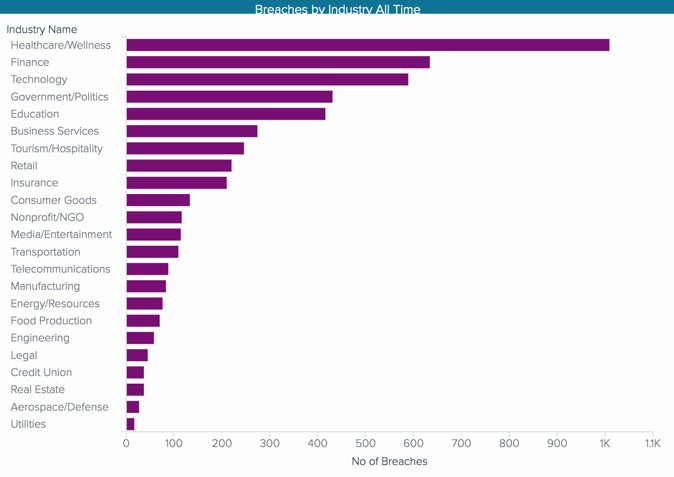
Over the last several months, members of our product team have been working to aggregate all of Bitsight’s security ratings data and highlight important insights about patterns in data breaches. In fact, Bitsight boasts one of the largest data breach data sets. Of course, this only highlights what data Bitsight has visibility into; with the largest sinkholing infrastructure in the world and the security posture of over 130,000 organizations, we have the most comprehensive view into global breach trends.
Bitsight’s data highlights the number of breaches captured in the last six months on a global scale. In April of this year, breaches spiked with 80 separate occurrences. These trends can help prompt companies to identify critical areas in need of remediation and are an important indicator for the future.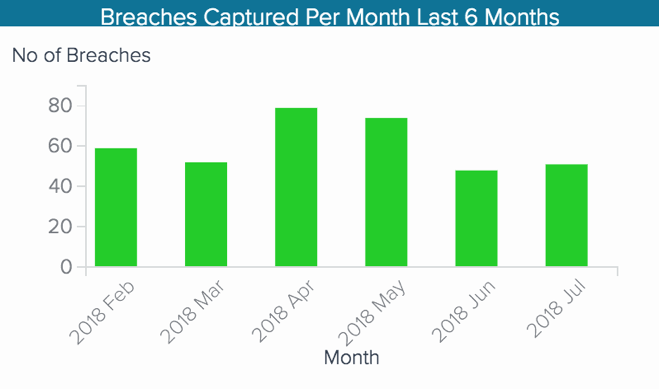
Bitsight also looks at breaches by severity within the three Bitsight Security Ratings categories over the last 30 days, noted by color, implicating X amount of records lost. Companies are classified by rating as basic, intermediate, or advanced. Overall, there are more breaches of higher severity in the basic and intermediate security rating categories, which makes sense as previous Bitsight studies have shown — and have been independently verified — that companies with a Bitsight Security Rating of 500 or less are 5X more likely to suffer a data breach than a company with a 700 or higher.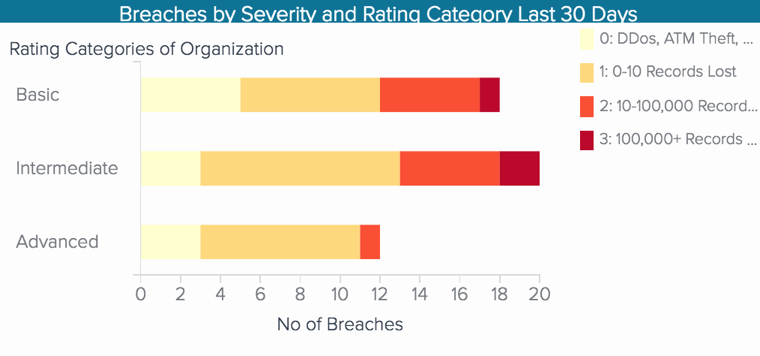
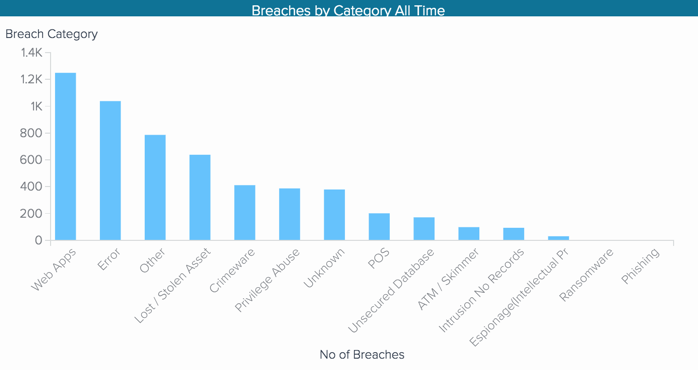
When examining breaches by category type (over all time), web applications lead with over 1,200 different breaches. According to the 2018 Verizon Database Industry Report (DBIR), web application breaches are the most common type of breach — they occurred over 20% of the time among all breaches in 2017-18.