
CVE-2026-107809 Details
Nginx UI is a web user interface for the Nginx web server. From 2.0.0 until 2.5.0, AuthRequired accepts a browser-managed token cookie as an API credential after the front end stores the JWT in that cookie. Because management endpoints do not universally require a CSRF token or perform Origin or Referer validation, a remote attacker can induce a logged-in administrator's browser to submit authenticated cross-site state-changing requests, including POST /api/configs. The attack requires an administrator account without OTP/Passkey or a target endpoint that does not require secure-session proof. The attacker cannot read the cross-origin response but can modify Nginx configuration, trigger reloads, or invoke other management operations reachable with the victim's session. This issue is fixed in version 2.5.0.
View at NVD
Exploit prediction scoring system (EPSS) score for CVE-2026-107809
EPSS (Exploit Prediction Scoring System): EPSS predicts the likelihood that a vulnerability will be exploited in the wild. A higher percentage means a greater chance of an exploit occurring. The EPSS model produces a probability score between 0 and 1 (0 and 100%).
0.23 Probability of exploitation activity being observed over the next 30 days (13th percentile)
CVSS score for CVE-2026-107809
CVSS (Common Vulnerability Scoring System): An open framework owned and managed by FIRST.Org, Inc. that assigns a numerical score from 0 to 10 to software vulnerabilities to indicate their severity.
8.8 High
Products affected by CVE-2026-107809

CVE-2026-107809 Global Footprint

Top 10 Identified Countries

Country Observations Percentage
CN 32 24.43%
US 16 12.21%
SG 11 8.40%
HK 8 6.11%
DE 7 5.34%
TH 6 4.58%
JP 5 3.82%
VN 5 3.82%
KR 5 3.82%
ID 4 3.05%

Is CVE-2026-107809 part of your extended attack surface? Bitsight helps security leaders rapidly identify exposure and detect threats in order to prioritize, communicate, and mitigate risk.

View interactive product tours

CVE-2026-107809 Industry Footprint

Top 10 Identified Industries

*Service provider organizations (typically Technology and Telecommunications) are disproportionally represented in the results given their upstream ownership of end-user infrastructure. See our FAQs.

Industry* Observations Percentage
Technology 86 89.58%
Telecommunications 9 9.38%
Education 1 1.04%

Bitsight, the leading provider in Cyber Risk Management, introduced the next-generation internet scanner Bitsight Groma in May 2024. This technology continuously scans the entire internet to discover assets, collect asset attribution evidence, and identify an ever-growing set of security observations, such as vulnerabilities and misconfigurations. Groma’s scanning activities presently encompass:


  • 40 million-plus monitored organizations
  • 250 million-plus host names
  • 4 billion-plus routable IPv4 and IPv6 addresses

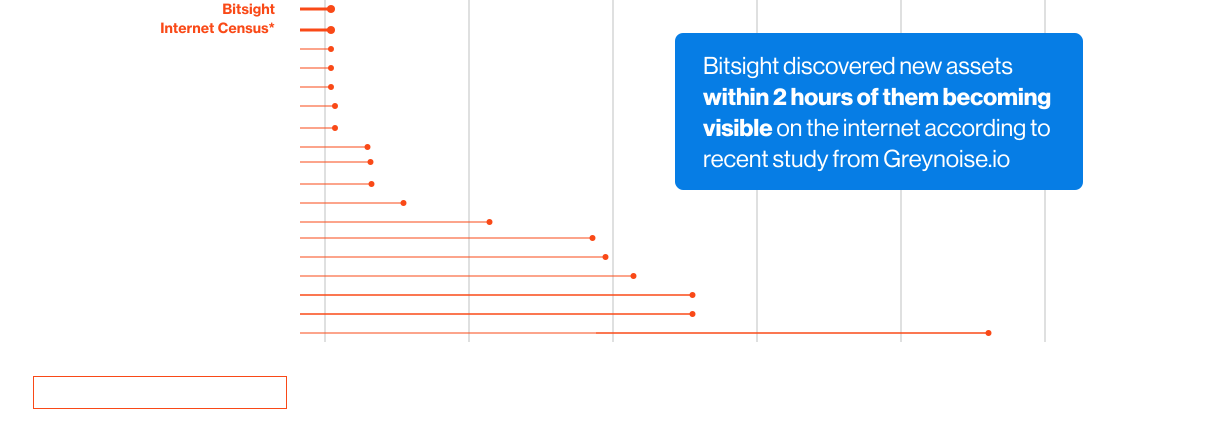
Greynoise’s recent study testifies the speed of Bitsight Groma.

Bitsight data discovery
Governance charcoal background

Bitsight TRACE team investigates security incidents and identifies vulnerabilities and threats.

View latest security research 

See what you’re up against across the expanding attack surface. Prioritize what matters most. And mitigate where you’re most vulnerable.

External Attack Surface Management