

The only security ratings platform that indicates the risk of a publicly disclosed data breach.

Background
Bitsight Security Ratings are used by organizations worldwide to mitigate cybersecurity risk across the enterprise. Leading organizations including AIG, Fannie Mae and Comcast depend on Bitsight to provide quantitative insight into the risks facing both themselves and third parties. As data breaches continue to grab headlines and create significant business challenges, more and more companies are actively seeking measurements for risk of a breach. By comparing its ratings to a comprehensive set of publicly disclosed data breaches, Bitsight can confidently demonstrate that Bitsight Security Ratings are the only ratings platform proven to indicate the risk of a publicly disclosed breach.
Study Overview
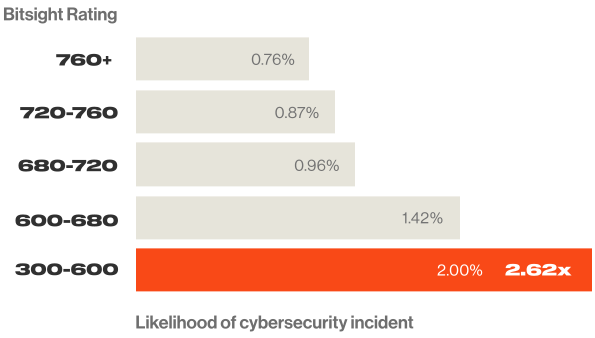
Bitsight analyzed the Security Ratings of 27,458 companies over a two year period. These companies varied by size and geography and they spanned 22 diverse industry sectors. Bitsight’s data scientists compared this ratings data to a comprehensive set of 2,671 breach events during this time period. The resulting analysis demonstrates that companies with higher ratings are less likely to have experienced a publicly disclosed data breach.
Specifically, companies with a rating of 400 or lower were five times more likely to experience a publicly disclosed data breach than companies with a 700 or higher.
Business Impact
Organizations across all industry sectors can leverage this information to drive risk aware business decisions. Security Ratings are indicative of a company’s risk of data breach, and businesses can take action with Bitsight Ratings in the following ways:


Bitsight Security Ratings FAQs

Secure your future today